


Can Decorative Film Extend Door Life?
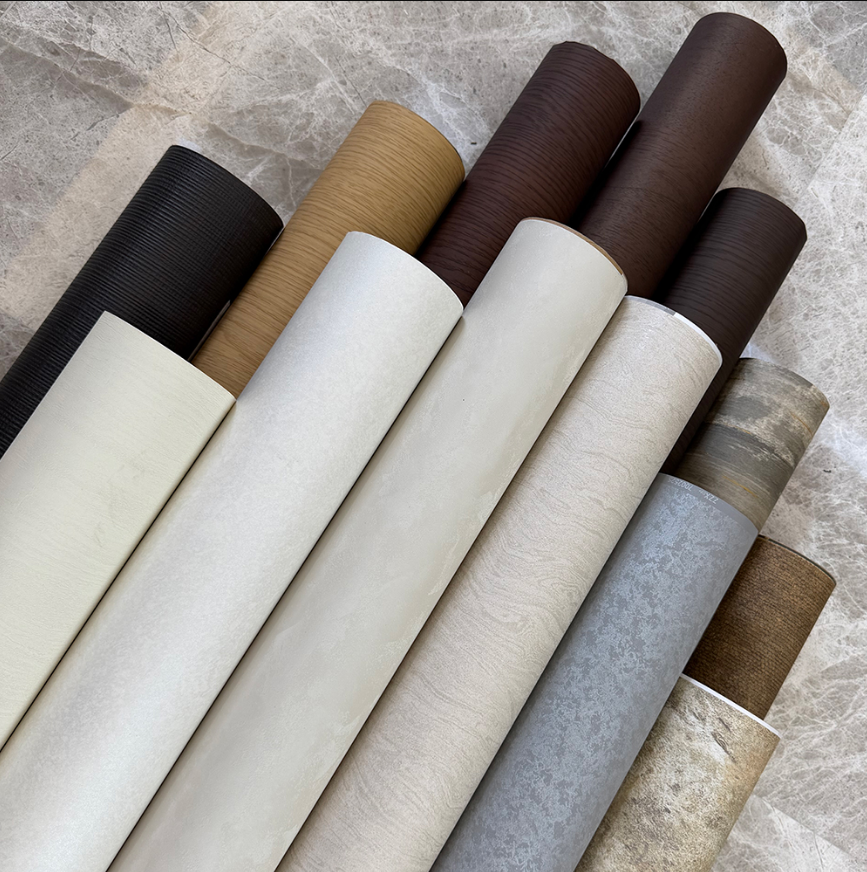
Daily use exposes doors to scratches, fingerprints, moisture, and general wear. Public buildings, apartments, hotels, and office spaces experience even greater surface stress because of constant traffic. Decorative film for doors offers a practical approach that combines visual enhancement with protective performance, helping extend the service life of door panels without extensive renovation.
Rather than treating decoration and protection as separate functions, modern decorative films integrate both into a single engineered material. Multiple layers work together to provide appearance, durability, adhesion, and environmental resistance.
Understanding Film Construction
A decorative door film is not simply a printed sticker. Industrial-grade products typically consist of several functional layers:
A transparent protective coating guards against abrasion.
A decorative printing layer creates the desired pattern.
A polymer base provides strength and flexibility.
An adhesive system bonds the film to the substrate.
A release liner protects the adhesive during storage and handling.
The total construction thickness commonly ranges between 0.12 mm and 0.50 mm depending on application needs. Thicker structures may provide additional impact resistance, while thinner films simplify profile wrapping and curved surface applications.
Protection Against Everyday Damage
One practical advantage of decorative film for doors is surface protection.
Door panels frequently encounter:
Keys and metal objects.
Moving furniture.
Cleaning equipment.
Children's toys.
Pet contact.
Frequent hand touching.
Protective coatings help reduce visible scratches and maintain a cleaner appearance.
Some decorative films incorporate low-gloss finishes that minimize the visibility of fingerprints and minor abrasions. Embossed textures further disguise small imperfections created through normal use.
Moisture Resistance
Wood-based doors can experience surface deterioration in humid environments.
Decorative films create an additional barrier that helps resist:
Water splashes.
Steam exposure.
Humidity changes.
Household cleaning products.
Bathrooms, kitchens, hotels, and healthcare facilities often require door surfaces that tolerate repeated cleaning cycles while maintaining their decorative appearance.
Proper edge sealing and correct installation play important roles in long-term moisture resistance.
Technical Parameters That Matter
Selecting decorative film involves more than choosing a pattern.
Important technical characteristics include:
Film thickness:
0.12 mm to 0.50 mm.
Working width:
1000 mm to 1420 mm.
Elongation:
Above 150% for vacuum forming applications.
Abrasion resistance:
Higher cycle ratings improve wear performance.
Peel strength:
Strong adhesion reduces separation risks.
Temperature resistance:
Commercial grades may tolerate temperatures approaching 80°C.
UV resistance:
Stabilizers help maintain color consistency.
These properties influence both manufacturing efficiency and finished product durability.
Door Renovation Without Replacement
Replacing doors often involves:
Removing hardware.
Adjusting frames.
Painting.
Material disposal.
Extended installation time.
Decorative film for doors offers an alternative for refurbishment projects.
Existing surfaces can be updated with:
Wood grain finishes.
Stone-inspired patterns.
Metallic effects.
Fabric textures.
Solid contemporary colors.
This flexibility allows designers to coordinate interiors while reducing construction disruption.
Commercial Applications
Commercial environments place unique demands on door surfaces.
Hotels require consistent appearance across hundreds of rooms.
Offices seek finishes that match modern furniture systems.
Retail spaces benefit from coordinated branding elements.
Healthcare facilities need surfaces that support regular cleaning.
Educational buildings experience continuous daily traffic.
Decorative films can be adapted to different project requirements while simplifying maintenance.
Installation Quality Influences Performance
Surface preparation directly affects film durability.
Professional installers generally recommend:
Cleaning contaminants thoroughly.
Repairing dents and cracks.
Ensuring smooth substrate conditions.
Applying film under controlled temperatures.
Removing trapped air during installation.
Proper edge finishing improves appearance and reduces lifting risks over time.
Industrial manufacturing processes such as vacuum pressing and profile wrapping create consistent bonding across large production volumes.
Long-Term Care
Maintaining decorative film surfaces requires relatively simple procedures.
Use soft cleaning cloths.
Apply mild cleaning solutions.
Avoid abrasive powders.
Prevent contact with aggressive solvents.
Inspect edges during routine maintenance.
Prompt cleaning prevents staining and helps preserve the protective coating.
Emerging Developments
Decorative surface technology continues to evolve.
Current product development includes:
Anti-fingerprint coatings.
Matte soft-touch finishes.
Enhanced scratch resistance.
Improved UV stability.
Digital customized patterns.
Lower-emission production methods.
Advanced adhesive technologies.
These innovations expand design possibilities while supporting practical performance goals.
Decorative film for doors has developed into a multifunctional surface material rather than a purely decorative product. By combining protective coatings, engineered polymer structures, durable adhesives, and realistic printed textures, it helps extend door service life while refreshing interior spaces. Whether used in residential renovation or commercial construction, carefully specified decorative films provide an effective balance between appearance, durability, and maintenance efficiency.

 English
 Arabic
 French
 Spanish
 Portuguese
 Deutsch
 Turkish
 Dutch
Dutch
 Italiano
 Russian
 Romaian
 Greek
Greek
