


How Does Aluminum Pot Set Improve Cooking?
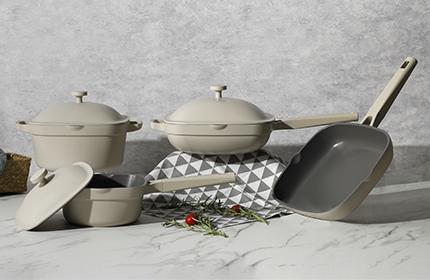
A Practical Aluminum Pot Set plays a key role in improving cooking efficiency through its material properties, structural design, and thermal performance characteristics. Unlike heavier cookware materials, aluminum provides rapid heat transfer and consistent thermal distribution, making it suitable for both beginner and experienced cooking environments.
At the core of its performance is aluminum’s high thermal conductivity. Heat spreads across the pot surface within seconds of contact with the flame or heating element. In practical terms, this reduces preheating time by approximately 20–40% compared to stainless steel cookware, depending on thickness and stove type. This fast response allows users to adjust cooking temperatures more precisely during preparation.
Most Practical Aluminum Pot Set designs incorporate multi-layer construction techniques. A common structure includes:
Outer aluminum body for heat conduction
Reinforced base layer for stability
Optional stainless steel induction plate for compatibility
The base thickness usually ranges from 2.0 mm to 4.5 mm, depending on product grade. Thicker bases improve heat retention and reduce warping under high-temperature cycles. This is particularly important for long simmering sessions or repeated daily use.
Cooking versatility is another key feature. A single set may include:
Small saucepan (1–2L) for sauces or heating milk
Medium pot (3–4L) for pasta or vegetables
Large stock pot (5–8L) for soups or batch cooking
This multi-unit structure allows simultaneous meal preparation, improving kitchen workflow efficiency. For example, sauces and main ingredients can be cooked separately but simultaneously without switching cookware.
Surface technology also enhances performance. Many aluminum pots use hard-anodized treatment, which creates a dense oxide layer on the surface. This layer improves corrosion resistance and increases hardness, making the cookware more resistant to scratches and everyday wear. Alternatively, non-stick coatings reduce food adhesion and oil consumption, supporting healthier cooking methods.
Heat distribution is especially important when cooking delicate dishes. Aluminum ensures fewer hot spots, which helps maintain stable simmering conditions. This is critical for recipes like custards, broths, and slow-cooked sauces where temperature consistency directly affects texture and flavor outcome.
In terms of energy efficiency, aluminum cookware requires less fuel or electricity due to faster heat-up times. This can contribute to reduced energy consumption in both residential and small commercial kitchens.
Maintenance is also straightforward. A Practical Aluminum Pot Set typically requires only mild detergent and soft sponges for cleaning. Avoiding abrasive tools helps preserve surface integrity, especially for coated versions.
From a practical standpoint, aluminum cookware improves overall cooking workflow by combining fast heating, lightweight handling, and multi-purpose design. These characteristics make it a functional tool for daily meal preparation across a wide range of cooking styles.

 English
 Arabic
 French
 Spanish
 Portuguese
 Deutsch
 Turkish
 Dutch
Dutch
 Italiano
 Russian
 Romaian
 Greek
Greek
