


How Are Tiling Tools Evolving?
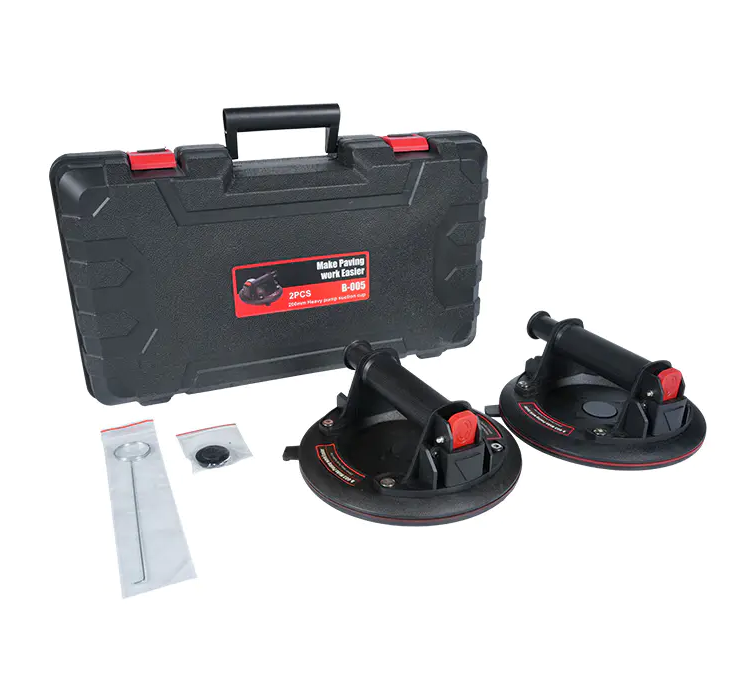
Tile installation has become increasingly technical as building materials continue to develop. Thin porcelain panels, textured ceramic surfaces, and natural stone slabs require greater installation accuracy than older products. Modern equipment is designed to help installers maintain alignment, improve adhesive coverage, and reduce material waste throughout the project.
A professional Tiling Tools Manufacturer follows these industry changes by developing products that balance durability, precision, and user comfort. The goal is not simply to produce tools but to provide practical solutions for different installation environments.
Large Tiles Require New Solutions
Many construction projects now use tiles exceeding 600 mm in length. Some decorative wall panels reach dimensions of 1200×2400 mm while maintaining relatively thin profiles.
Handling these products requires specialized equipment.
Large tile suction cups commonly feature:
Vacuum diameter:
200 mm to 250 mm.
Single cup load:
40 kg to 60 kg.
Double cup load:
80 kg to 120 kg.
Triple cup load:
Up to 150 kg.
Natural rubber sealing rings help maintain stable vacuum pressure on smooth surfaces.
These handling tools reduce movement during positioning and lower the risk of accidental damage.
Directional Adhesive Application
Applying adhesive evenly helps improve tile bonding.
Modern notched trowels are available with several profiles:
Square notch.
U notch.
V notch.
Slant notch.
Common blade thickness ranges from 0.7 mm to 1.2 mm.
Blade materials often include stainless steel with polished surfaces to reduce adhesive sticking.
Handle materials include wood, polypropylene, and thermoplastic rubber.
Straight adhesive ridges encourage air movement beneath the tile as pressure is applied during installation.
A Tiling Tools Manufacturer may offer interchangeable trowel systems so installers can change notch sizes without replacing the complete tool.
Tile Spacers Improve Joint Consistency
Uniform grout lines contribute to the visual appearance of tiled surfaces.
Plastic spacers are available in:
1 mm.
1.5 mm.
2 mm.
3 mm.
5 mm.
8 mm.
10 mm.
Cross, T-shape, and horseshoe styles suit different installation layouts.
Injection-molded polyethylene provides flexibility while resisting breakage.
Reusable spacers made from engineering plastics support repeated construction projects.
Rubber Mallets Protect Tile Surfaces
Adjusting tile position requires controlled force.
Rubber mallets generally feature:
Weight:
250 g.
500 g.
750 g.
1000 g.
Head hardness:
65 to 80 Shore A.
Fiberglass or steel handle construction.
Soft impact helps seat tiles without damaging glazed finishes.
Anti-slip grips improve handling in wet working conditions.
Tile Hole Cutters Expand Installation Options
Bathrooms and kitchens require accurate openings for pipes and fixtures.
Diamond hole saw specifications often include:
Diameter:
6 mm to 120 mm.
Diamond coating height:
10 mm.
Cutting depth:
35 mm.
Connection:
M14 thread or hex shank.
Vacuum brazed diamond particles increase cutting efficiency on porcelain and granite materials.
Water cooling can extend tool life during continuous operation.
Mixing Buckets And Cleaning Systems
Clean mixing and washing improve installation quality.
Mixing buckets commonly range from:
20 L to 40 L capacity.
Polypropylene wall thickness:
3 mm to 5 mm.
Grout washing systems may include:
Dual rollers.
Removable sediment trays.
High-density sponge floats.
Integrated cleaning systems reduce excess grout residue and simplify maintenance.
Storage And Transportation
Construction sites expose equipment to dust, moisture, and impact.
Modern tool cases often feature:
High-impact polypropylene shells.
Metal locking mechanisms.
Foam inserts for tool protection.
IP-rated sealing designs for dust resistance.
Organized storage helps reduce equipment loss and transportation damage.
A Tiling Tools Manufacturer may supply complete installation kits for wholesalers and contractors, combining cutting tools, trowels, spacers, leveling systems, floats, and accessories.
Manufacturing Quality Matters
Tool performance depends heavily on production control.
Common quality checks include:
Dimensional measurement.
Blade flatness inspection.
Weld strength testing.
Handle pull-force evaluation.
Plastic impact resistance testing.
Surface coating adhesion tests.
These procedures help maintain consistency between production batches.
Environmental Considerations
Reusable wedges and spacers reduce disposable plastic consumption.
Stainless steel components can be recycled after long service periods.
Water-based surface treatments are increasingly adopted during manufacturing to reduce emissions.
Packaging materials are gradually shifting toward recyclable cardboard and paper cushioning.
Future Development
Digital measurement devices, laser alignment systems, and lightweight composite materials continue to influence the tiling industry. Contractors seek products that simplify installation while maintaining stable performance across residential and commercial projects.
A dependable Tiling Tools Manufacturer pays attention to installer feedback and adapts product designs to changing construction methods. Combining practical engineering with durable materials supports efficient workflows and helps achieve consistent installation results across a wide range of tile applications.
Reliable tiling equipment remains an important part of modern construction, supporting precision, reducing waste, and improving project productivity from preparation to final grouting.

 English
 Arabic
 French
 Spanish
 Portuguese
 Deutsch
 Turkish
 Dutch
Dutch
 Italiano
 Russian
 Portuguese (Brazil)
 Greek
Greek
