


What Materials Work With Grinding Wheels?
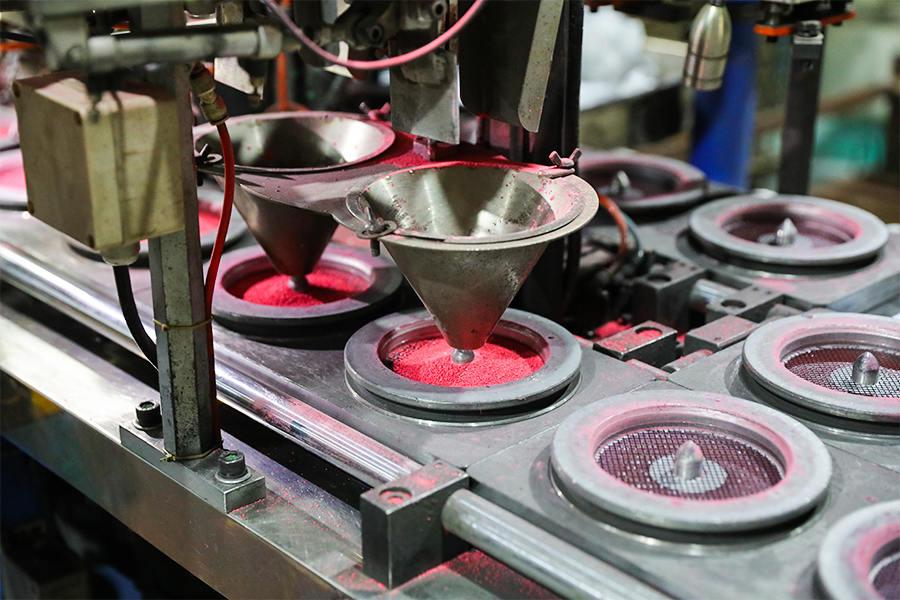
Industrial grinding operations depend on abrasive technology that can handle different metals with stability and predictable cutting behavior. The Metal Grinding Disc Grinding Wheel is designed specifically for this purpose, combining engineered abrasive grains and controlled bonding systems to achieve consistent material removal.
Grinding action is not similar to cutting with a blade. Instead, it works through thousands of microscopic abrasive points that fracture and shear material from the work surface. Each grain acts like a tiny cutting edge, continuously renewing itself as it wears down.
Abrasive Types and Their Functions
The performance of a Metal Grinding Disc Grinding Wheel depends largely on the abrasive material used:
Aluminum oxide: suitable for carbon steel and general metal grinding
Silicon carbide: used for non-ferrous metals and softer alloys
Zirconia alumina: designed for stainless steel and high-load grinding
Ceramic alumina: supports high-pressure grinding with self-sharpening behavior
These abrasive materials are selected based on hardness compatibility with the workpiece. Harder metals require more durable abrasives, while softer metals require sharper but less rigid grains.
Wheel Construction and Bond Technology
A grinding disc is composed of abrasive grains bonded by resin or vitrified materials. Resin-bonded wheels are commonly used in portable angle grinders because they provide flexibility and shock resistance.
The bonding structure influences:
Grain retention strength
Cutting aggressiveness
Heat resistance
Wheel lifespan
A tighter bond holds grains longer, making the wheel last more under light pressure. A softer bond releases grains faster, improving cutting performance on harder materials.
Mechanical Operation on Metal Surfaces
When the Metal Grinding Disc Grinding Wheel contacts a metal surface, friction causes micro-fracturing of abrasive grains. This exposes new sharp edges, maintaining cutting efficiency throughout usage.
Grinding angles also influence performance:
5°–15°: surface grinding and weld smoothing
15°–30°: aggressive material removal
90°: edge grinding (only with reinforced discs)
Incorrect angle usage can increase vibration and reduce wheel life.
Thermal Effects During Grinding
Heat generation is a critical factor in grinding operations. Excess heat may cause:
Surface burn marks
Metallurgical changes in steel
Reduced dimensional accuracy
To manage this, wheel structure includes controlled porosity for air circulation. Open-structured wheels help reduce temperature buildup during continuous grinding operations.
In industrial environments, controlled feed pressure is also used to maintain stable grinding temperature. Excessive force can overload the abrasive grains, causing premature wear.
Common Industrial Applications
The Metal Grinding Disc Grinding Wheel is widely applied in:
Steel fabrication workshops
Shipbuilding metal surface preparation
Automotive repair welding cleanup
Structural steel finishing
Maintenance of industrial equipment
Each application requires different grit levels and bond strength depending on material thickness and finish requirements.
Wear Patterns and Efficiency Control
Wear behavior depends on how evenly the abrasive grains are distributed. Uneven wear can cause vibration and inconsistent surface finish. High-quality wheel design ensures balanced grain dispersion and stable rotation at high RPM.
Operators often choose different grit sequences for multi-stage grinding:
Coarse grit for initial shaping
Medium grit for leveling
Fine grit for finishing
Summary
The Metal Grinding Disc Grinding Wheel is an engineered abrasive solution designed for controlled metal removal across different industrial environments. Its performance is determined by abrasive composition, bonding system, and operational parameters such as speed and pressure. Understanding these factors helps improve grinding consistency, reduce tool wear, and maintain stable machining quality.

 English
 Arabic
 French
 Spanish
 Portuguese
 Deutsch
 Dutch
Dutch
 Italiano
 Russian
 Romaian
 Portuguese (Brazil)
 Greek
Greek
