


What Materials Suit Diamond Hole Saw Use?
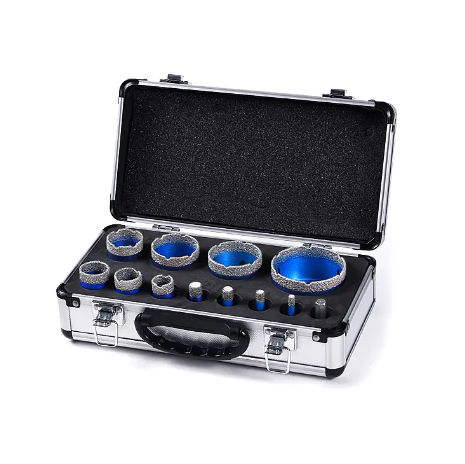
The Electroplated Diamond Hole Saw is designed specifically for machining brittle and high-hardness non-metallic materials. Its application range is broad, covering construction, interior installation, glass fabrication, and decorative stone processing. The tool is engineered to reduce edge damage while maintaining stable cutting performance across multiple material types.
Industry references show that diamond hole saws are commonly used for drilling glass, ceramic, porcelain, tile, slate, marble, limestone, and similar materials where conventional high-speed steel tools cannot maintain durability or cutting precision.
Core Application Areas
1. Glass Processing
Glass drilling requires extreme control due to its brittle nature. The electroplated diamond coating ensures gradual grinding rather than sudden impact cutting. This reduces cracking risk and allows clean circular holes for:
Bathroom glass installations
Aquarium air and filtration ports
Decorative glass panels
Lighting fixture openings
Typical glass thickness supported: 3 mm to 12 mm for standard operation
2. Ceramic and Porcelain Tile Installation
Ceramic tiles used in kitchens and bathrooms require precise drilling for plumbing, mounting fixtures, and electrical routing. The Electroplated Diamond Hole Saw allows smooth hole edges without chipping glaze layers.
Recommended drilling speed for ceramic:
1500–2500 RPM
Constant water cooling
Light and steady pressure
Porcelain, being denser, requires slower speed and increased cooling to maintain tool life.
3. Stone and Mineral-Based Materials
Light stone materials such as marble, limestone, and slate can be processed using electroplated diamond tools. However, hardness variations require careful control. The tool is suitable for:
Decorative stone panels
Interior wall stone drilling
Light architectural stone modifications
Hard granite applications are possible only in thin sections or low-load conditions.
4. Fiberglass and Composite Panels
Modern construction often uses fiberglass-reinforced plastics. These materials are abrasive to standard drill bits due to internal fibers. The diamond-coated rim cuts through without fraying edges.
Technical Performance Factors
Key parameters influencing performance include:
Diamond grit density (typically 50–60 mesh)
Nickel layer thickness and bonding quality
Rim structure (continuous or serrated)
Core ventilation for debris removal
Tool body thickness affecting vibration control
Some advanced versions include multi-layer electroplating technology, improving diamond exposure consistency and extending usable life cycles compared to single-layer designs.
Operational Guidelines
To achieve stable performance:
Maintain constant water flow on cutting area
Avoid high-speed drilling which increases heat stress
Do not apply excessive downward force
Begin drilling at a slight tilt for positioning stability
Clear slurry buildup frequently during deep cuts
Industry Value
The electroplated diamond structure allows manufacturers and installers to perform precise drilling without switching between multiple tools. This reduces workflow interruption and increases consistency across repetitive installation tasks.
From construction finishing to architectural glass work, the Electroplated Diamond Hole Saw serves as a versatile solution for controlled drilling in brittle materials. Its combination of diamond abrasion technology and electroplated bonding ensures predictable performance across a wide range of non-metal applications.

 English
 Arabic
 Spanish
 Portuguese
 Deutsch
 Turkish
 Dutch
Dutch
 Italiano
 Russian
 Romaian
 Portuguese (Brazil)
 Greek
Greek
