


Is Biomass Steam Boiler Energy Efficient?
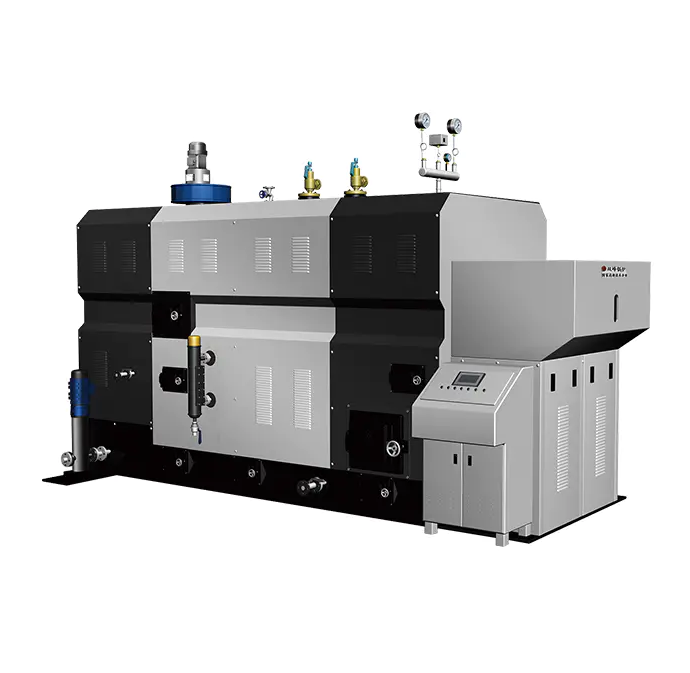
A Biomass Steam Boiler is engineered to convert solid renewable fuel into usable thermal energy with controlled combustion and heat recovery systems. Efficiency depends on furnace design, heat exchange structure, and the stability of fuel feeding.
Modern industrial biomass boilers typically achieve thermal efficiency between 80% and 92%, depending on fuel type and system configuration . This performance range makes them a practical solution for industries requiring continuous steam supply.
Furnace Structure and Combustion Stability
The furnace is the core of energy conversion. Biomass fuel enters through automatic feeding equipment and is distributed evenly across a chain grate or reciprocating grate system.
Inside the furnace, combustion is divided into temperature zones:
Low-temperature drying zone
Volatile release and ignition zone
High-temperature combustion zone
Ash burnout zone
This staged combustion design ensures stable flame formation and reduces incomplete combustion losses.
Heat Transfer System Design
Heat generated in the furnace is absorbed by water walls and heat exchange tubes. The system includes:
Water-cooled furnace walls
Steam drum for vapor separation
Convection tube bundles for heat absorption
Water gradually transforms into high-pressure steam under controlled circulation conditions. Depending on design, steam pressure may range from 1.0 MPa up to 2.5 MPa, while steam temperature can exceed 200°C in industrial applications .
Fuel Flexibility and Adaptation
Biomass boilers are designed to handle multiple fuel types such as:
Wood pellets
Agricultural straw
Rice husk
Coconut shell
Biomass briquettes
Fuel calorific value and moisture content directly influence combustion efficiency. Lower moisture content generally improves ignition speed and thermal output stability.
Efficiency Enhancement Systems
Several auxiliary systems improve performance:
Economizer: recovers heat from flue gas
Air preheater: warms combustion air
Induced draft fan: stabilizes furnace pressure
Dust collector: reduces particulate emissions
These components work together to reduce heat loss and improve fuel utilization efficiency.
Typical Industrial Specifications
A representative configuration may include:
Capacity: 2–20 t/h
Working pressure: 1.25–2.5 MPa
Steam temperature: 194–226°C
Water volume: varies from 6–22 m³ depending on model
Exhaust temperature: approximately 165–175°C
These values reflect common industrial-grade biomass steam systems used in continuous production environments.
Operational Efficiency Factors
Efficiency performance is influenced by:
Fuel feeding stability
Combustion air distribution
Heat exchange surface condition
Ash removal speed
Flue gas temperature control
Even small variations in fuel moisture or air ratio can affect steam output consistency.
Industrial Usage Scenarios
Typical applications include:
Textile production lines
Food processing plants
Chemical heating systems
Paper manufacturing
Drying and sterilization systems
Stable steam output ensures process continuity in multi-shift production environments.
Conclusion
A Biomass Steam Boiler achieves efficient energy conversion through staged combustion, advanced heat exchange, and multi-stage heat recovery systems. Its performance depends on fuel quality, furnace design, and operational control systems, making it a flexible option for industrial steam applications.

 English
 Arabic
 French
 Spanish
 Portuguese
 Deutsch
 Turkish
 Italiano
 Russian
 Romaian
 Portuguese (Brazil)
 Greek
Greek
