


Internal Thread Globe Valve in Steam Systems
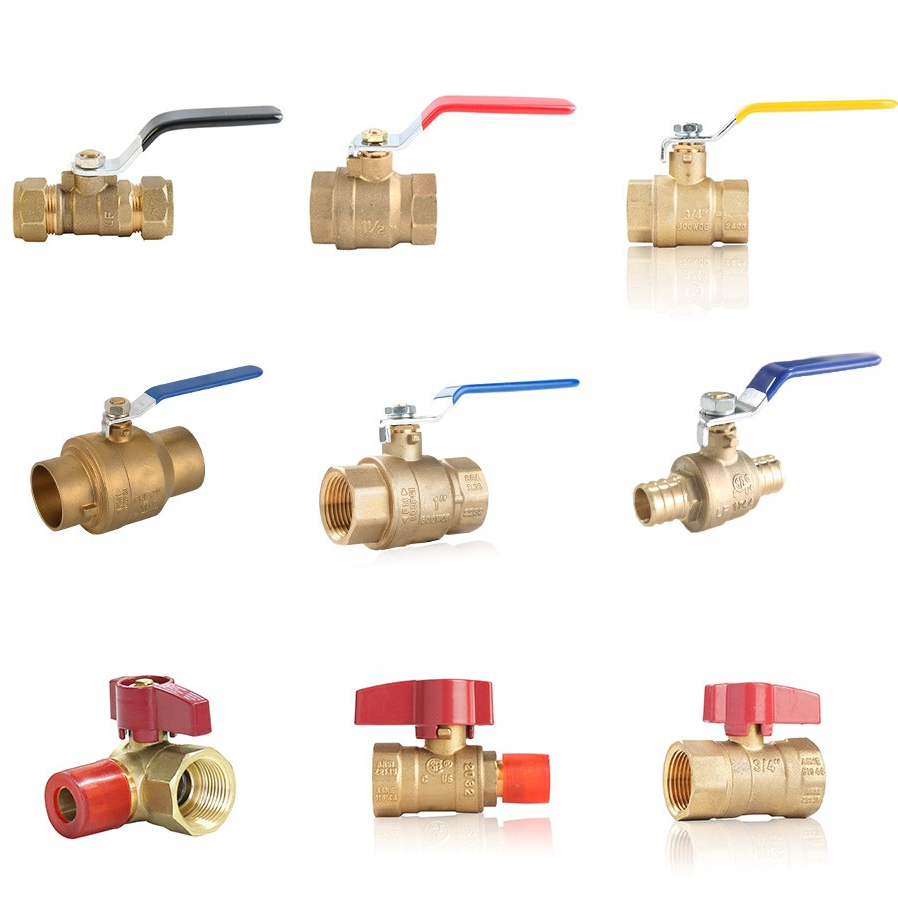
Industrial piping systems rely heavily on stable pressure regulation to maintain safe and efficient operation. The Internal Thread Globe Valve is commonly used in such environments due to its ability to provide controlled throttling and reliable sealing under varying conditions.
Unlike straight-through valves, globe valves are engineered with an internal baffle structure that forces fluid to change direction inside the valve body. This design improves control accuracy and allows operators to fine-tune flow rates with precision .
Engineering Structure and Material Selection
The Internal Thread Globe Valve is typically constructed using forged or cast stainless steel. Common configurations include:
Body material: SS304 / SS316
Pressure rating: PN16 to PN40 (approx. 1.6–4.0 MPa)
Nominal size: DN6–DN50
Operating temperature: up to 200°C depending on sealing system
Connection type: BSPT / NPT internal threads
The internal threading design eliminates the need for flange welding, making it suitable for compact installations or retrofit systems.
Stem components are usually precision-machined to reduce friction during operation. Packing systems often use PTFE rings for low-temperature sealing or graphite-based materials for higher thermal resistance.
Flow Control Behavior and Performance
The core function of the Internal Thread Globe Valve is throttling. As the handwheel rotates, the stem moves linearly, gradually changing the gap between the disc and seat.
This structure provides a near-linear flow control characteristic, meaning flow changes proportionally with stem movement. This makes it easier for engineers to adjust system conditions without sudden pressure fluctuations.
However, the internal flow path creates multiple directional changes, which results in moderate pressure drop. In steam or gas systems, this characteristic must be considered during pipeline design to avoid unnecessary energy loss.
Steam and Thermal System Applications
One of the key application areas is steam distribution. In these systems, stable pressure control is essential to prevent equipment stress and thermal imbalance.
Typical use cases include:
Steam tracing pipelines
Heating exchangers
Condensate return lines
Auxiliary boiler systems
The valve’s stainless steel construction allows it to handle elevated temperatures, often up to 350°C in reinforced designs. Sealing systems are selected based on temperature and media compatibility.
Installation and Maintenance Characteristics
Internal threaded connections make installation straightforward in tight spaces. This is especially useful in modular equipment systems where pipelines must be assembled in confined layouts.
Maintenance is relatively simple:
Packing can be adjusted without full disassembly
Valve bonnet can be removed for internal inspection
Seat surfaces can be reconditioned in some designs
Service life depends heavily on operating frequency and media cleanliness. Clean fluids significantly extend disc and seat durability.
System Integration Considerations
When integrating an Internal Thread Globe Valve into a system, engineers must consider:
Pressure loss across valve body
Flow direction alignment
Material compatibility with media
Thermal expansion under operating temperature
Proper selection ensures stable performance in long-term industrial operation.

 English
 Arabic
 French
 Spanish
 Portuguese
 Deutsch
 Turkish
 Italiano
 Russian
 Romaian
 Portuguese (Brazil)
 Greek
Greek
