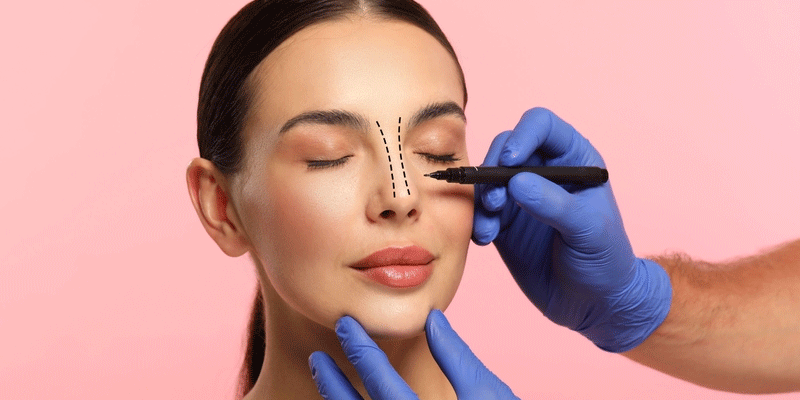
Rhinoplasty is a surgical procedure that reshapes the nose to improve facial harmony, correct structural issues, or enhance breathing function. Because every nose is unique, rhinoplasty is not a one-size-fits-all procedure. Instead, different techniques and approaches are used depending on the patient’s anatomy and desired outcome.
For individuals considering rhinoplasty in Riyadh, understanding the different types of nose reshaping procedures can help clarify expectations and make the decision-making process easier. This guide explains the main categories of rhinoplasty and how each one works.
Understanding Rhinoplasty
Rhinoplasty involves modifying the bone, cartilage, and soft tissues of the nose to improve appearance or function. It can be performed for cosmetic enhancement, medical correction, or both.
Common goals include:
- Improving nose shape
- Refining nasal tip
- Correcting asymmetry
- Improving breathing
- Repairing nasal injuries
Different techniques are chosen based on these goals.
Open Rhinoplasty
Open rhinoplasty is one of the most commonly used techniques, especially for complex cases.
How It Works
In this approach, a small incision is made at the base of the nose between the nostrils, allowing the skin to be lifted for better visibility.
Benefits
- Better access to nasal structures
- More precise reshaping
- Suitable for complex corrections
- Improved control over nasal symmetry
When It Is Used
Open rhinoplasty is often recommended for:
- Major structural changes
- Severe asymmetry
- Revision surgeries
- Detailed tip refinement
Closed Rhinoplasty
Closed rhinoplasty is a technique where all incisions are made inside the nostrils.
How It Works
The surgeon operates through internal incisions without external cuts.
Benefits
- No visible external scar
- Less tissue disruption
- Potentially faster early recovery
- Reduced swelling in some cases
When It Is Used
Closed rhinoplasty is typically used for:
- Minor reshaping
- Bridge adjustments
- Small structural corrections
Tip Plasty (Nasal Tip Rhinoplasty)
Tip plasty focuses specifically on reshaping the nasal tip without major changes to the rest of the nose.
What It Corrects
- Bulbous tip
- Drooping tip
- Asymmetrical tip
- Lack of definition
Benefits
- Subtle enhancement
- Shorter procedure time
- Focused refinement of appearance
This is ideal for patients who are satisfied with most of their nose but want improvement in the tip area.
Reduction Rhinoplasty
Reduction rhinoplasty focuses on decreasing the size or prominence of the nose.
What It Addresses
- Large nasal bridge
- Wide nose
- Over-projection
- Bulky appearance
Benefits
- More balanced facial proportions
- Refined nasal structure
- Improved side profile
This type of rhinoplasty is commonly chosen for aesthetic improvement.
Augmentation Rhinoplasty
Augmentation rhinoplasty is performed to build up or enhance parts of the nose that lack structure.
What It Corrects
- Flat nasal bridge
- Low nasal projection
- Lack of definition
Techniques Used
- Cartilage grafting
- Structural support adjustments
Benefits
- Improved nasal height
- Better facial balance
- Enhanced profile definition
Functional Rhinoplasty
Functional rhinoplasty focuses on improving nasal breathing rather than appearance alone.
What It Treats
- Deviated septum
- Nasal obstruction
- Narrow airways
- Structural breathing issues
Benefits
- Improved airflow
- Better sleep quality
- Enhanced physical comfort
- Reduced nasal blockage
This procedure can also be combined with cosmetic improvements.
Revision Rhinoplasty
Revision rhinoplasty is performed to correct or improve results from a previous nose surgery.
Why It Is Needed
- Unsatisfactory cosmetic results
- Breathing difficulties after surgery
- Asymmetry or irregular healing
- Structural complications
Challenges
- More complex than primary surgery
- Requires detailed planning
- Often involves scar tissue correction
Ethnic Rhinoplasty
Ethnic rhinoplasty focuses on enhancing the nose while preserving natural ethnic identity.
Key Focus Areas
- Maintaining natural facial characteristics
- Respecting cultural features
- Achieving balanced refinement
Benefits
- Natural-looking enhancement
- Personalized surgical approach
- Preservation of identity
Non-Surgical Rhinoplasty (Liquid Rhinoplasty)
Non-surgical rhinoplasty uses injectable fillers to temporarily reshape the nose.
What It Can Do
- Smooth minor bumps
- Improve nasal symmetry
- Enhance bridge definition
Limitations
- Temporary results
- Cannot reduce nose size
- Not suitable for major corrections
Structural Rhinoplasty
Structural rhinoplasty focuses on strengthening the internal framework of the nose.
Purpose
- Improve long-term stability
- Prevent collapse
- Support nasal shape
Benefits
- Stronger nasal structure
- Long-lasting results
- Better functional support
Choosing the Right Type of Rhinoplasty
The best procedure depends on several factors:
- Nasal anatomy
- Aesthetic goals
- Functional concerns
- Skin thickness
- Previous surgeries
- Overall facial balance
A thorough evaluation is necessary to select the most appropriate technique.
Combining Different Techniques
In many cases, more than one rhinoplasty technique is used together.
For example:
- Open rhinoplasty + functional correction
- Reduction + tip refinement
- Structural support + aesthetic reshaping
This combined approach helps achieve balanced and comprehensive results.
Recovery Differences Between Types
Recovery varies depending on the procedure performed.
Minor Procedures
- Faster recovery
- Less swelling
- Shorter downtime
Complex Procedures
- Longer healing period
- More swelling initially
- Gradual refinement over months
Regardless of type, final results develop over time.
Conclusion
Rhinoplasty in Riyadh includes several types of nose reshaping procedures, each designed to address specific cosmetic or functional concerns. From open and closed rhinoplasty to tip refinement, functional correction, and revision surgery, each technique plays a unique role in achieving balanced and natural-looking results.
Understanding these options helps patients make informed decisions and choose the approach that best matches their goals. With proper planning and a personalized treatment strategy, rhinoplasty can enhance facial harmony, improve breathing function, and deliver long-lasting aesthetic improvements.




 English
 Arabic
 French
 Spanish
 Portuguese
 Deutsch
 Turkish
 Dutch
Dutch
 Italiano
 Russian
 Romaian
 Greek
Greek
