


Deconstructing Revenue in the Busway Power Market
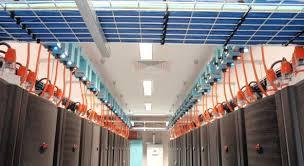
The primary sources of Data Center Busway revenue are generated almost exclusively through large-scale, project-based sales to the companies and contractors involved in building or retrofitting data center facilities. This is a capital-intensive, business-to-business market where the sales cycle is long and tied directly to the major construction projects of hyperscale cloud providers, colocation companies, and large enterprises. The revenue is not derived from small, individual transactions but from substantial contracts that can be worth millions of dollars for a single data center project. This project-based model means that the market's revenue is directly correlated with the health of the global data center construction industry, which is currently in a state of unprecedented expansion.
The most significant portion of revenue comes from the direct sale of the physical components of the busway system. This includes the linear sections of the busbar trunking, which are often sold by the foot or meter, as well as the numerous elbows, fittings, and other components needed to route the system throughout the data hall. A major and highly profitable component of the sale is the large number of tap-off boxes that are required to connect the server racks to the main busway run. For a large data center with thousands of racks, the collective value of these tap-off units represents a substantial part of the total contract value, making them a critical product for manufacturers to offer.
While the sale of hardware constitutes the bulk of the revenue, a growing and important stream comes from associated value-added services. Manufacturers are increasingly generating revenue by providing expert design and engineering support to help clients plan the optimal layout for their busway system to ensure maximum efficiency and flexibility. Some also offer installation supervision and commissioning services to ensure the system is deployed correctly and safely. Furthermore, as these systems become more complex and intelligent, there is a growing opportunity for long-term service and maintenance contracts, which can provide a valuable recurring revenue stream for manufacturers, moving them from being just an equipment supplier to a long-term operational partner.

 English
 Arabic
 French
 Spanish
 Portuguese
 Deutsch
 Turkish
 Dutch
Dutch
 Italiano
 Russian
 Romaian
 Greek
Greek
