


Why Material Choice Matters?
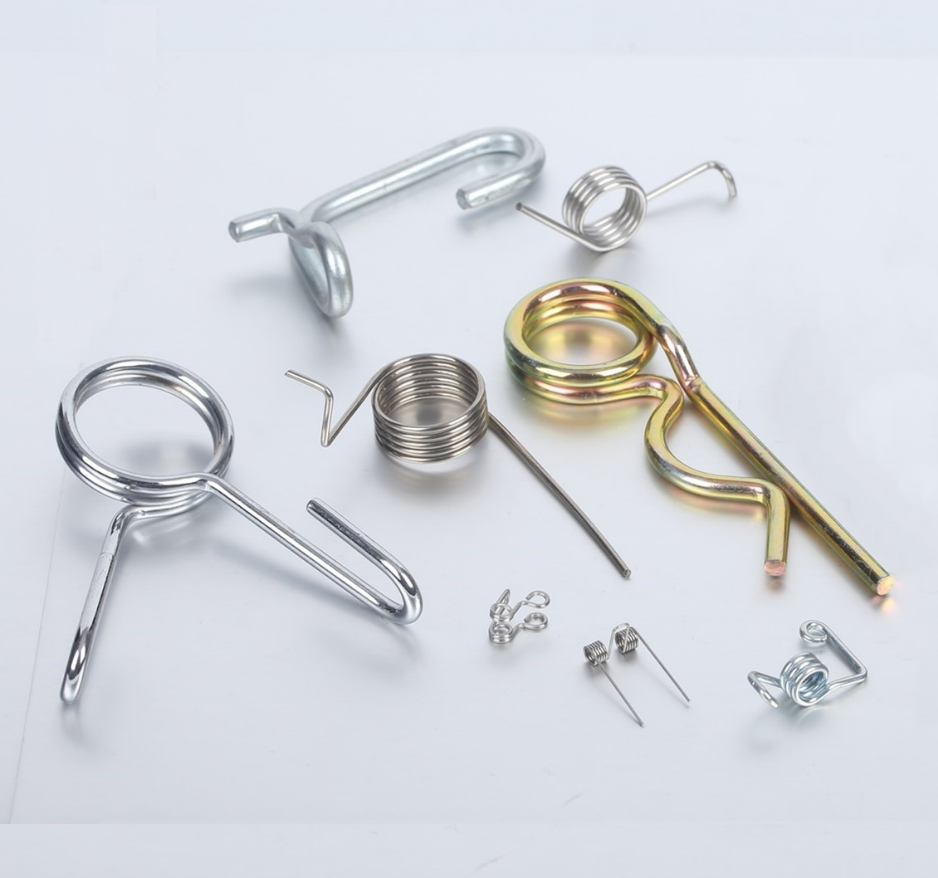
Every mechanical assembly contains components that quietly support movement, positioning, retention, or vibration control. Although these parts are rarely visible after installation, they contribute significantly to the reliability of industrial equipment. One such component is the Stainless Steel Wire Forming Spring, a customized elastic part designed to meet specific installation requirements while providing stable mechanical performance across repeated operating cycles.
Unlike traditional compression or extension springs, wire forming springs are manufactured into two-dimensional or three-dimensional geometries that allow them to perform several functions simultaneously. A single component may secure cables, provide positioning force, absorb vibration, maintain electrical contact, or lock moving mechanisms. This versatility explains why customized wire forms continue to gain popularity across many industrial sectors.
One of the first engineering decisions involves material selection. Different stainless steel grades provide different combinations of strength, corrosion resistance, fatigue performance, and manufacturing flexibility. ASTM A313 covers austenitic, duplex, and age-hardenable stainless steel spring wire intended specifically for spring manufacturing and defines requirements for chemical composition and mechanical properties.
Grade SUS302 remains a common solution for general mechanical springs. It offers relatively high tensile strength after cold drawing while maintaining good forming characteristics. Components used in industrial machinery, office equipment, and consumer products frequently rely on this material because it balances elasticity with manufacturing efficiency.
SUS304 is another widely specified material for a Stainless Steel Wire Forming Spring. Its chromium and nickel composition provides dependable corrosion resistance in humid environments, making it suitable for food processing machinery, packaging equipment, household appliances, laboratory devices, and automation systems. Since many industrial facilities perform regular cleaning using water or mild detergents, the corrosion resistance of 304 stainless steel helps maintain long-term appearance and mechanical performance.
Applications exposed to salt spray or aggressive chemicals often require SUS316 stainless steel. The addition of molybdenum improves resistance to chloride corrosion, making this material appropriate for marine equipment, chemical processing machinery, pharmaceutical devices, wastewater treatment systems, and outdoor installations. Although material cost is generally higher than 304 stainless steel, the extended durability under demanding environmental conditions often supports its selection.
Certain engineering applications require relatively high fatigue strength together with dimensional stability. In these situations, 17-7PH precipitation-hardening stainless steel becomes a practical option. After solution treatment and aging, this alloy develops greater mechanical strength while maintaining useful corrosion resistance. Aerospace components, precision instruments, and specialized industrial equipment commonly employ this material where repeated loading cycles are expected. ASTM A313 includes age-hardenable stainless steel grades intended for these applications.
The ability to customize geometry gives wire forming springs an advantage over many conventional spring designs. Modern CNC equipment can produce:
- Single-leg retaining springs
- Double-leg positioning springs
- Locking clips
- U-shaped retainers
- S-shaped wire forms
- Complex three-dimensional brackets
- Sensor retaining springs
- Electrical contact springs
- Cable support clips
- Custom assembly fixtures
These configurations allow engineers to replace several stamped or machined parts with one integrated spring component.
Automotive manufacturing represents one of the largest application areas for customized wire forming springs. Inside modern vehicles, they are installed in seat adjustment systems, fuel line retainers, brake mechanisms, interior trim assemblies, electrical connectors, cable routing clips, HVAC systems, door locking mechanisms, and hood latch assemblies. Because vehicles experience constant vibration, changing temperatures, and moisture exposure, stainless steel materials help maintain stable performance throughout long service periods.
Industrial automation equipment also depends heavily on wire forming springs. Robotic systems require accurate positioning of sensors and moving components. Conveyor systems rely on spring clips to secure protective covers and guide mechanisms. Assembly equipment uses elastic wire forms to simplify maintenance while ensuring repeatable positioning during high-speed production.
Medical equipment introduces additional design requirements. Diagnostic instruments, laboratory analyzers, surgical devices, and fluid control systems frequently incorporate Stainless Steel Wire Forming Spring components because stainless steel offers good cleanliness and corrosion resistance. Smooth surface finishes and passivation treatments further improve suitability for environments requiring frequent sterilization or cleaning.
The electronics industry presents different challenges. Miniature connectors, battery holders, switch mechanisms, communication equipment, and precision sensors require compact springs capable of producing consistent contact force within limited installation space. Wire diameters between 0.20 mm and 1.00 mm are commonly used for these compact applications.
Agricultural equipment represents another demanding environment. Machinery operating outdoors encounters mud, dust, rain, fertilizer residue, and repeated mechanical shock. Stainless wire forming springs are frequently used in linkage systems, cable retainers, protective guards, and adjustment mechanisms because corrosion resistance helps reduce maintenance requirements.
Several technical parameters are evaluated during engineering design:
Wire diameter generally ranges from 0.20 mm to 8.00 mm depending on structural requirements.
Typical tensile strength for cold-drawn stainless spring wire ranges from approximately 1200 MPa to above 1800 MPa depending on alloy and wire diameter.
Elastic modulus remains close to 193 GPa for common austenitic stainless grades.
Dimensional tolerances often include ±0.01 mm to ±0.03 mm for wire diameter and approximately ±0.10 mm for critical formed dimensions.
Operating temperatures commonly extend from approximately -40°C to 200°C, depending on material grade and application requirements.
Manufacturers also evaluate fatigue life during product development. Springs subjected to repeated loading must remain within their elastic operating range to avoid permanent deformation. Proper bend radii, controlled stress levels, and smooth surface quality all contribute to improved fatigue performance over extended service periods.
Inspection procedures normally include raw material verification, dimensional measurement, spring force testing, hardness evaluation, visual inspection, tensile testing, and corrosion resistance assessment. Some industries also require salt spray testing, metallographic examination, or traceable production documentation to verify manufacturing consistency.
As engineering products continue evolving toward lighter, more compact designs, customized elastic components play an increasingly important role. A carefully engineered Stainless Steel Wire Forming Spring combines flexible geometry, corrosion resistance, dimensional precision, and dependable fatigue performance in a single component. Through thoughtful material selection, precision CNC manufacturing, and comprehensive quality control, these springs continue supporting reliable operation across industries ranging from transportation and automation to medical equipment and advanced electronics.

 English
 Arabic
 French
 Portuguese
 Deutsch
 Turkish
 Dutch
Dutch
 Italiano
 Russian
 Romaian
 Portuguese (Brazil)
 Greek
Greek
