


Texturized Vegetable Protein Market Size Expected to Reach USD 3.1 Billion by 2036
NEWARK, DE, 1 July, 2026 — The global texturized vegetable protein market is witnessing steady growth as food manufacturers increasingly adopt plant-based protein ingredients to support rising demand for sustainable nutrition, meat alternatives, and cost-effective protein solutions. Valued at USD 1.6 billion in 2025, the market is projected to reach USD 1.7 billion by 2026-end and further grow to USD 3.1 billion by 2036, expanding at a compound annual growth rate (CAGR) of 6.2% between 2026 and 2036, according to Future Market Insights.
Texturized vegetable protein (TVP) is gaining importance as manufacturers utilize advanced extrusion and processing technologies to create high-quality plant-based ingredients with improved texture, hydration capacity, and functional performance. These ingredients are increasingly used across meat alternatives, meat extenders, snacks, commercial food production, and household applications.
Get detailed market forecasts, competitive benchmarking, and pricing trends: https://www.futuremarketinsights.com/reports/sample/rep-gb-2747
Demand growth is driven by rising adoption of plant-based diets, increasing focus on affordable protein sources, expanding alternative protein applications, and growing food industry requirements for sustainable ingredients. Conventional TVP is expected to remain the leading nature segment, accounting for 87.0% share, while Industrial End Use is projected to dominate demand with 78.5% share through 2026.
Key Texturized Vegetable Protein Market Projections and Strategic Insights
• Global Market Value (2025): USD 1.6 Billion
• Forecast Market Value (2036): USD 3.1 Billion
• Forecast CAGR (2026–2036): 6.2%
• Incremental Opportunity (2026–2036): USD 1.4 Billion
• Leading Nature Type: Conventional TVP
• Nature Type Share: 87.0%
• Leading End Use: Industrial
• End Use Share: 78.5%
• Leading Product Type: Soy Protein
• Product Type Share: 64.5%
• Key Growth Areas: Meat Alternatives, Food Processing, Sustainable Proteins
• Major Markets: Asia Pacific, North America, Europe
Analyst Perspective
"Texturized vegetable protein is becoming an important ingredient for food manufacturers developing meat extenders, hybrid foods, and plant-based products. The ability of TVP to provide stable texture, efficient hydration, and cost advantages is strengthening its adoption across industrial food applications. Companies investing in extrusion technology, formulation improvements, and sustainable sourcing will be positioned to capture future growth opportunities," said Nandini Roy Choudhury, Principal Consultant for Food and Beverage at FMI.
The texturized vegetable protein industry is transforming protein supply chains by enabling manufacturers to develop functional, affordable, and sustainable alternatives to traditional protein ingredients. Its versatility and processing compatibility make it a preferred ingredient across multiple food categories.
Key Growth Drivers
A major factor accelerating the texturized vegetable protein market is the increasing demand for affordable, sustainable, and functional plant-based protein ingredients.
Food processors are adopting TVP to manage animal protein cost pressures while maintaining product quality and nutritional value.
Key growth contributors include:
• Rising demand for plant-based meat alternatives
• Increasing adoption of vegetarian and flexitarian diets
• Growing requirement for cost-effective protein ingredients
• Expansion of processed food manufacturing
• Rising preference for sustainable food solutions
• Increasing use of hybrid meat formulations
Growing consumer interest in health, sustainability, and protein-rich diets is creating new opportunities for TVP manufacturers worldwide.
Technology & Innovation Trends
Advancements in extrusion technology, ingredient processing, and formulation techniques are improving the texture, hydration performance, and application scope of texturized vegetable protein.
Manufacturers are focusing on enhancing bite, sensory characteristics, protein functionality, and clean-label positioning to expand TVP applications.
Innovation is expanding across:
• Plant-based meat products
• Meat extenders
• Protein-rich snacks
• Ready-to-eat foods
• Functional nutrition products
• Alternative protein formulations
Soy protein remains the leading product category due to established supply chains, processing familiarity, and strong ingredient availability.
Market Challenges & Restraints
Despite strong growth prospects, the texturized vegetable protein market faces several challenges.
Consumer concerns related to ingredient preferences, competition from emerging proteins, and the need for improved sensory performance may influence market expansion.
Other challenges include:
• Competition from pea, wheat, and other plant proteins
• Texture and taste improvement requirements
• Raw material price fluctuations
• Supply chain management challenges
• Processing cost pressures
Improving product quality, enhancing consumer acceptance, and developing advanced protein blends remain key priorities for industry participants.
Segment Analysis
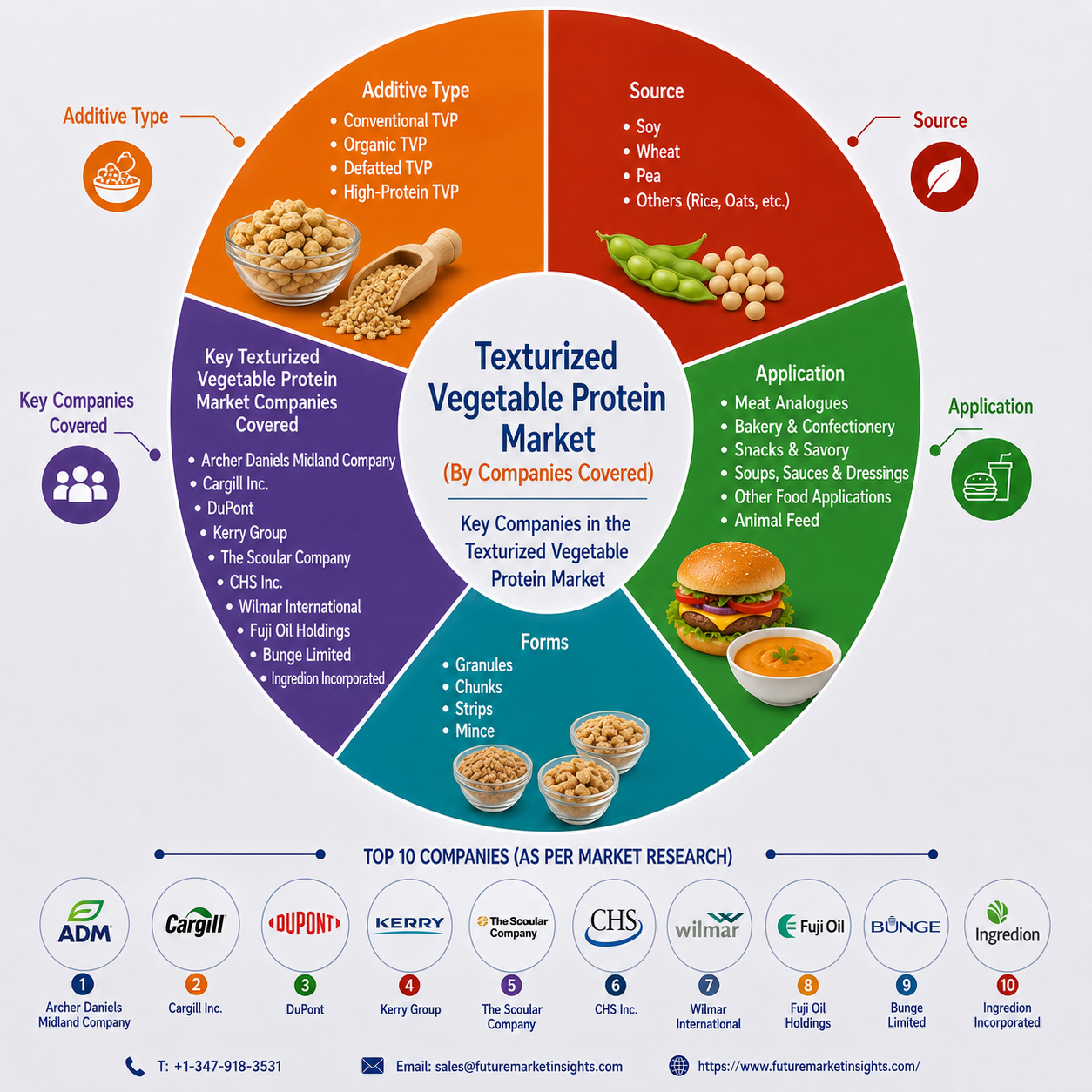
The texturized vegetable protein market is segmented by product type, form, end use, application, nature, and sales channel.
Conventional TVP is forecast to dominate the nature segment with an 87.0% share, supported by established production methods and widespread industrial usage.
Industrial end use is projected to lead with a 78.5% share in 2026, driven by increasing adoption among food manufacturers requiring reliable bulk protein ingredients.
Soy protein is expected to dominate the product type segment with a 64.5% share in 2026 due to strong processing infrastructure and broad commercial acceptance.
Application Analysis
Texturized vegetable protein is increasingly used in:
• Meat substitutes
• Meat extenders
• Snacks
• Processed foods
• Protein-based meals
• Commercial food formulations
The growing shift toward sustainable protein consumption continues to expand application opportunities across food industries.
Regional Analysis
Asia Pacific is emerging as a major growth region due to rising food processing investments, increasing protein consumption, and growing adoption of plant-based products.
India is projected to register a CAGR of 6.7% through 2036, supported by expanding food manufacturing capabilities and strong vegetarian food demand.
Japan is forecast to grow at a CAGR of 5.8% through 2036, driven by demand for high-quality prepared foods and improved texture performance.
North America and Europe continue to demonstrate demand growth due to alternative protein innovation, advanced food processing industries, and sustainability initiatives.
Customize insights for your business strategy: https://www.futuremarketinsights.com/customization-available/rep-gb-2747
Competitive Landscape
The texturized vegetable protein market is becoming increasingly competitive as ingredient manufacturers and food producers expand their plant-based protein portfolios.
Competition is focused on:
• Product performance improvement
• Extrusion technology advancement
• Sustainable sourcing
• Application development
• Supply chain optimization
Key Companies Covered
• Archer Daniels Midland Company
• Cargill Inc.
• DuPont
• Kerry Group
• The Scoular Company
• CHS Inc.
• Wilmar International
• Fuji Oil Holdings
• Bunge Limited
• Ingredion Incorporated
Leading Companies Analysis
Market participants are strengthening their position through innovation, partnerships, and expansion into alternative protein applications.
Key strategies include:
• Development of advanced TVP formulations
• Expansion of plant-based ingredient portfolios
• Investment in extrusion technologies
• Strengthening raw material sourcing networks
• Collaboration with food manufacturers
The competitive landscape is expected to intensify as demand for sustainable protein solutions continues to rise.
Investment & Strategic Developments
Investment in plant-based protein technology continues to increase as companies focus on improving efficiency, functionality, and product acceptance.
Strategic developments are centered around:
• Improving extrusion processes
• Enhancing texture and sensory performance
• Expanding application areas
• Developing soy and non-soy protein solutions
• Strengthening sustainable supply chains
Future Outlook
The future of the texturized vegetable protein market remains positive as food industries continue shifting toward sustainable and affordable protein solutions.
The market is projected to grow from USD 1.6 billion in 2025 to USD 3.1 billion by 2036, supported by rising demand for alternative proteins, expanding food processing applications, and evolving consumer preferences.
Over the next decade, advancements in processing technology, improved formulations, and wider acceptance of plant-based ingredients are expected to shape the future of texturized vegetable protein applications.
Explore In-Depth Food and Beverage Market Insights: https://www.futuremarketinsights.com/industry-analysis/food-and-beverage
Conclusion
The texturized vegetable protein market is entering a phase of steady expansion driven by increasing demand for plant-based proteins, sustainable food manufacturing, and affordable nutrition solutions.
With a projected 6.2% CAGR from 2026 to 2036, the market presents significant opportunities for ingredient manufacturers, food producers, and nutrition brands.
As global food systems increasingly prioritize sustainability, protein accessibility, and functional nutrition, texturized vegetable protein is positioned to remain a valuable ingredient in the future of food innovation.
Custom Research and Consulting Services
Future Market Insights provides customized research solutions, procurement intelligence, competitive analysis, market entry strategy development, sustainability consulting, and strategic market assessments tailored to client-specific business objectives.
Business Impact
FMI helps organizations transform market complexity into strategic clarity, enabling leadership teams to identify growth opportunities faster, optimize resource allocation, strengthen competitive positioning, and make high-stakes business decisions with confidence.
To explore how FMI Custom Research can support your strategic priorities, connect with our team at - sales@futuremarketinsights.com
Related Reports
Red Orange Anthocyanin Extract Ingredients Market: https://www.futuremarketinsights.com/reports/red-orange-anthocyanin-extract-ingredients-market
Mediterranean Lemon Bioflavonoid Shot Bases Market: https://www.futuremarketinsights.com/reports/mediterranean-lemon-bioflavonoid-shot-bases-market
Mediterranean Probiotic - Polyphenol Synbiotic Concepts Market: https://www.futuremarketinsights.com/reports/mediterranean-probiotic-polyphenol-synbiotic-concepts-market
Duckweed Protein Market: https://www.futuremarketinsights.com/reports/duckweed-protein-market
Titanium Dioxide Color Market: https://www.futuremarketinsights.com/reports/titanium-dioxide-color-market
About Future Market Insights (FMI)
Future Market Insights, Inc. (ESOMAR certified, recipient of the Stevie Award, and a member of the Greater New York Chamber of Commerce) provides deep insights into governing factors elevating demand in global markets.
FMI delivers market intelligence, consulting services, and syndicated research reports across chemicals, materials, food ingredients, pharmaceuticals, industrial manufacturing, sustainability, and advanced materials sectors.
With global expertise and industry-focused research capabilities, FMI provides actionable insights that help organizations understand market dynamics and identify emerging opportunities.
Contact
Future Market Insights Inc.
Christiana Corporate, 200 Continental Drive, Suite 401, Newark, Delaware 19713, USA
Rahul Singh
AVP - Marketing and Growth Strategy
Future Market Insights, Inc.
+91 8600020075
For Media - Rahul.singh@futuremarketinsights.com
Email: sales@futuremarketinsights.com
Website: www.futuremarketinsights.com
For Web - https://www.factmr.com/

 English
 Arabic
 French
 Spanish
 Portuguese
 Deutsch
 Turkish
 Dutch
Dutch
 Italiano
 Russian
 Portuguese (Brazil)
 Greek
Greek
