


How Much Does AI Development Cost in 2026? A Realistic Budget Guide
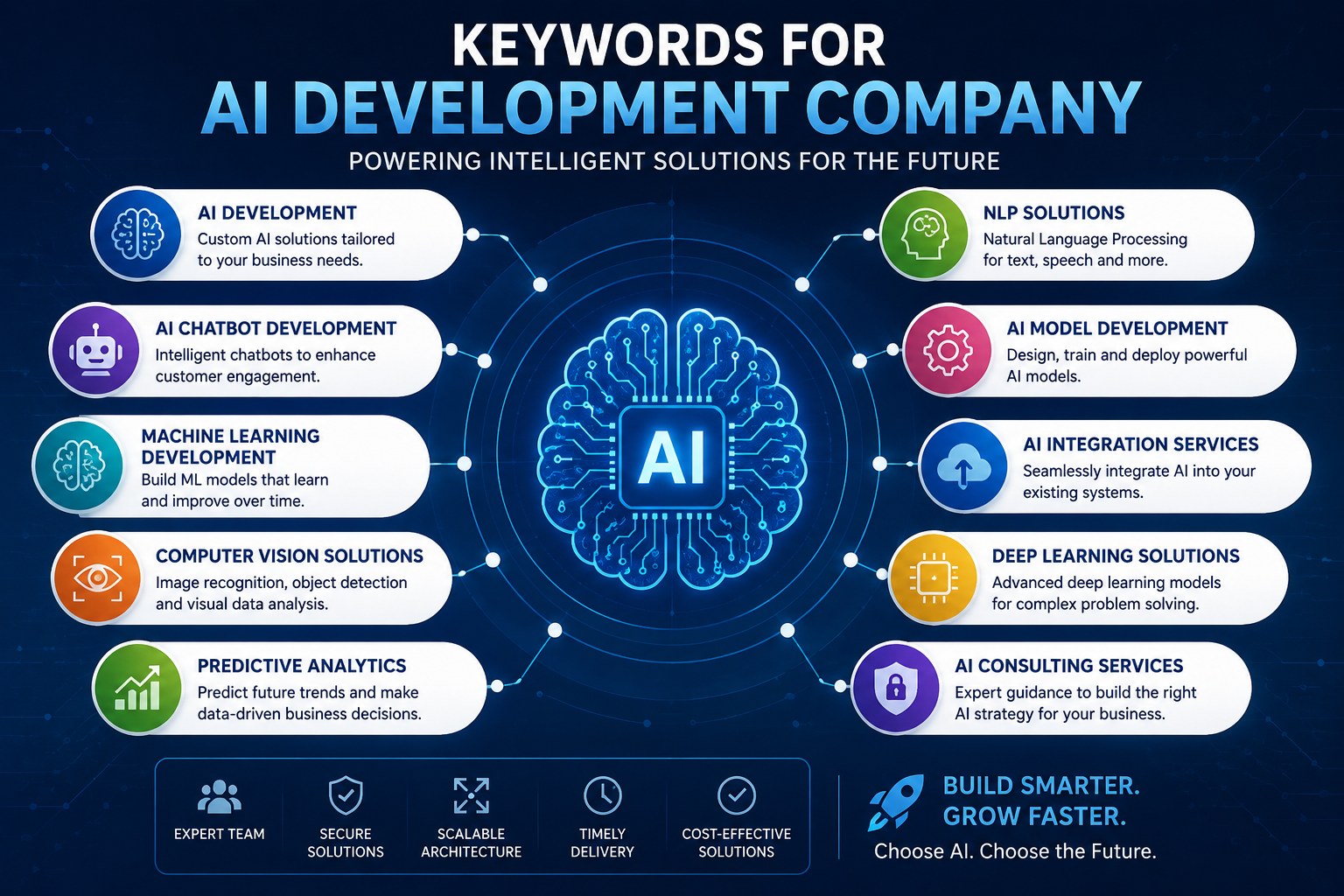
How Much Does AI Development Cost in 2026? A Realistic Budget Guide
AI development costs range from around $10,000 for a simple chatbot to $2 million or more for an enterprise-grade platform, and the honest answer to "How much will my project cost?" is always "It depends on scope.” This guide breaks down real 2026 price ranges by project type, the factors that actually move the number, the engagement models AI development companies use to bill you, and the hidden costs most quotes leave out.
If you’ve requested a few quotes from AI development companies already, you’ve probably noticed the numbers don’t line up. One vendor says $30,000. Another says $250,000. Neither is necessarily wrong; they might be scoping completely different projects and calling them both "an AI chatbot".
That gap is the actual problem this article solves. Not "What does AI cost?" in the abstract, but what specifically drives a quote from five figures into seven so you can tell whether a number you're looking at is reasonable or someone is padding a proposal?
Why “It Depends” Is the Only Honest Answer: Here’s What It Depends On
Every AI development company will tell you cost depends on scope, and that’s not a dodge — it’s true. A basic FAQ bot answering questions from a knowledge base and a fraud-detection system processing millions of transactions a day are both "AI", and they cost about as differently as a bicycle and a freight train.
What actually varies the number are how much custom model work is involved versus wiring up an existing API; how clean and ready your data is; whether you need compliance-grade security and auditability; how deeply the system needs to integrate with your existing stack; and whether you’re paying for a one-time build or an ongoing, continuously trained system.
AI Development Cost by Project Type (2026 Ranges)
These are realistic market ranges compiled from current industry pricing data, not a specific vendor’s rate card:
|
Project type |
Typical cost range |
What's included |
|
Simple FAQ/support chatbot (API-based) |
$10,000 – $25,000 |
Pre-built LLM API, basic conversation flow, limited integration |
|
Mid-level AI assistant (CRM integration, lead qualification) |
$50,000 – $80,000+ |
Memory, business logic, integration with existing tools |
|
Enterprise AI chatbot/support system |
$150,000 – $2,000,000 |
Multi-channel, compliance, custom training, high-volume infrastructure |
|
Generative AI MVP (RAG system on top of an LLM) |
$15,000 – $60,000 |
Retrieval pipeline, prompt engineering, basic UI |
|
Generative AI enterprise platform |
$200,000 – $500,000+ |
Custom fine-tuning, security, scalable infrastructure |
|
Custom ML/predictive model (single use case) |
$50,000 – $250,000 |
Data pipeline, model training, evaluation, deployment |
|
Full enterprise AI platform |
$300,000 – $1,500,000+ |
Multiple models, MLOps, compliance, integration across systems |
At the high end, large multi-unit enterprise AI programs commonly land between $500,000 and $2 million in total investment once every workstream is included.
What Actually Drives the Price Up or Down
• Data readiness. Data preparation and cleaning routinely consumes 40–60% of a project’s timeline. If your data is scattered, unlabelled, or inconsistent, budget for that work explicitly — it’s not a footnote; it’s often the majority of the effort.
• Compliance requirements. Regulatory and compliance work (healthcare, finance, anything handling personal data) typically adds 20–35% to total project cost, often translating to an extra $100,000–$300,000 on larger systems.
• Build vs. API. Wiring up an existing model through an API is dramatically cheaper than training or fine-tuning a custom model. Most projects don’t need a custom-trained model — but some vendors will sell you one anyway because it’s a bigger invoice.
• Integration depth. A standalone tool is cheap. A system that needs to talk to your CRM, your data warehouse, and three legacy systems is not – integration work is consistently underestimated in initial quotes.
• Team structure and location. Rates vary significantly by region and seniority mix; a team leaning heavily on senior ML engineers costs more per hour but often finishes faster and with fewer expensive mistakes.
The Engagement Models AI Development Companies Actually Use
Beyond project scope, how you’re billed changes the shape of your budget. Most established AI development companies offer some version of these four models:
|
Model |
How it works |
Best for |
|
Fixed price |
One agreed price for all milestone deliverables |
Small to mid-sized projects with a clearly defined scope |
|
Time & materials |
Billed monthly based on team effort |
AI-assisted projects where requirements are expected to evolve |
|
SLA/milestone-based |
Payment tied to specific, pre-agreed milestones |
Iterative, process-oriented projects with defined checkpoints |
|
Team augmentation |
Dedicated AI developers embedded with your team |
Businesses that want to extend in-house capacity, not outsource the whole build |
A fixed price feels safest to a first-time buyer, but it only works well when the scope genuinely won't change. If there’s real ambiguity in requirements, common in AI projects where the "right" approach sometimes only becomes clear after early testing, time-and-materials or milestone-based billing is usually the more honest structure, even though it feels less predictable upfront.
Hidden Costs Most Quotes Don’t Include
This is where budgets blow up after the contract is signed.
• Data labelling and RAG infrastructure. Often adds $5,000–$80,000 depending on data volume and complexity, and it’s frequently missing from an initial estimate.
• Ongoing inference and cloud costs. Running the model in production costs money every month, separate from the build. This scales with usage and is easy to underestimate.
• MLOps and monitoring. Model performance degrades over time as real-world data drifts from training data. Monitoring, retraining, and version control are ongoing line items, not one-time costs.
• Annual maintenance. Enterprise AI systems typically run 20–30% of the original build cost per year in maintenance.
• Total cost of ownership. Over three years, total ownership cost is typically 1.5–2x the initial build price once inference, maintenance, and iteration are factored in. If a vendor’s pitch only mentions the build number, ask directly what years two and three look like.
Red Flags in an AI Development Quote
• A fixed price for a vaguely defined project. If the scope isn’t nailed down yet, a confident fixed number is either a guess or padded to cover the vendor’s risk.
• No mention of ongoing costs. If the conversation stops at "Here's what it costs to build", ask what it costs to run.
• No discovery phase. A quote produced without understanding your data, systems, and actual requirements is not a real estimate.
• A custom-trained model pitched by default. Ask directly whether an existing API based model could do the job for a fraction of the cost. A credible vendor will tell you honestly, even if it means a smaller invoice.
• Silence on data readiness. If nobody has asked about the state of your data yet, the estimate you’re looking at doesn’t account for the part of the project that usually takes the longest.
How to Budget for Your First AI Project
1. Start with a defined pilot, not the full vision. A scoped MVP gives you a real cost baseline and de-risks the bigger investment.
2. Ask for an itemised estimate, not just a single number, with build, data work, integration, and first-year running costs broken out separately.
3. Budget for three years, not one. Use the initial build estimate as roughly half of what you’ll actually spend by year three.
4. Match the engagement model to your certainty level. Fixed price only if the scope is genuinely locked; time & materials or milestone billing if it isn’t.
5. Get at least two scoped quotes, and if they’re wildly different, ask both vendors to walk you through exactly what’s included; the gap is usually explainable once you see it.
Why Businesses Work With Clarisco Solutions on AI Development Services
Clarisco Solutions offers the same range of engagement models covered above — fixed price for well-defined small and mid-sized projects, time & materials for AI-assisted work with evolving requirements, milestone-based billing for iterative builds, and team augmentation for businesses that want dedicated AI developers working alongside their existing team rather than a full outsourced build.
A few things that shape how Clarisco scopes a project:
• Discovery before a number. Requirements, data readiness, and business objectives are evaluated first, so the engagement model and estimate actually match the project rather than being guessed at.
• Agile delivery with visible progress. Projects follow an agile process with regular client communication and, for tool or app development, real-time progress access rather than opaque monthly updates.
• Full post-launch responsibility. Post-development maintenance and upgrades are covered under extended support plans rather than treated as a separate negotiation after go-live.
• Track record at scale. 650+ web, mobile, blockchain, and AI solutions delivered globally over 12+ years gives the team enough pattern matching to flag scope risks like underestimated data work before they become budget overruns.
Because actual pricing depends entirely on your specific scope, Clarisco doesn’t publish a fixed rate card, the same honest answer any credible AI development company should give you. What you can get quickly is a scoped estimate based on your real requirements, not a generic package price.
Frequently Asked Questions
How much does AI development cost for a small business?
Small business AI projects, like a support chatbot or a single automation workflow, typically fall in the $10,000–$80,000 range depending on complexity and integration needs. API-based solutions built on existing large language models are usually the most cost-effective starting point.
Is it cheaper to use an AI API than build a custom model?
Yes, significantly. Wiring up an existing model through an API can cost a fraction of training or fine-tuning a custom model, and it’s the right choice for most business use cases. Custom model training is usually only justified when you have a use case existing models genuinely can’t handle well.
What’s the biggest hidden cost in AI development projects?
Ongoing costs after launch include inference/cloud costs, monitoring, retraining, and annual maintenance, which together often push the total three-year cost of ownership to 1.5–2x the initial build price. Data preparation is the biggest hidden cost before launch, frequently consuming 40–60% of the project timeline.
Should I choose a fixed-price or time-and-materials contract for an AI project?
Choose fixed price only if your requirements are genuinely locked down. AI projects often evolve as early testing reveals what actually works, which makes time-and-materials or milestone-based billing a more realistic fit for many first-time AI builds.
How do I know if an AI development quote is reasonable?
Compare it against the ranges in this guide for similar project types, confirm it includes data preparation and integration (not just model-building), and ask what year-two and year-three costs look like. A quote that only covers the initial build is incomplete.
Ready to Get a Real Number for Your Project?
Generic pricing guides can only get you so far; the only accurate estimate is one scoped against your actual data, systems, and goals. If you’re ready to move past ballpark ranges, Clarisco Solutions will scope your project properly before giving you a number.
How Much Does AI Development Cost in 2026? A Realistic Budget Guide Get a free, scoped quote from Clarisco Solutions →

 English
 Arabic
 French
 Spanish
 Portuguese
 Deutsch
 Turkish
 Italiano
 Russian
 Romaian
 Portuguese (Brazil)
 Greek
Greek
