


Nante Industrial surface mounted socket Durability and Maintenance Guide
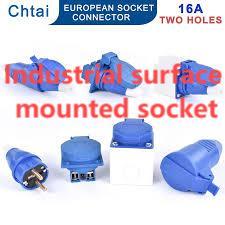
Good installations begin with a clear specification of how a Industrial surface mounted socket will be used on site — who will operate it, what environmental stresses it will face, and what safety devices are required — because these factors determine enclosure type, ingress protection, and mounting details. Early collaboration between designers, procurement, and field teams helps ensure that a Industrial surface mounted socket selected on paper performs reliably under real-world conditions and avoids costly rework.
Assessing use cases and site environment
Different applications demand different features. Temporary event power needs rapid deployment and easy access; factory workstations require rugged housings and clear labeling; outdoor public areas need tamper-resistant lids and robust sealing. Walk the site and note sun exposure, washdown routines, vibration sources, and likely accidental impacts. Record peak and typical load profiles, and map where protection against dust, water jets, or direct hose-down will change product selection. A thorough site assessment narrows choices quickly and clarifies testing requirements.
Material selection and corrosion resistance
Choose materials that match the environment. Powder-coated steel provides structural strength and cost efficiency but needs a durable coating system in corrosive atmospheres. Stainless steel is ideal for coastal or chemical-exposed locations, while engineered polymers reduce weight and eliminate rust concerns. Don’t forget the system components: hinges, fasteners, and gaskets must use compatible alloys and elastomers to avoid galvanic corrosion. Request material declarations and UV-aging or salt-spray test data when durability is a critical procurement factor.
Mechanical design, mounting, and accessibility
Surface-mounted units must be anchored securely and placed where users can access sockets without causing strain on cables. Position units at ergonomic heights, allow for plug retention under load, and provide weatherproof cable exits where necessary. Reinforced mounting flanges and anti-vibration bushings increase longevity in high-motion environments. Also consider maintenance access: hinged covers, removable backplates, and labeled terminal blocks make routine servicing faster and safer.
Electrical safety, protection devices, and user interface
Design electrical layouts to separate user-exposed sockets from internal protective devices. Integrate appropriate overcurrent protection, RCDs where required, and surge suppression for exposed installations. Use clear, durable labeling for ratings and safe operating instructions. Where public use is expected, specify tamper-resistant sockets and lockable covers. Ensure that earthing and bonding arrangements follow local code, and provide mechanical isolation options for safe maintenance.
Installation best practices and commissioning
Preserve factory ingress ratings by using correct cable glands on every penetration and sealing unused knockouts with compatible plugs. Verify grounding continuity and torque terminal connections to manufacturer specifications. During commissioning execute simple functional tests: verify protective device operation, inspect gaskets under compression, and perform a visual water-check if practical. Handover documentation — wiring diagrams, part numbers, and maintenance checklists — reduces ambiguity for future technicians.
Maintenance planning and condition monitoring
Routine inspections should focus on gasket condition, fastener torque, signs of moisture or corrosion, and wear on user-facing components like lids and sockets. In harsher sites deploy simple condition sensors — humidity monitors or door-open switches — to trigger service visits only when needed. Keep a small, well-documented spare-parts kit close to the installation to avoid extended outages for minor repairs.
Procurement, testing, and lifecycle thinking
When specifying products require objective evidence: IP ratings, material certificates, and test reports for UV aging, salt spray, or impact. For larger rollouts, standardize on families of parts to simplify spares and training. Compare warranties and spare-parts lead times rather than just upfront price — lifecycle costs often dominate procurement decisions. Insist on acceptance testing at delivery to catch manufacturing defects before field installation.
A pragmatic program — define usage clearly, pick materials and protections suited to the environment, follow disciplined installation methods, and adopt condition-based maintenance — will greatly extend the service life of surface-mounted power outlets in industrial settings. For details on product ranges and corporate information, visit https://www.nante.com

 English
 Arabic
 Spanish
 Portuguese
 Deutsch
 Turkish
 Dutch
Dutch
 Italiano
 Russian
 Romaian
 Portuguese (Brazil)
 Greek
Greek
