


How Do Fire Dancers Not Get Burned?
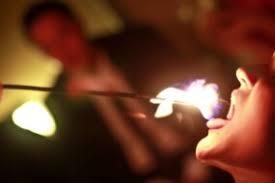
There's a moment at every fire show — right before the first prop gets lit — where the crowd goes quiet. Everyone's thinking the same thing: how is this person about to spin actual flames around their body and walk away unhurt?
It's a fair question. Fire looks chaotic and unpredictable, and our brains are hardwired to treat it as an instant threat. But fire dancing isn't recklessness dressed up as art. It's a discipline built on physics, muscle memory, and some surprisingly clever gear. Once you understand what's actually happening, the "magic" starts to look a lot more like mastery.
Fire Dancers Aren't as Flammable as You Think
Here's a fact that surprises most people: the human body isn't nearly as combustible as it seems. We're mostly water, and aside from hair, there's very little on us that catches fire easily or quickly. What actually burns — instantly and aggressively — is the fuel on the props, not the skin underneath it.
This matters because it reframes the entire skill. Fire dancers aren't defying flammability; they're managing exposure time. A quick brush against a flame, lasting a fraction of a second, often isn't enough time for heat to transfer into a burn. That's the real secret hiding behind every impressive move: speed, timing, and distance.
It's All About Controlled Movement
Professional fire dancers spend months — sometimes years — practicing with unlit props before they ever add flame. Poi, staffs, fans, and hoops all move in learned, repeatable patterns, and dancers train those patterns into muscle memory long before fire enters the picture.
Why does this matter so much? Because fire dancing is really about predicting where the flame will be and keeping your body somewhere else. Flames rise, not fall, so experienced performers angle their tools so the fire trails upward and away from their skin rather than toward it. A slight shift in hand position or spin speed is often the only thing separating a clean pass from a burn.
As one description from a longtime fire safety resource puts it plainly: performers learn to keep the fire "gently swaying" away from the hands, because the flame naturally rises toward whatever is holding it. It's less about bravery and more about geometry.
The Gear Is Engineered for This Exact Job
Take a closer look at the props themselves, and you'll notice they're anything but improvised. The glowing ends of poi, staffs, and fans are made from a "wick" — a tightly wound material designed to soak up fuel and burn slowly and predictably. Most professional-grade wicks are made from Kevlar, sometimes blended with fiberglass, because these materials can handle extreme heat without disintegrating mid-performance.
Kevlar wick isn't just heat-resistant — it's built to hold fuel in a controlled way, so the flame burns steadily instead of flaring unpredictably. That predictability is everything in a live performance, where a dancer needs to know almost exactly how the fire will behave second to second.
Clothing matters just as much as the props. Most experienced performers wear snug-fitting natural fibers like cotton or wool, since these materials resist catching fire and don't melt onto skin the way synthetic fabrics can. Loose sleeves, dangling jewelry, and untied hair are treated as serious hazards — not fashion choices — because they're the most common way accidental contact turns into an injury.
Safety Isn't Optional — It's Built Into the Culture
Ask any professional fire performer, and they'll tell you the real safety net isn't the wick or the costume — it's preparation and support. Reputable performers rarely light up without a dedicated safety spotter nearby, someone whose only job is watching for danger and reacting instantly with a fire blanket or extinguisher if something goes wrong.
Sobriety is non-negotiable in the fire arts community, and for good reason: fire dancing demands full concentration, and even mild impairment dramatically increases risk. Seasoned performers will also tell newer dancers not to fire up until a routine is second nature — because hesitation or a moment of doubt mid-performance is often when accidents happen, not the fire itself.
The Bottom Line
Fire dancing looks like a dance with danger, but it's really a dance with precision. Behind every spinning flame is a performer who has trained for hours without fire, gear engineered specifically to burn safely and predictably, natural-fiber clothing chosen for protection rather than style, and a safety team ready to react in an instant.
So the next time you watch a fire dancer glide flames around their body like it's effortless, remember: it isn't luck, and it isn't magic. It's technique, respect for the craft, and a genuine understanding of how fire behaves — which is exactly what makes it worth admiring as an art form, not just a stunt.

 English
 French
 Spanish
 Portuguese
 Deutsch
 Turkish
 Dutch
Dutch
 Italiano
 Russian
 Romaian
 Portuguese (Brazil)
 Greek
Greek
