


How Comme des Garcons Changed Modern Fashion
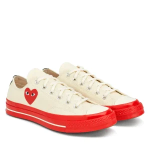
Comme des Garçons, led by designer Rei Kawakubo since 1969, fundamentally shifted what fashion was allowed to look like. By rejecting traditional tailoring, symmetry, and body-flattering silhouettes in favor of deconstructed, asymmetrical, and conceptually driven design, Kawakubo opened the door for an entire generation of designers to treat clothing as an idea rather than just a product. That influence didn't stay confined to high fashion runways either, it filtered directly into streetwear through the accessible PLAY line, sneaker collaborations, and a broader cultural shift toward valuing individuality over conventional fit.
The moment that changed everything
To understand CDG's influence, it helps to go back to 1981, when Rei Kawakubo showed her collection in Paris for the first time. The response was polarizing in a way that's hard to overstate. Critics were confused, sometimes openly hostile, toward garments that were torn, asymmetrical, and monochrome in a fashion world still deeply attached to tailored silhouettes and conventional beauty standards. Comme des Garcons The infamous nickname that stuck to that era, Hiroshima chic said more about how unprepared the Parisian fashion establishment was than anything accurate about the actual clothing. What Kawakubo was doing wasn't referencing tragedy, it was questioning why fashion had to flatter the body in one specific, narrow way at all.That confrontation, uncomfortable as it was at the time, cracked open space for an entirely different way of thinking about clothing, one that treated imperfection, asymmetry, and conceptual ideas as valid design language rather than mistakes to be corrected.
Rejecting the idea that clothes should flatter
Most fashion before Kawakubo's arrival in Paris operated on a fairly consistent assumption, garments existed to enhance or flatter the body's natural shape. Corsetry, tailored waistlines, symmetrical cuts, all of it built around the same underlying goal.Kawakubo's early work directly challenged that assumption. Pieces from her collections often obscured the body's shape entirely, added volume in places that had nothing to do with traditional silhouette lines, or left seams and construction details visible rather than hidden. This wasn't a technical failure, it was the entire design thesis.That idea, that clothing doesn't have to serve the body in a conventional sense, has rippled through decades of design since. You can see traces of it in oversized streetwear silhouettes, in the deliberately unfinished hems that show up across contemporary designer collections, and in the broader cultural shift away from tight, body-conscious dressing that dominated earlier eras of fashion.
Genderless design before it had a name
Long before "genderless fashion" became a common marketing phrase, Kawakubo was already designing in ways that didn't map cleanly onto traditional menswear or womenswear categories. The brand's own name, meaning "like the boys" in French, reflected this from the very beginning, an early signal that Kawakubo wasn't interested in designing femininity https://commedesgarccon.com/collection/cdg-play/ the way fashion had traditionally defined it.This wasn't framed as activism or a statement piece in the way genderless fashion sometimes gets marketed today. It was simply how Kawakubo approached design, treating garments as forms and ideas rather than starting from rigid gendered assumptions about who should wear what.Decades later, as gender-fluid and unisex fashion became mainstream talking points across the industry, CDG's early, unforced approach to genderless design reads less like a trend the brand jumped on and more like a direction it had been working in from day one.
How CDG influenced an entire generation of designers
Kawakubo's impact goes well beyond her own collections. Junya Watanabe, who trained under her and now runs his own acclaimed label while maintaining close ties to the CDG family of brands, carries forward a lot of the same experimental construction techniques, applying them to increasingly technical and sometimes sportswear-influenced silhouettes.Beyond direct mentorship, Kawakubo's broader influence shows up across a wide range of designers who cite her work as permission to treat fashion conceptually rather than purely commercially. Designers working in deconstruction, asymmetry, and conceptual presentation owe a real debt to the groundwork CDG laid starting in the early 1980s, whether or not their specific aesthetic looks anything like Kawakubo's own work.Museum recognition reflects this influence too. Kawakubo received a solo exhibition at the Metropolitan Museum of Art's Costume Institute in 2017, an honor given to very few living designers, and one that placed her work firmly within the context of art history rather than just commercial fashion.
The bridge into streetwear culture
High fashion influence is one thing, but CDG's fingerprint on streetwear specifically is arguably even more visible day to day. The PLAY line, launched in 2002 with its now-iconic heart logo designed by artist Filip Pagowski, gave a much broader, younger audience direct access to the CDG name without requiring an investment in complex, experimental runway pieces.That accessibility mattered enormously for how streetwear culture developed over the following two decades. PLAY tees and cardigans became genuine wardrobe staples, worn the same casual way people wear a Fred Perry polo or a basic hoodie, while still carrying real design history behind them.The CDG x Converse collaboration, running since 2007, extended that bridge even further into everyday sneaker culture, putting a recognizable piece of design history literally on people's feet in a way that felt approachable rather than exclusive.
Collaboration as a design philosophy
Comme des Garçons has approached brand collaborations differently than a lot of the industry, treating partnerships as genuine creative exchanges rather than purely commercial licensing deals. Collaborations with Nike, Converse, Supreme, and various other streetwear and sportswear names have consistently maintained CDG's design sensibility rather than simply slapping a logo onto an existing product.This approach helped normalize a broader shift across fashion and streetwear alike, where collaboration became less about novelty and more about genuine creative crossover between different design traditions. A lot of the collaboration culture that now defines contemporary streetwear, high fashion houses partnering with sportswear brands, streetwear labels working with luxury names, traces at least part of its legitimacy back to how CDG approached these partnerships early on.
Dover Street Market and reshaping retail
Kawakubo's influence extended into retail itself through Dover Street Market, the concept store she co-founded in London in 2004. Rather than organizing merchandise by brand in a conventional department store layout, Dover Street Market treated the shopping space itself as a curated, ever-changing installation, blurring the line between retail and art exhibition.That approach has since influenced how a lot of contemporary boutiques and concept stores think about physical retail space, particularly as online shopping has pushed brick-and-mortar stores to offer something beyond simply browsing racks of clothing. The idea that a store visit could be an experience worth having on its own terms, not just a transaction, owes a real debt to what Dover Street Market pioneered.
Why this influence still matters heading into 2026
As streetwear culture continues shifting toward valuing archival design history over pure hype-driven drops, brands with genuine design lineage are seeing renewed interest from younger shoppers actively researching where current trends actually came from. Comme des Garçons benefits significantly from this shift, given how much of contemporary fashion's vocabulary, oversized silhouettes, genderless design, deconstruction as an aesthetic choice, traces directly back to Kawakubo's work.Understanding that history changes how a piece feels to wear, whether it's a mainline runway garment or a simple PLAY tee. It's not just clothing, it's a small piece of a much longer design conversation that's been shaping fashion since long before most current streetwear brands existed.
FAQs
Who founded Comme des Garçons and when?
Rei Kawakubo founded Comme des Garçons in Tokyo in 1969, later showing collections in Paris starting in 1981, which marked a major turning point for the brand's international recognition.
Why was Comme des Garçons controversial when it debuted in Paris?
Critics were unprepared for Kawakubo's deconstructed, asymmetrical designs, which rejected traditional tailoring and body-flattering silhouettes in favor of unconventional shapes and visible construction details.
How did Comme des Garçons influence streetwear specifically?
The PLAY line, launched in 2002, made the brand's design legacy accessible to a much broader audience through simple, wearable basics and sneaker collaborations, helping bridge high fashion influence into everyday streetwear culture.
What is Dover Street Market and why does it matter?
Dover Street Market is a concept store co-founded by Rei Kawakubo in 2004 that reimagined retail as a curated, art-like experience rather than a standard department store layout, influencing how many contemporary boutiques approach physical retail space.
Is Comme des Garçons still influential in fashion today?
Yes, significantly. As streetwear culture increasingly values archival design history, Kawakubo's decades-long influence on silhouette, gender-neutral design, and conceptual collaboration continues to shape how designers and shoppers alike think about fashion.

 English
 Arabic
 French
 Spanish
 Portuguese
 Deutsch
 Turkish
 Dutch
Dutch
 Italiano
 Russian
 Romaian
 Portuguese (Brazil)
