


Choosing the Right Investment Strategy with Real Estate Tokenization
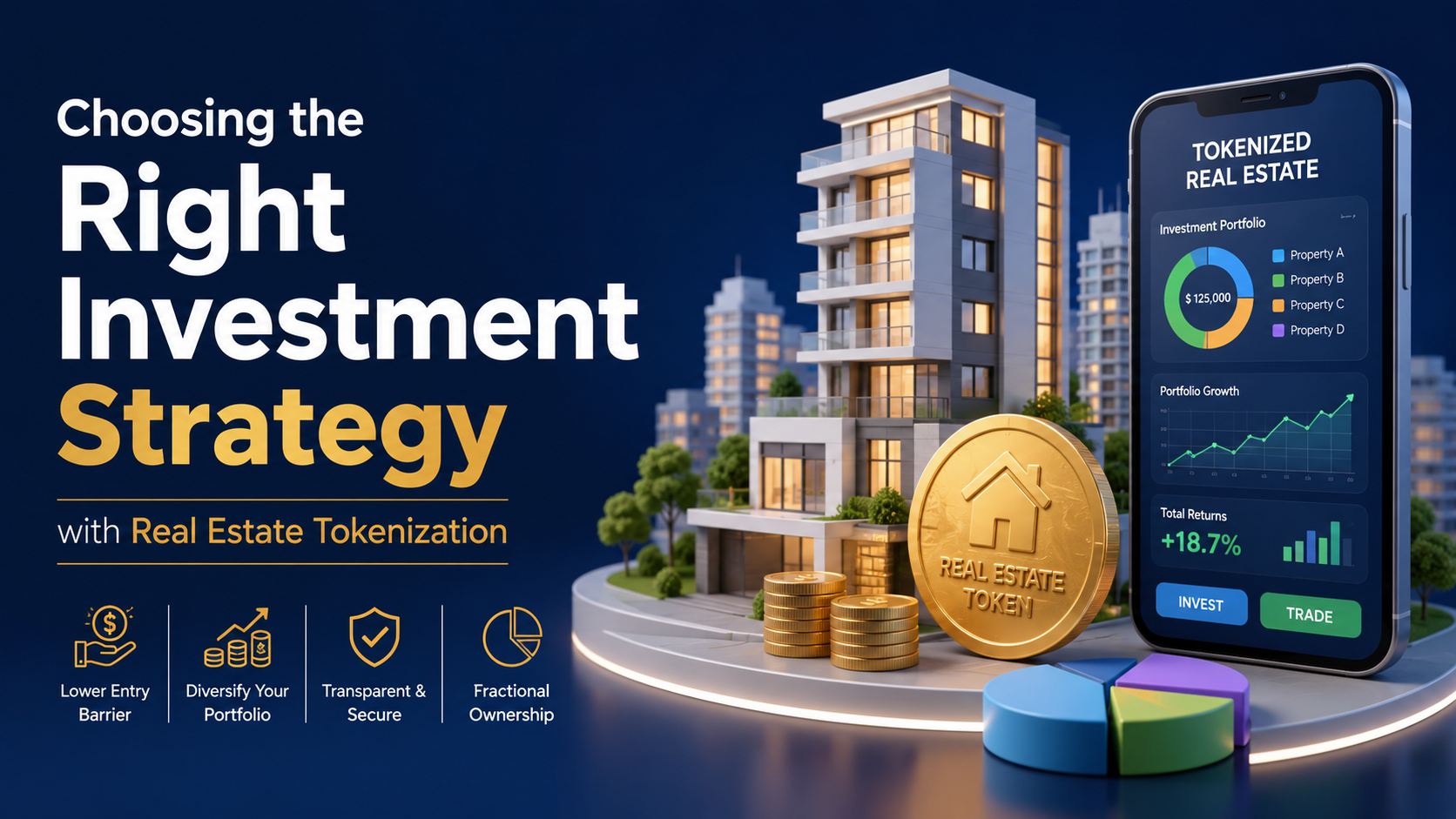
Property investment has long been considered one of the most dependable ways to build wealth. However, high capital requirements, limited liquidity, lengthy paperwork, and geographical restrictions have often prevented many investors from entering the market. Digital asset technology has introduced new investment models that make property ownership more accessible. Among these developments, Real Estate Tokenization has attracted attention from investors, property owners, developers, and financial institutions seeking different ways to participate in real estate markets.
Rather than purchasing an entire property, investors can buy digital tokens representing fractional ownership of real estate assets. This approach allows investment across residential, commercial, industrial, hospitality, and mixed-use properties while offering greater flexibility than traditional ownership structures.
Selecting the right investment strategy is equally important as selecting the right property. Every investor has different financial objectives, risk tolerance, investment timelines, and expected returns. Understanding how different tokenized investment models work helps investors make informed decisions while reducing unnecessary risks.
This guide explains how investors can choose suitable strategies using Real Estate Tokenization and what factors should be considered before making investment decisions.
Understanding Real Estate Tokenization
Real Estate Tokenization is the process of converting ownership rights of physical real estate into blockchain-based digital tokens. Each token represents a fractional share of the underlying property and gives investors ownership according to the number of tokens they hold.
Instead of requiring one buyer to purchase an entire building, multiple investors can own portions of the same asset. Depending on the investment structure, token holders may receive rental income, capital appreciation, or both.
The growing adoption of real estate asset tokenization has encouraged developers and financial institutions to launch regulated investment opportunities for both retail and institutional investors.
Why Investment Strategy Matters
Many investors assume that purchasing tokens automatically leads to profitable returns. In reality, investment outcomes depend on selecting suitable assets, understanding market conditions, and matching investments with personal financial goals.
A proper investment strategy helps investors:
-
Match investments with financial objectives
-
Balance expected returns with acceptable risk
-
Diversify across property sectors
-
Plan investment duration
-
Manage liquidity expectations
-
Reduce exposure to market fluctuations
Without a structured investment plan, investors may allocate funds into unsuitable projects that fail to meet their expectations.
Define Your Investment Objective
Every investment begins with a financial objective. Before selecting tokenized properties, investors should determine what they want to achieve.
Income Generation
Some investors prioritise regular rental income over long-term appreciation. Residential apartments, office spaces, and commercial buildings with stable tenants may suit this objective.
Monthly or quarterly rental distributions often appeal to investors seeking passive income.
Capital Appreciation
Others focus on increasing asset value over several years. Properties located in developing urban areas may offer higher appreciation potential compared to mature markets.
Portfolio Diversification
Many investors already own stocks, bonds, or conventional real estate. Adding tokenized property investments provides exposure to another asset category without purchasing entire properties.
Wealth Preservation
Some investors simply seek relatively stable assets that may retain value over time. Income-generating commercial properties often fit this investment style.
Understand Different Property Categories
Not every real estate asset performs in the same manner. Selecting the right property type significantly influences investment performance.
Residential Properties
Residential assets generally provide relatively stable rental demand.
Examples include:
-
Apartments
-
Villas
-
Student housing
-
Senior living communities
Residential investments may suit investors seeking consistent rental returns.
Commercial Buildings
Office buildings, retail centres, and shopping complexes often generate higher rental income than residential assets.
However, commercial properties may also experience higher vacancy risks during changing economic conditions.
Industrial Properties
Warehouses, logistics centres, and manufacturing facilities have experienced increasing demand due to e-commerce growth.
These assets often involve long-term leasing agreements with business tenants.
Hospitality Assets
Hotels, resorts, serviced apartments, and holiday properties may produce attractive returns during tourism growth.
However, hospitality investments generally experience greater fluctuations than residential assets.
Mixed-Use Developments
Mixed-use projects combine residential, retail, office, and entertainment facilities within one development.
Such properties often distribute investment risk across multiple income sources.
Assess Your Risk Tolerance
Every investment involves some level of uncertainty.
Investors should evaluate how much risk they are comfortable accepting before selecting tokenized real estate opportunities.
Conservative Investors
These investors often prefer:
-
Established rental properties
-
Long-term leased buildings
-
Lower volatility
-
Predictable income
Moderate Investors
Moderate investors may combine income-producing properties with assets expected to appreciate over time.
Growth-Oriented Investors
Growth-focused investors often seek:
-
Newly developed projects
-
Emerging markets
-
Redevelopment opportunities
-
Higher appreciation potential
While returns may be greater, risks generally increase as well.
Choose Between Short-Term and Long-Term Investment
Investment duration affects property selection.
Short-Term Strategy
Short-term investors may look for:
-
Quick appreciation opportunities
-
Development projects nearing completion
-
Properties with expected market growth
This strategy usually involves higher market risk.
Long-Term Strategy
Long-term investors generally benefit from:
-
Rental income
-
Property appreciation
-
Market stability
-
Compounding returns
Many institutional investors favour longer holding periods.
Evaluate Property Location Carefully
Location continues to influence property performance regardless of ownership structure.
Investors should analyse:
-
Population growth
-
Employment opportunities
-
Infrastructure projects
-
Transport connectivity
-
Rental demand
-
Local economic conditions
Tokenization changes ownership methods but does not change the importance of selecting desirable locations.
Diversify Across Multiple Assets
One advantage of fractional ownership is the ability to invest across several properties instead of concentrating capital into a single investment.
Diversification may include:
-
Residential properties
-
Office buildings
-
Industrial facilities
-
Hotels
-
Student housing
-
Different cities
-
Multiple countries where regulations permit
This approach reduces dependence on the performance of one individual asset.
Understand the Legal Structure
Every tokenized investment should clearly define ownership rights.
Investors should review:
-
Property ownership documents
-
Token issuance structure
-
Investor rights
-
Revenue distribution policies
-
Exit procedures
-
Regulatory compliance
Legal clarity provides greater confidence before investing.
Review Expected Income Distribution
Different projects distribute earnings in different ways.
Some investments provide:
-
Monthly rental income
-
Quarterly income
-
Annual distributions
-
Capital gains upon asset sale
Understanding payment schedules helps investors align investments with financial planning.
Consider Liquidity Opportunities
Traditional property investments often require months to sell.
Real Estate Tokenization introduces opportunities for secondary market trading where regulations permit.
Investors should understand:
-
Whether secondary trading exists
-
Trading restrictions
-
Lock-in periods
-
Exit options
-
Token transfer policies
Liquidity varies from one platform to another.
Study Property Management Quality
Even attractive properties depend on effective management.
Investors should review:
-
Property maintenance
-
Tenant management
-
Financial reporting
-
Occupancy history
-
Lease administration
Professional management contributes to consistent property performance.
Evaluate Market Conditions
Real estate markets change over time.
Investors should monitor:
-
Interest rates
-
Inflation
-
Housing demand
-
Commercial occupancy
-
Government policies
-
Construction activity
These factors influence rental income and long-term property values.
Consider Technology Infrastructure
A secure digital investment environment supports investor confidence.
Reliable Real Estate Tokenization Platform Development generally includes:
-
Digital identity verification
-
Smart contract execution
-
Secure token issuance
-
Investor dashboards
-
Asset documentation
-
Compliance procedures
Technology should support investment operations while maintaining data integrity.
Work with Experienced Development Partners
Businesses planning tokenized property offerings often require technical expertise throughout the project lifecycle.
An experienced Real Estate Tokenization company can assist with platform planning, smart contract integration, compliance considerations, investor management, and digital asset infrastructure.
Many organisations also work with a Real Estate Tokenization Development company to develop secure platforms suitable for property token issuance and ongoing asset administration.
Professional Real Estate Tokenization Services often include platform consultation, blockchain integration, token creation, compliance support, investor onboarding, and asset management features. Businesses planning real estate tokenization development should evaluate technical capabilities, regulatory understanding, previous project experience, and long-term support before selecting a development partner.
Companies seeking complete implementation frequently choose Real Estate Tokenization Development Services that cover planning, architecture, blockchain integration, testing, deployment, and maintenance under a structured development process.
Common Mistakes Investors Should Avoid
Several avoidable mistakes may affect investment performance.
These include:
Investing Without Research
Always understand the property, ownership model, and expected returns before investing.
Ignoring Regulatory Requirements
Investment regulations vary across jurisdictions. Investors should understand local legal requirements before participating.
Focusing Only on High Returns
Higher projected returns often involve higher risks. A balanced assessment is always advisable.
Lack of Diversification
Concentrating investments in one property increases exposure to market changes.
Overlooking Management Quality
Property performance depends not only on location but also on professional management.
Ignoring Exit Planning
Every investment should include an understanding of available exit opportunities before purchasing tokens.
Future Outlook for Tokenized Property Investment
Property investment continues to evolve as blockchain adoption expands across financial markets.
Institutional participation, growing investor awareness, and regulatory progress may encourage broader acceptance of tokenized real estate in the coming years. Fractional ownership models provide opportunities for individuals and organisations to participate in property investments with varying budget levels.
As more commercial, residential, hospitality, and industrial assets become available through digital ownership models, investors will likely have access to wider property portfolios across different markets. Businesses involved in real estate asset tokenization are also expected to introduce additional investment structures designed to meet varying investor preferences while maintaining regulatory compliance.
Conclusion
Choosing the right investment strategy with Real Estate Tokenization involves much more than selecting a promising property. Investors should carefully evaluate financial goals, property categories, investment duration, market conditions, legal structures, risk levels, income expectations, and liquidity options before making decisions. A disciplined approach supported by thorough research can improve investment outcomes while reducing unnecessary risks. For businesses planning to launch tokenized property platforms, Blockchain App Factory provides Real Estate Tokenization Development Services with experience in platform design, blockchain integration, token creation, compliance support, and complete development solutions for modern real estate investment ecosystems.
FAQs
1. What is Real Estate Tokenization?
Real Estate Tokenization is the process of representing ownership of a real estate asset through blockchain-based digital tokens. Investors can purchase fractional ownership instead of buying an entire property.
2. How does real estate asset tokenization benefit investors?
Real estate asset tokenization allows fractional ownership, broader investment access, portfolio diversification, and, depending on the platform and regulations, improved liquidity compared to conventional property investments.
3. What should investors consider before investing in tokenized real estate?
Investors should review property quality, location, expected income, legal structure, regulatory compliance, management experience, investment duration, and available exit options.
4. Why should businesses work with a Real Estate Tokenization Development company?
A Real Estate Tokenization Development company can assist with blockchain integration, token issuance, platform architecture, smart contracts, compliance considerations, investor management features, and ongoing technical support.
5. What services are included in Real Estate Tokenization Services?
Real Estate Tokenization Services commonly include business consultation, platform planning, token creation, smart contract development, investor onboarding, compliance support, wallet integration, testing, deployment, and maintenance.
6. What is involved in Real Estate Tokenization Platform Development?
Real Estate Tokenization Platform Development generally covers user management, property listing modules, token issuance systems, digital identity verification, payment integration, investor dashboards, reporting features, and blockchain connectivity for secure asset management.

 English
 Arabic
 Spanish
 Portuguese
 Deutsch
 Turkish
 Dutch
Dutch
 Italiano
 Russian
 Romaian
 Portuguese (Brazil)
 Greek
Greek
