


The Food Boxes Every Small Restaurant Should Consider Using
A restaurant owner in Ohio recently switched packaging suppliers three times in one year. Each time, the boxes arrived late, the print quality varied, or the minimum order quantity forced her to buy far more than her kitchen could use before the design needed updating. Her story is common. Small restaurants often treat packaging as an afterthought until a bad batch of boxes disrupts a busy weekend service.
Packaging is not just a container for food. It affects delivery temperature, presentation on a table, and how often a customer chooses to order again. For small restaurant owners, procurement managers, and event companies sourcing food packaging in bulk, the decision involves more than picking a design. It requires understanding the practical trade-offs between cost, durability, and supplier reliability.
Why Box Type Matters More Than Most Owners Expect
Different menu items need different structural support. A soggy pizza box or a leaking soup container creates a bad customer experience regardless of how good the food tastes. Restaurant owners researching The Food Boxes often start by mapping their menu to specific packaging categories rather than choosing one box style for everything.
Rigid boxes work well for higher-end takeout items, gift meals, or catering orders where the box itself is part of the presentation. They hold their shape under weight and protect delicate items during transport.
Mailer boxes suit restaurants that ship packaged goods, sauces, or meal kits. Their flat-pack structure keeps storage space manageable in a kitchen that already has limited room.
Tuck-end boxes remain a practical choice for everyday to-go orders. They are quick to assemble by hand during rush hours, which matters when staff are managing multiple tickets at once.
Custom sleeves offer a lower-cost way to add branding to an otherwise plain container, useful for restaurants testing new packaging designs without committing to a full custom box run.
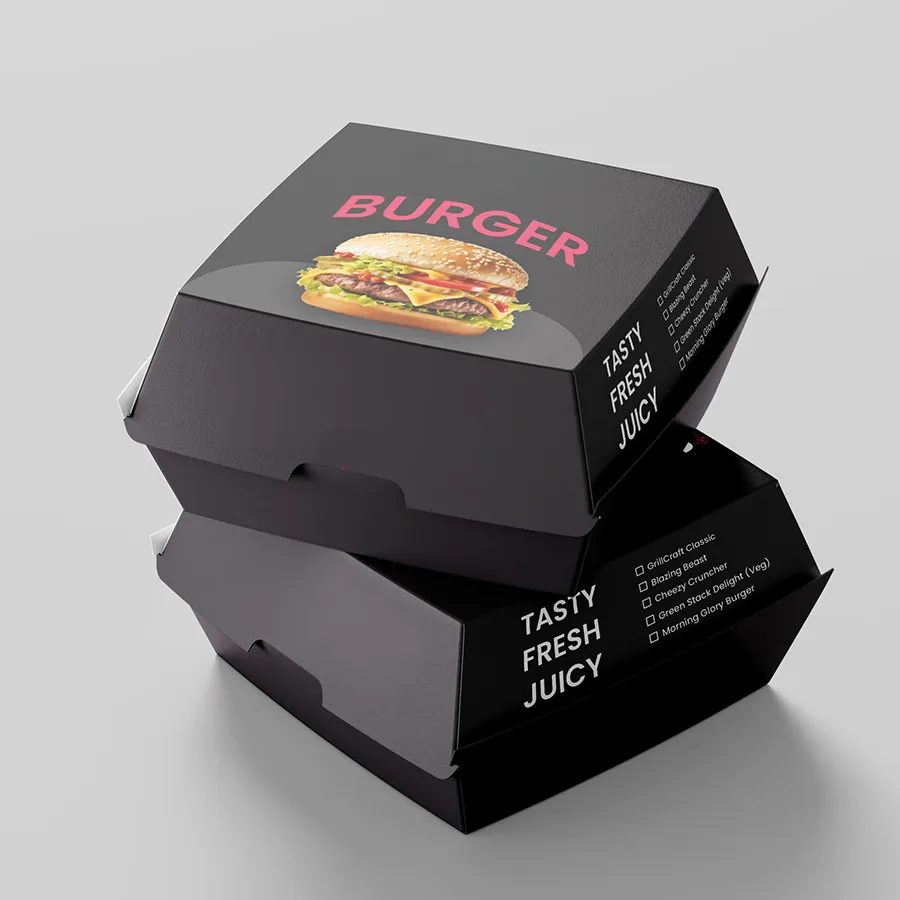
For restaurants specializing in sandwiches or burgers, Burger Packaging designed with proper ventilation and insulation prevents steam buildup, which keeps buns from getting soggy during delivery.
Questions to Ask Before Placing an Order
Before committing to a supplier, restaurant owners benefit from asking a few direct questions.
What is the minimum order quantity? Small restaurants often overestimate how much packaging they need. A supplier requiring 10,000 units minimum may not suit a restaurant that changes its menu seasonally. Look for suppliers offering lower MOQs for new accounts, even if the per-unit cost is slightly higher.
What is the actual lead time, not the advertised one? Advertised lead times rarely account for design approval rounds, holiday season delays, or shipping. Ask for a realistic timeline based on similar past orders, not a best-case estimate.
Can the supplier show samples of the exact material and print method? Photos on a website do not always reflect how ink looks on kraft board versus coated cardboard. A physical sample avoids surprises when the full order arrives.
How consistent is the supplier across repeat orders? A restaurant reordering the same box every quarter needs consistent color matching and material thickness. Inconsistency between batches signals a quality control problem that will resurface later.
Balancing Customization With Budget
Full customization, from die-cut windows to multi-color printing, raises both cost and lead time. Restaurants operating on tighter margins can start with a simpler design, a logo stamp on a stock box color, and expand customization once order volume justifies the investment. This approach reduces upfront risk while still giving customers a recognizable package.
Event companies ordering packaging for catered functions face a different calculation. Order sizes tend to be larger and more predictable, so negotiating pricing tiers based on volume commitments often makes more financial sense than smaller, frequent orders.
Making the Decision
There is no single correct box for every restaurant. A food truck serving quick lunches has different needs than a catering company handling weekend events. The right approach starts with an honest look at order volume, storage space, and how often the menu changes, then matching those realities to a supplier that can meet MOQ and lead time expectations without compromising on material quality.
Restaurants ready to compare options based on their specific menu and order volume can request a quote to see how pricing and lead times align with their operation before committing to a full production run.

 English
 Arabic
 French
 Spanish
 Portuguese
 Deutsch
 Turkish
 Dutch
Dutch
 Russian
 Romaian
 Portuguese (Brazil)
 Greek
Greek
