


JinhuaMgirl MgirlCosmetic: What Documentation Proves a Liquid Eyeliner Factory's Consistency
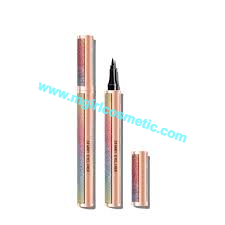
Cosmetic brands depend on product uniformity to build consumer trust and brand loyalty. A single inconsistent batch can damage reputation, trigger returns, and erode hard-won customer confidence. Liquid eyeliner presents particular challenges due to its fluid nature, pigment suspension, and application sensitivity.Liquid Eyeliner Factory operations must address viscosity stability, color matching, and drying characteristics across every run. mgirlcosmetic approaches this challenge through comprehensive quality management systems. Does their manufacturing framework guarantee the repeatability that brands require?
Viscosity control stands as the primary variable affecting liquid eyeliner performance. Each batch must flow identically from the applicator tip, depositing a consistent line width without skipping or flooding. Factory protocols measure viscosity at multiple production stages—raw material reception, mixing, filling, and finished goods. Automated viscometers provide real-time data, enabling immediate adjustments to maintain target specifications. Temperature fluctuations during storage and transport also influence viscosity, so climate-controlled environments preserve stability from production through delivery.
Pigment dispersion directly impacts color intensity and coverage uniformity. Agglomerated particles create streaky application and uneven opacity, destroying the crisp line that consumers expect. High-shear mixing equipment breaks down pigment clusters, distributing colorants evenly throughout the liquid base. Each formulation specifies precise mixing time, speed, and temperature parameters. Quality control technicians extract samples at predetermined intervals, comparing them against retained master standards using spectrophotometric analysis. This color matching process detects deviations before filling commences.
Raw material lot variation presents an ongoing challenge for manufacturers. Natural ingredients, synthetic polymers, and solvent blends each exhibit batch-to-batch differences that can affect final product behavior. Experienced suppliers qualify multiple raw material sources, testing each incoming shipment against acceptance criteria. When variations occur, formulation adjustments compensate without altering final performance characteristics. This proactive approach prevents unexpected shifts that would otherwise appear during finished product testing.
Filling equipment calibration influences both fill weight and applicator performance. Precise fill volumes ensure each unit contains the same product quantity, while proper nozzle alignment prevents air bubble incorporation. Air bubbles cause skipping during application, frustrating end users. Automated filling lines incorporate checkweighers and vision inspection systems, rejecting units that fall outside tolerance ranges. Regular maintenance schedules keep filling equipment operating within specified parameters, reducing variability across extended production runs.
Packaging components, particularly applicator tips and wipers, affect product delivery consistency. Felt tips vary in porosity, brush tips in bristle stiffness, and wipers in their ability to remove excess product. Manufacturers establish incoming inspection criteria for each component type, measuring critical dimensions and functional characteristics. Component suppliers undergo qualification audits, ensuring their processes remain stable over time. This supply chain vigilance prevents packaging-induced performance differences that could be mistaken for formula inconsistencies.
Stability testing programs monitor product attributes over extended periods, simulating real-world storage conditions. Heat cycling, freeze-thaw exposure, and accelerated aging protocols reveal potential degradation pathways. Each stability study uses multiple production batches to assess consistency across time and conditions. Retention samples from each batch remain under observation for the product's labeled shelf life, providing historical data for trend analysis. This long-term perspective identifies gradual process drifts before they produce non-conforming products.
Documentation and traceability systems support consistency through complete visibility. Each production batch receives a unique identifier linking raw materials, equipment, operators, and test results. This traceability enables root cause analysis when deviations occur, facilitating corrective actions that prevent recurrence. Comprehensive batch records satisfy regulatory requirements and provide customers with quality assurance documentation, including certificates of analysis and stability summaries.
Statistical process control (SPC) charts track key quality parameters across hundreds of batches, distinguishing normal variation from exceptional events. Control limits derived from historical performance establish acceptable ranges, triggering investigation when results approach warning boundaries. This data-driven approach transforms reactive quality control into preventive process management. Over time, SPC analysis identifies opportunities for process refinement, continuously narrowing variation ranges.
Customer feedback loops complete the quality cycle, connecting factory performance with end-user experience. Complaint analysis, returned product examination, and retailer return data provide insights that laboratory testing alone cannot capture. Manufacturers correlate field performance with production records, strengthening their understanding of critical-to-quality attributes. This closed-loop system ensures that batch consistency definitions reflect actual consumer expectations, not merely internal specifications.
Achieving batch-to-batch consistency demands commitment from every department—procurement, production, quality, and logistics. Clear standard operating procedures, comprehensive training programs, and regular equipment verification create a culture of quality. Regular internal audits identify gaps in execution, while external certifications provide objective validation. For brands seeking reliable manufacturing partnerships, evaluating a factory's consistency track record proves essential. A trustworthy Liquid Eyeliner Factory demonstrates this capability through transparent documentation and responsive customer support. Review detailed product specifications and quality documentation at https://www.mgirlcosmetic.com, where manufacturing transparency from a dedicated Liquid Eyeliner Factory supports informed sourcing decisions.

 English
 Arabic
 French
 Spanish
 Portuguese
 Turkish
 Dutch
 Italiano
 Russian
 Romaian
 Portuguese (Brazil)
 Greek
