


The Complete Guide to Digital Permit to Work Management
The Complete Guide to Digital Permit to Work Management
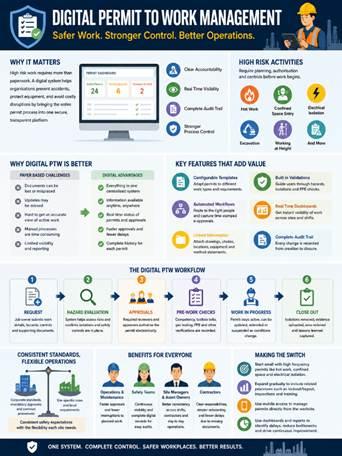
Managing high risk activities involves far more than filling out permits or satisfying regulatory requirements. The real objective is to control hazards before they lead to injuries, equipment damage, or expensive operational interruptions. A digital Permit to Work (PTW) system helps achieve this by replacing scattered paper based practices with one structured platform that improves visibility, ownership, and control.
Rather than relying on physical permits, lengthy email threads, or separate spreadsheets, the entire permit lifecycle can be managed through one secure environment. Duties are assigned clearly, status information remains visible, and actions are captured automatically, giving organisations a dependable and traceable process from initiation through completion. It also makes critical information easier to follow, helping teams coordinate decisions and respond consistently when conditions change during demanding work on site.
Why a Permit to Work Process Matters
High risk activities, including hot work, confined space entry, electrical isolation, excavation, and work at height, demand careful preparation before employees begin. A Permit to Work process provides formal authorisation for these jobs, confirming that hazards have been evaluated, controls are established, and suitably qualified personnel have reviewed and approved the proposed work.
Digital PTW management reinforces these requirements by building them directly into the workflow. Each request moves through a defined sequence, required safety checks cannot be overlooked, and documents such as risk assessments and isolation records must be supplied before approval can proceed. Role based access also limits permit creation, review, approval, and closure to authorised users, establishing clear responsibility at every stage.
Why Digital PTW Systems Improve on Paper Based Methods
Traditional paper permits and disconnected electronic documents can become increasingly difficult to control in active workplaces. Multiple shifts, contractors, and simultaneous jobs across several areas make manual coordination cumbersome. Documents can disappear, changes may not reach everyone, and supervisors can struggle to establish an accurate picture of ongoing work.
A digital Permit to Work platform addresses these problems by bringing the complete process into one central location. Permit information, hazards, approvals, drawings, attachments, and closure evidence remain together, allowing authorised users to retrieve the right information whenever required.
Supervisors and safety personnel can quickly see which permits are active, awaiting approval, or being held by outstanding conditions. Managers also receive a complete history for each permit, showing approval responsibility, timing, and decisions recorded throughout the process.
Features That Deliver Practical Operational Value
A capable digital Permit to Work solution goes beyond simply converting a paper form into an electronic screen. Configurable permit templates can be tailored to different job types, helping ensure that each activity includes the safety requirements relevant to its specific risks.
Built in checks can guide workers through hazard identification, isolation confirmation, and verification of required personal protective equipment. Automated routing sends permits to the appropriate reviewers and approvers while recording electronic authorisations with precise timestamps.
Real time dashboards give teams a current view of work across a facility, supporting smoother shift handovers and helping prevent avoidable waiting. Permits can also connect with equipment, locations, photographs, drawings, and method statements, keeping important information accessible in one place. Each change is retained, producing a detailed audit trail that follows the permit from initial creation to final closeout.
How a Digital Permit to Work Workflow Functions
The process typically starts with the job owner entering essential details such as the work scope, location, hazards, planned controls, and supporting files. The system guides the assessment of identified risks and helps verify that required isolations and protective measures have been addressed before the permit advances.
After the necessary approvals are secured, pre work checks can be recorded. These may cover worker competency, toolbox discussions, gas testing, and confirmation that the appropriate personal protective equipment is available and required.
While the task is underway, the permit remains active in the system and can be revised, suspended, or extended when workplace conditions change. Once the work ends, isolations are removed, evidence is attached, the area is returned to an appropriate condition, and lessons learned can be captured to strengthen future planning.
Consistency While Preserving Site Flexibility
An effective digital PTW platform allows organisations to maintain consistent safety expectations across multiple facilities without forcing every location into an identical operating model. Central teams can define required approvals and common procedures, while individual sites can add local requirements that reflect their particular circumstances.
Templates, validation controls, and permission configurations support consistent standards while still allowing each facility to manage its specific operational demands.
Benefits Across the Organisation
The advantages of digital Permit to Work management reach every group involved in hazardous activities.
Operations and maintenance teams can move approvals forward faster and experience fewer interruptions to planned work. Safety teams gain ongoing visibility into permit activity and maintain complete electronic records that make audit preparation easier. Site leaders and asset owners gain greater consistency across shifts, contractor work, and routine operations, together with clearer insight into overall performance.
Contractors benefit as well because responsibilities are defined upfront, onboarding becomes simpler, and delays related to missing documents or uncertain approval expectations are reduced.
Transitioning from Paper Permits to Digital Management
Organisations moving away from paper files or shared folders do not have to convert every permit activity at once. A sensible starting point is to digitise the permit types used most often, including hot work, confined space entry, and electrical isolation.
Once those workflows are established, organisations can progressively extend digital management to connected processes such as lockout/tagout activities, inspections, and training records.
Mobile access enables field personnel to request, inspect, approve, and manage permits without leaving the work area, reducing unnecessary travel to offices. Meanwhile, reporting dashboards can reveal repeated delays, workflow bottlenecks, and operational patterns, giving organisations useful insight for continuous improvement in workplace safety and operational performance.
Book a free demo @ https://toolkitx.com/campaign/permit-to-work/
Browse More

 English
 Arabic
 French
 Spanish
 Portuguese
 Turkish
 Dutch
Dutch
 Italiano
 Russian
 Romaian
 Portuguese (Brazil)
 Greek
Greek
