


Cloud Gaming Market: Growth, Trends and Forecast to 2035
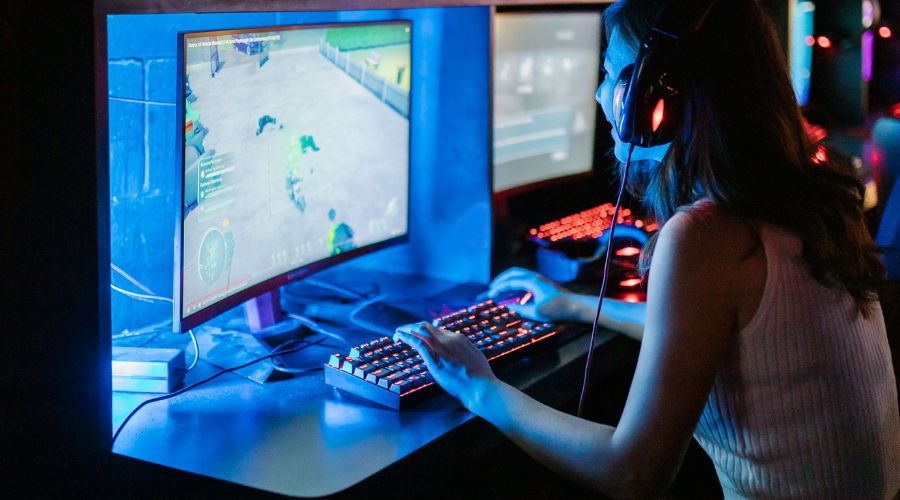
Cloud gaming is changing the economics of interactive entertainment by moving much of the computing burden from a player's device to remote data centers. Instead of downloading and rendering a game locally, players send controller inputs to a cloud server, where the game runs; the resulting video and audio are then streamed back to the player's screen. This model can turn smartphones, tablets, smart TVs, laptops and relatively modest PCs into gateways to demanding games.
According to the market figures supplied for this analysis, the global cloud gaming market reached approximately USD 2,360.29 million in 2025 and is projected to expand at a 36.80% CAGR between 2026 and 2035, reaching about USD 54,178.42 million by 2035. The exceptionally high projected growth reflects a market moving from an emerging technology toward a broader distribution model for games.
The commercial opportunity is significant because cloud gaming addresses one of gaming's longstanding barriers: hardware. A high-end gaming PC or console can require substantial upfront investment, while cloud platforms can shift some of that expense into subscriptions or usage-based services. At the same time, cloud gaming introduces a new dependency on broadband quality, data-center proximity, platform economics and licensing.
The result is not simply a new way to play games. It is an evolving infrastructure model connecting game publishers, cloud providers, semiconductor companies, telecommunications networks and consumers.
What is driving the rapid growth of the cloud gaming market?
Cloud gaming is growing because it reduces dependence on expensive local hardware, eliminates many downloads and updates, and allows games to reach devices that were never designed as dedicated gaming machines. Better broadband, 5G, edge computing and more powerful cloud GPUs are reinforcing this shift.
Traditional gaming requires the user's device to perform most of the rendering and computation. That means players need sufficiently powerful graphics processors, processors, memory and storage. Cloud gaming reverses this architecture. The remote server performs the demanding computation while the player's device primarily handles input, decoding and display.
This changes the purchasing equation. A consumer with a basic laptop can potentially access a graphically intensive game without buying a discrete GPU. NVIDIA describes GeForce NOW as a service that lets users stream PC games with GeForce RTX performance to devices including Macs, TVs, phones, iPads and handhelds, with more than 4,500 supported games listed on its current platform.
Microsoft has taken a broader ecosystem approach through Xbox Cloud Gaming. Its current service supports cloud play across Windows PCs, mobile devices, Xbox consoles, selected smart TVs, Amazon Fire TV devices and Meta Quest headsets, while selected free-to-play titles can be accessed with a Microsoft account.
The model is also attractive to publishers because cloud delivery can reduce friction between discovering a game and actually playing it. A user does not necessarily need to wait for a large download, allocate substantial storage or upgrade a GPU before trying a title.
That convenience is particularly relevant to casual and lifestyle gamers, who may not want to maintain dedicated gaming hardware. It also creates a bridge between mobile entertainment and traditional PC or console gaming.
How does cloud gaming technology actually work?
Cloud gaming works by running a game on a remote server and continuously streaming the rendered audiovisual output to the player. The player's controller inputs travel in the opposite direction, creating a real-time feedback loop that depends heavily on network latency, stability and server location.
The architecture typically combines high-performance CPUs and GPUs, virtualization or containerized workloads, game-server infrastructure, video encoding, content delivery networks and networking systems. When a player moves a character or presses a button, that input must reach the cloud server quickly. The server processes the action, renders the next frame and sends the resulting video back to the device.
This creates a fundamental technical challenge: cloud gaming must behave more like an interactive application than conventional video streaming.
A movie can buffer several seconds ahead because the viewer's actions do not affect playback. A competitive game cannot. If the player presses a button and sees the response too late, the experience immediately deteriorates.
Research into cloud-gaming networks confirms that bandwidth alone is not enough to determine quality. Latency, frame rate, freezes, gameplay context and network conditions all influence perceived performance. Recent research has also examined how cloud-gaming sessions can be analyzed in real time to assess quality according to the game and activity taking place.
This is why edge computing matters. Locating computing resources closer to players can shorten network paths and reduce latency. Google's game-server infrastructure, for example, emphasizes geographically distributed clusters because game latency requirements often determine where server fleets should be located.
For the market, this means investment is required far beyond GPUs. Data-center capacity, networking, regional availability, encoding efficiency and telecommunications infrastructure can all determine whether a cloud gaming service feels responsive.
Which devices and gaming audiences are driving adoption?
Smartphones and tablets expand the addressable audience for cloud gaming, while PCs, laptops and consoles remain important for higher-performance experiences. The technology is particularly attractive to casual and lifestyle gamers, although avid gamers are also using cloud services for convenience and access to high-end hardware.
Smartphones are strategically important because they are already widespread and increasingly capable of decoding high-quality video. Cloud gaming lets them act as lightweight gaming terminals rather than performing the entire rendering workload locally.
Tablets occupy a similar position, especially for users who want a larger display without carrying a dedicated gaming PC. Smart TVs and streaming devices also broaden the concept of cloud gaming by turning the living room into a potential platform without requiring a traditional console.
Microsoft's current cloud-gaming implementation demonstrates how broad the device strategy has become, with support extending from mobile devices and PCs to smart TVs and VR headsets.
PCs and laptops remain commercially important because they offer precise controls and access to large PC game libraries. NVIDIA's approach is particularly relevant here because GeForce NOW can connect supported PC game stores and subscriptions, allowing users to stream games they already own or access through services such as Steam, Epic Games Store, GOG, PC Game Pass and Ubisoft Connect.
The gamer segmentation is equally significant. Casual gamers benefit from eliminating hardware investment and installation friction. Avid gamers may use cloud gaming as a secondary platform, particularly when traveling or when local hardware is unavailable. Lifestyle gamers can use cloud services as an entertainment option across phones, TVs and other everyday devices.
This diversity expands the commercial opportunity beyond the traditional enthusiast market.
Why are video streaming and file streaming important market models?
Video streaming is the core cloud-gaming model because the game executes remotely and the player receives a real-time audiovisual stream. File streaming represents a more hybrid approach, where game content or components are delivered from the cloud while some processing may still occur locally.
Pure game streaming provides the clearest hardware advantage because the remote infrastructure performs the demanding rendering. It is particularly useful when the user's device has limited graphics capability.
However, the model places substantial demands on networks. Research on GeForce NOW and other cloud platforms has shown that cloud gaming can require significantly more bandwidth than conventional online gaming because the entire rendered visual experience must be transmitted continuously.
File-streaming approaches can reduce some of that dependency by progressively delivering game assets or enabling faster access to content without requiring a complete traditional download before play. This can create a middle ground between local and fully remote gaming.
The commercial importance of both models lies in flexibility. Consumers increasingly expect games to be accessible across devices, and publishers want to reduce barriers between players and content.
Amazon illustrates another route to this flexibility. Amazon operates Luna on AWS, enabling games to be delivered through the cloud to supported devices without requiring users to purchase a dedicated console. Amazon's current Luna strategy also integrates cloud gaming into Prime and introduces social, living-room-oriented experiences through GameNight.
The industry is therefore moving toward a spectrum of cloud integration rather than a single technical model.
How are 5G, edge computing and cloud GPUs transforming the market?
5G and edge computing can improve cloud gaming by reducing network latency and providing more consistent connections, while specialized cloud GPUs make high-end rendering available without requiring equivalent local hardware.
For cloud gaming, the value of 5G is not simply higher download speeds. Consistency, latency and network responsiveness are equally important. A fast connection that experiences frequent variation can produce a worse gaming experience than a slightly slower but stable connection.
Edge computing complements 5G by moving processing closer to users. If a cloud gaming server is hundreds or thousands of kilometers away, network delays can accumulate. A more geographically distributed infrastructure can shorten that distance.
Cloud GPU development is another critical factor. NVIDIA's latest GeForce NOW offering demonstrates how cloud gaming can provide RTX-class graphics performance on devices that do not physically contain equivalent GPUs.
The semiconductor industry therefore becomes an indirect growth beneficiary of cloud gaming. Data centers need powerful GPUs, CPUs, networking components and high-speed memory to run multiple game instances efficiently.
Cloud infrastructure providers are also becoming increasingly important to game developers even when the consumer does not directly interact with a cloud gaming platform. Google Cloud, for example, provides infrastructure for game servers, persistent game data and scalable multiplayer experiences, while its Agones project provides an open-source approach to hosting and scaling dedicated game servers on Kubernetes.
This distinction matters: cloud gaming is one part of a much larger cloud gaming infrastructure market, where compute, networking, storage and developer services support the entire games ecosystem.
Which regions are leading the cloud gaming market?
North America remains a major market because of its established gaming ecosystem, cloud infrastructure and high broadband penetration, while Asia Pacific offers exceptional growth potential through mobile gaming, large digital populations and expanding connectivity. Europe also has strong adoption, with Latin America and the Middle East and Africa representing longer-term opportunities.
Why is North America commercially important?
North America combines major cloud providers, game publishers, hardware companies and a large installed base of gamers. It is also home to much of the infrastructure and capital supporting cloud gaming development.
The region's mature subscription economy is particularly favorable to cloud gaming. Consumers are already accustomed to paying recurring fees for digital entertainment, making game subscriptions easier to understand than entirely new purchasing models.
Microsoft's Xbox Cloud Gaming is a major example of this ecosystem approach, combining cloud access with Game Pass and Xbox's broader device network.
Why is Asia Pacific expected to grow rapidly?
Asia Pacific combines a huge gaming population with strong mobile adoption and rapidly developing digital infrastructure. Countries such as China, Japan, South Korea and India have distinct gaming ecosystems but share increasing demand for accessible digital entertainment.
China is particularly important because of the scale of its gaming market and the presence of major technology companies. Tencent has extensive gaming and cloud capabilities, while Alibaba operates large-scale cloud infrastructure that can support digital entertainment workloads.
Cloud gaming can be attractive in markets where users have smartphones but may face greater barriers to purchasing high-end gaming PCs. This creates an opportunity for cloud services to monetize existing mobile and broadband infrastructure.
What is the outlook for Europe and emerging markets?
Europe has strong broadband infrastructure, high digital-media adoption and an established PC and console gaming culture. Its fragmented national markets, however, can require publishers and service providers to navigate different consumer preferences, regulations and commercial partnerships.
Latin America, the Middle East and Africa present a different opportunity. Hardware affordability can be a constraint, making cloud access potentially attractive, but inconsistent connectivity and infrastructure availability can limit adoption.
Consequently, regional growth will depend not only on gamer demand but also on where providers can establish sufficiently dense computing and network infrastructure.
Who are the leading companies in the cloud gaming market?
Competition is increasingly divided between platform owners, cloud infrastructure providers, GPU companies, publishers and specialist cloud-gaming operators. The strongest participants are building ecosystems rather than treating cloud gaming as a standalone streaming product.
Microsoft is one of the most significant participants through Xbox Cloud Gaming and Game Pass, using its game portfolio, subscription ecosystem and Azure infrastructure to connect content with devices.
NVIDIA occupies a different position through GeForce NOW, emphasizing access to high-performance cloud GPUs and compatibility with existing PC game libraries.
Amazon has positioned Luna around AWS infrastructure, Prime integration and accessible living-room gaming. Amazon's current Luna strategy includes more than 50 cloud-delivered games for Prime members in supported markets and a broader premium offering.
Sony Interactive Entertainment is pursuing cloud streaming through PlayStation Plus, including streaming of supported PS5 games and games from its catalogues.
Google remains relevant primarily through its cloud infrastructure and gaming technologies, even though its consumer Stadia service was discontinued. Google Cloud continues to provide game-server infrastructure, databases and AI capabilities for game developers.
The competitive landscape supplied for this market also includes IBM, Intel, Alibaba, Tencent, Ubisoft, Ubitus and Shadow. Their roles differ considerably: some contribute cloud or semiconductor infrastructure, while others provide game content, cloud-rendering platforms or remote-PC services.
Ubitus is particularly relevant to specialist cloud gaming, while Ubisoft illustrates how publishers can participate in cloud distribution alongside infrastructure partners. Google's Agones project, developed with Ubisoft, is an example of collaboration between cloud technology and game development.
The industry's competitive question is therefore not simply who has the best streaming technology. It is who can combine content, infrastructure, distribution, pricing and user experience sustainably.
What challenges could slow cloud gaming market growth?
The biggest barriers are network latency, inconsistent connectivity, data consumption, server economics, game licensing and consumer concerns about ownership and subscriptions. Cloud gaming can remove hardware costs, but it replaces them with dependence on reliable internet access and recurring service fees.
Latency remains the central technical challenge. Fast-paced competitive games are especially sensitive because even small delays can affect player performance. Research has repeatedly identified input delay, freezing and perceived frame rate as important measures of cloud-gaming quality.
Bandwidth is another issue. Cloud gaming continuously transmits high-quality video, potentially creating substantial data consumption. Microsoft currently recommends a minimum 10 Mbps downstream connection for Xbox Cloud Gaming, while noting that some devices may require around 20 Mbps for better quality.
There is also a difficult economic equation for providers. High-performance GPUs and servers are expensive, and cloud platforms must keep those machines highly utilized to make subscriptions profitable. Peak-hour demand can create capacity challenges, while idle capacity represents wasted investment.
Content licensing adds another layer. A cloud platform cannot necessarily offer every game, even if its infrastructure can technically run it. Publishers must negotiate rights, revenue sharing and regional availability.
Finally, consumers may question the long-term value of paying for access rather than owning hardware or locally stored copies. This does not mean cloud gaming cannot succeed, but it makes pricing, portability and service continuity important parts of the customer proposition.
What is the outlook for the cloud gaming market through 2035?
The cloud gaming market is positioned for exceptionally rapid growth as better infrastructure, lower hardware barriers and cross-device gaming make streaming increasingly practical. However, long-term success will depend on whether providers can deliver consistent low-latency experiences at sustainable prices.
Under the forecast provided for this analysis, the market is expected to rise from USD 2.36 billion in 2025 to USD 54.18 billion by 2035, representing a remarkable 36.80% CAGR.
That trajectory should be viewed as an ambitious market forecast rather than a guarantee. Cloud gaming still competes with powerful local PCs, consoles and increasingly capable smartphones. For many avid gamers, local hardware provides predictable latency, ownership and performance without depending on a remote service.
The strongest opportunity may therefore lie in expanding gaming to people who would otherwise face a hardware barrier. Casual gamers can access premium titles without buying a console; travelers can use lightweight devices; households can play on TVs; and publishers can reach players across a wider range of endpoints.
The technology is also likely to become increasingly invisible. Players may not care whether a game is running locally, in a regional edge facility or in a hyperscale data center. They will care whether it launches quickly, responds accurately, looks good and remains available.
That makes the next decade less about replacing consoles outright and more about adding cloud access as another layer of the gaming ecosystem.
If infrastructure investment keeps pace with demand, cloud GPUs become more efficient, networks continue improving and publishers embrace flexible distribution, cloud gaming could transform gaming from a hardware-dependent activity into a service that is accessible almost anywhere. The market's strongest winners will be those that make that transition feel effortless rather than technological.

 English
 Arabic
 French
 Spanish
 Portuguese
 Deutsch
 Turkish
 Dutch
Dutch
 Italiano
 Romaian
 Portuguese (Brazil)
 Greek
Greek
