


9 Ways a White Label Tokenization Platform Can Support Asset Issuers
Asset tokenization is becoming a practical option for businesses that want to represent real-world assets through blockchain-based digital tokens. Real estate, private funds, commodities, artwork, infrastructure projects, and other asset classes can be structured for digital issuance, subject to applicable laws and market requirements. For an asset issuer, however, launching a tokenized offering involves much more than creating tokens. Investor onboarding, compliance, asset records, payment processing, token distribution, reporting, and secondary trading all need to work together.
A White Label Tokenization Platform gives businesses a ready-made technology foundation that can be presented under their own brand. Instead of developing every platform component from the beginning, an issuer can configure the platform around its business model, asset type, investor requirements, and operating processes. This approach is particularly relevant to firms entering real estate and other regulated asset markets.
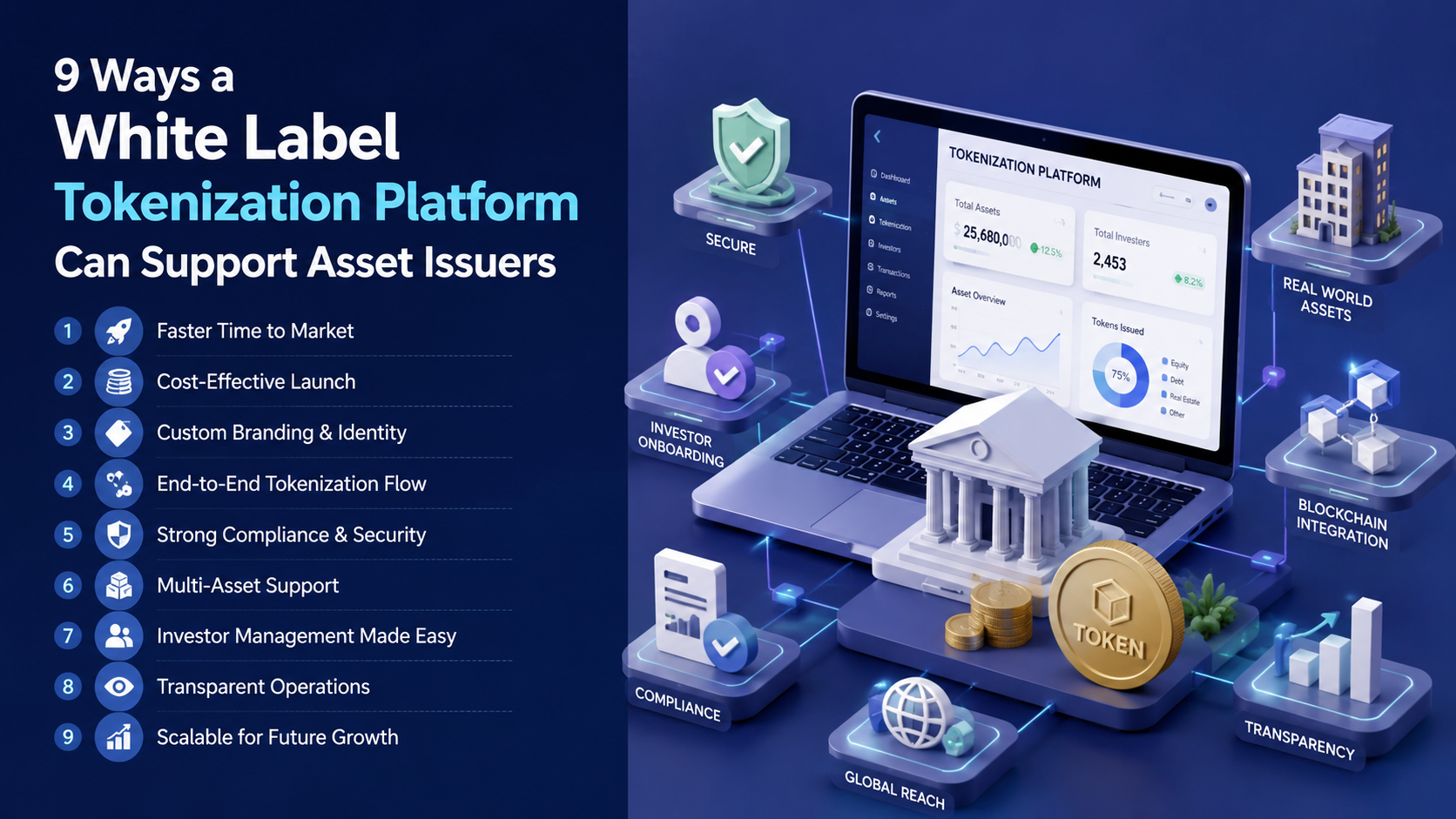
The following nine methods explain how a White Label Tokenization Platform can support asset issuers throughout the lifecycle of a tokenized offering.
1. Faster Setup for New Tokenized Asset Offerings
Launching a tokenized asset platform from the ground up can involve blockchain development, investor interfaces, administrative tools, compliance functions, smart contracts, wallet integration, and payment features. A white-label solution provides many of these technology components through an existing platform structure.
For asset issuers, this can reduce the amount of development work required before an offering reaches the market. The issuer can focus more attention on selecting assets, preparing legal structures, defining investor terms, and planning the offering rather than spending the entire project timeline on basic platform infrastructure.
For example, a property investment company planning fractional ownership of commercial buildings can use a White Label Real Estate Tokenization Platform as the technology layer for presenting properties, issuing tokens, managing investor accounts, and displaying ownership information.
2. Supports Different Asset Issuance Models
Every asset issuer may have a different approach to tokenization. One company may issue tokens representing fractional interests in a property, while another may tokenize debt, fund interests, commodities, or other financial claims.
A white-label platform can support different issuance structures through configurable token models and platform workflows. Issuers can define token supply, ownership terms, distribution rules, investor categories, pricing, and other offering parameters according to their project structure.
This flexibility is useful for companies that plan to launch several offerings over time. Instead of creating a separate technology environment for every asset, they can use the same platform foundation while configuring individual offerings for different assets.
3. Provides Investor Onboarding and Account Management
Investor onboarding is an important part of any tokenized asset offering. Investors may need to create accounts, submit identification documents, complete verification procedures, provide financial information, and accept offering-related agreements.
A tokenization platform can bring these activities into a single digital interface. Investors can register, complete required checks, review available offerings, make investments, and monitor their token holdings through their accounts.
For issuers, this creates a more organized process for handling investor information. Administrative teams can review account status, monitor pending actions, manage investor categories, and maintain records associated with each participant.
For businesses offering White Label Real Estate Tokenization, these functions can be particularly useful because property investments often involve multiple investors and recurring reporting requirements.
4. Helps Manage Compliance Workflows
Tokenized assets can involve securities regulations, investor eligibility requirements, anti-money laundering procedures, know-your-customer checks, tax documentation, and jurisdiction-specific obligations. The exact requirements depend on the asset, structure, location, and type of investors involved.
A platform can provide workflow support for these processes by connecting investor verification, document collection, transaction records, and permission settings. Issuers can define which investors are eligible for particular offerings and restrict participation when required conditions have not been completed.
This does not replace legal or regulatory advice. Instead, the platform provides technology for organizing operational procedures established by the issuer and its legal or compliance teams.
White Label Real Estate Tokenization Services can therefore include platform functions that help property businesses manage investor information and offering restrictions within their selected legal framework.
5. Automates Token Issuance and Ownership Records
Traditional asset ownership records can involve multiple documents, spreadsheets, databases, intermediaries, and administrative processes. Tokenization introduces a blockchain-based record for digital ownership or rights associated with an asset.
A platform can connect smart contracts with issuance workflows so that approved investors receive the appropriate number of tokens after completing the required investment process. Token balances can then be associated with investor accounts and recorded on the selected blockchain network.
For an issuer, this reduces manual handling during token distribution. Administrative teams can also access records related to token supply, investor holdings, transfers, and offering activity from a central interface.
The exact legal meaning of a token depends on how the offering is structured. The platform therefore needs to reflect the legal rights represented by the tokens rather than treating every token as having the same ownership model.
6. Connects Payments With Token Purchases
Investment collection is another area where tokenization platforms can assist issuers. Depending on the target market and regulatory structure, investors may need to pay using bank transfers, card-based payment methods, stablecoins, or other supported options.
A platform can connect payment workflows with investment orders and token allocation. Once the relevant conditions are satisfied, the investment amount and token purchase can be associated with the investor's account.
This can make transaction management easier for both investors and administrators. Issuers can monitor incoming investments, pending payments, completed transactions, and token allocations through platform dashboards.
For real estate businesses, this can be useful when handling multiple property offerings with different investment amounts and subscription periods.
7. Gives Issuers Administrative Control
Asset issuers need more than an investor-facing website. Their internal teams require administrative tools for managing offerings, investors, documents, transactions, token supplies, and platform activity.
A White Label Tokenization Platform can provide an administration panel where authorized personnel manage these functions. Depending on the platform design, administrators may create asset listings, set investment parameters, review investor applications, manage token allocations, publish documents, and monitor transactions.
Role-based permissions can also divide responsibilities among different employees. For example, a compliance employee may handle verification tasks, while an investment manager manages offerings and a finance employee reviews payment records.
This separation can make daily platform operations more organized and reduce unnecessary access to sensitive administrative functions.
8. Creates a Branded Investor Experience
Brand identity matters when financial businesses introduce digital investment products. Investors generally expect the platform interface to reflect the company they are dealing with rather than appearing as an unrelated third-party service.
White label technology allows issuers to present the platform under their own brand identity. Logos, colors, domain names, interface elements, offering pages, and communication materials can be configured according to the issuer's branding requirements.
For a property company, this means its White Label Real Estate Tokenization Platform can provide a digital investment environment that remains connected to its existing business identity.
The branded experience can extend across property listings, investor dashboards, account pages, transaction screens, and offering documentation. This gives the issuer greater control over how its tokenized asset business is presented to customers.
9. Supports Ongoing Reporting and Portfolio Management
Tokenization does not end when tokens are issued. Investors may continue to need information about their holdings, distributions, transactions, asset performance, and other updates.
A platform can provide dashboards that display portfolio information and relevant transaction records. Issuers can publish asset updates, investment documents, distribution information, and other communications through the investor interface.
For real estate offerings, portfolio management can include property information, rental income updates, valuation information, distribution records, and ownership data where applicable.
These functions also help issuers maintain communication with investors after an offering has closed. Instead of relying entirely on separate spreadsheets and manual emails, the platform can serve as a central location for investment-related information.
What Should Asset Issuers Consider Before Choosing a White Label Platform?
Selecting a platform requires more than comparing the number of features available. Asset issuers should first define the assets they plan to tokenize, their target investor groups, operating jurisdictions, compliance requirements, blockchain preferences, payment methods, and expected transaction volume.
The smart contract structure also deserves careful attention. The contract should reflect the rights and restrictions associated with the tokenized asset. Issuers should review how token transfers, investor eligibility, distributions, and other activities are handled.
Security should also receive significant attention. Access controls, wallet management, smart contract testing, data protection, transaction monitoring, and administrative permissions can affect the reliability of the platform.
The provider's development and support model should also be reviewed. An issuer may need technical maintenance, contract updates, integrations, bug fixes, platform monitoring, and assistance when new offerings are introduced.
Why White Label Tokenization Fits Real Estate Businesses
Real estate is one of the asset classes frequently discussed in connection with tokenization because individual properties can involve large capital requirements and multiple ownership participants. Token-based structures can provide a digital method for representing fractional interests or other property-related rights, depending on the legal arrangement.
A White Label Real Estate Tokenization Platform can give property companies an environment for listing assets, registering investors, processing subscriptions, issuing tokens, maintaining ownership records, and managing post-investment information.
Businesses can also use White Label Real Estate Tokenization Development to create a platform that reflects their operating model rather than relying on a generic investor portal. With the right legal structure and technology setup, the same platform can support multiple property offerings.
White Label Real Estate Tokenization Services may cover platform configuration, smart contract integration, investor management functions, payment connections, administrative dashboards, wallet features, and other components required for a tokenized real estate business.
Conclusion
A White Label Tokenization Platform can give asset issuers a practical technology base for launching and managing tokenized offerings. From investor onboarding and compliance workflows to token issuance, payment processing, administration, branding, and portfolio reporting, the platform can bring many operational activities into one environment. For property businesses, White Label Real Estate Tokenization can provide a structured way to present tokenized property opportunities while maintaining their own brand identity. The right platform still needs to match the issuer's legal structure, asset type, investor requirements, blockchain network, security expectations, and business model. Blockchain App Factory provides White Label Real Estate Tokenization Services for businesses seeking a platform for launching and managing tokenized real estate offerings, with support for White Label Real Estate Tokenization Development and White Label Real Estate Tokenization Platform Development.
FAQs
1. What is a White Label Tokenization Platform?
A White Label Tokenization Platform is a pre-developed technology solution that businesses can present under their own brand for issuing and managing tokenized assets. It can include investor management, token issuance, smart contracts, payments, administration, and reporting functions.
2. How can a white-label platform help asset issuers?
It can reduce development work and provide ready-made functions for investor onboarding, token issuance, transaction management, asset listings, administrative operations, and investor reporting.
3. Can real estate companies use a white label tokenization platform?
Yes. Real estate businesses can use a White Label Real Estate Tokenization Platform for property listings, investor onboarding, token issuance, ownership records, investment processing, and portfolio management, subject to the applicable legal structure.
4. Does tokenization replace legal compliance?
No. Tokenization technology does not replace legal, regulatory, tax, or compliance advice. The platform should support procedures established by the issuer and its professional advisers.
5. What assets can be tokenized?
Depending on the legal and technical structure, businesses may tokenize real estate interests, funds, debt instruments, commodities, artwork, infrastructure-related interests, and other real-world assets.
6. What is involved in White Label Real Estate Tokenization Development?
It can involve platform configuration, user management, property listing functions, smart contract development, token issuance, payment integration, wallet functions, administrative tools, compliance workflows, and reporting features.
7. Why is branding important for tokenization platforms?
Branding allows an issuer to provide investors with an investment interface associated with its own company. This can help maintain consistency across its website, investment offerings, investor dashboards, and communication channels.
8. Can one platform support multiple tokenized properties?
Yes. A suitable platform can support multiple offerings, with individual properties having their own token supply, investment terms, documents, investor restrictions, and transaction records.
9. What should businesses check before selecting a provider?
Businesses should review the provider's technology architecture, smart contract practices, security procedures, blockchain support, compliance-related functions, integrations, administration tools, maintenance process, and experience with the intended asset class.

 English
 French
 Spanish
 Portuguese
 Deutsch
 Turkish
 Dutch
Dutch
 Italiano
 Russian
 Romaian
 Portuguese (Brazil)
 Greek
Greek
