


How the Clay Tempering Process of Japanese Swords Works
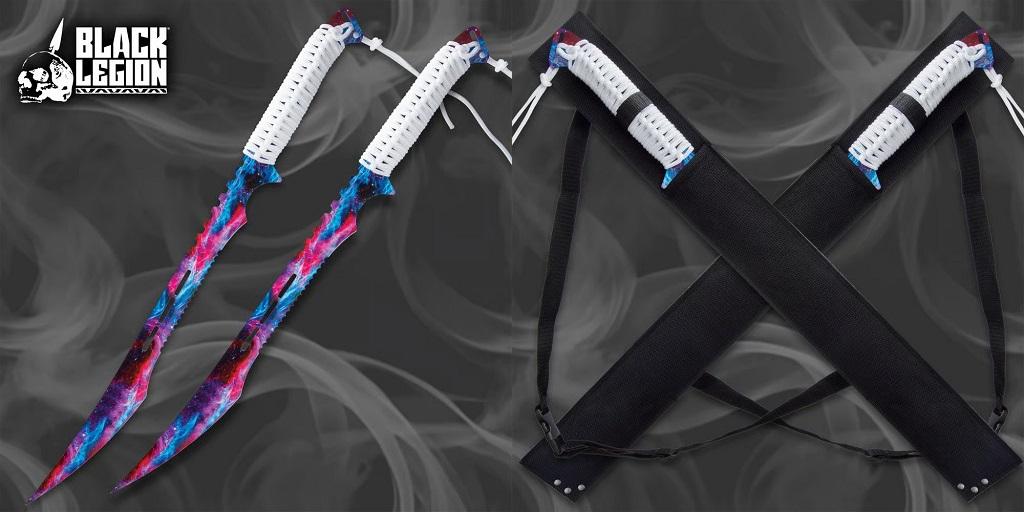
One of the most distinctive attributes of traditional Japanese swords is the “hamon” or “hamon” line, which is a wavy line at the edge of the blade that shows where the clay tempering process took place.
This is not just cosmetic, it is a mark of quality if it is authentic. Here’s what you need to know.
What Clay Tempering Does
When a Japanese swordsmith is preparing to temper a blade, he or she mixes a combination of water, ash and charcoal powder. This is then applied to the blade near the edge.
Then, when the smith tempers the blade, the clay that’s coated on there slows down the rate at which the edge and the spine of the sword heat up and cool down. The clay insulates the covered portion of the blade stock, metering the rate at which it receives and sheds heat.
This process results in an edge that is harder and a spine that is softer. The end result is that the edge will stay sharp for longer and be generally more resilient. The flipside is that the spine is softer and therefore better able to tolerate physical abuse than the edge, without snapping or chipping.
Consequently, a Japanese sword that has been properly clay tempered will have an edge that maintains itself and a spine that yields a much tougher sword that is more tolerant of abuse.
The hamon line is left on the blade as a result of this tempering process, and appears as a cloudy, wavy line near the edge.
What Makes a Sword “Real” Otherwise
Clay tempering is not the only thing that makes a Japanese sword authentic (or not).
As with any real “battle ready” sword, a real Japanese sword should be made with a suitable steel alloy. Traditionally, this was “tamahagane” or steel produced from iron sand, but in the modern era, there are many suitable steels, including but not limited to 1095, T10, and Damascus.
The sword must also be tempered, as we have covered in this short post. A tempered sword will have a blade that not only maintains an edge, but which can withstand the stresses of striking a target without shattering or chipping. A properly tempered sword can also be bent without taking a set.
Lastly, a sword must have a full tang, which in a Japanese sword is called a nakago and which is secured in the tsuka, or hilt, with a bamboo pin called a mekugi. This is different from how Western swords have their tangs set, but it is effective in traditional Japanese swords.
Either way, a sword must have a full tang to be considered real, because the tang is one of the key components that yields the structural integrity necessary to use the sword.
Here for a Real Japanese Sword?
In the market for a Japanese sword? Check out True Swords. They carry a wide range of battle ready swords, including traditional Japanese swords such as katana, wakizashi and odachi swords. Visit their website and get in touch with them for more information if you have questions.
-----------------------------------------------------------
For more information about Ninja Sword and Defense Umbrella Please visit: True Swords.

 English
 Arabic
 French
 Spanish
 Portuguese
 Turkish
 Dutch
Dutch
 Italiano
 Russian
 Romaian
 Portuguese (Brazil)
 Greek
Greek
