


Europe Online Grocery Market Growth Through Retail Innovation
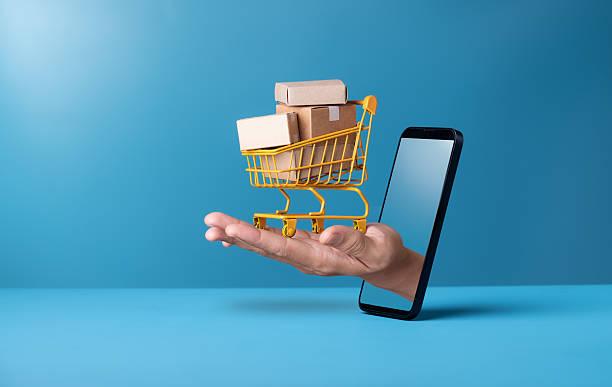
Europe Online Grocery Market is progressing through continuous innovation across digital platforms, fulfillment systems, customer engagement, and retail operations. Grocery retailers are increasingly treating e-commerce as an integrated part of their broader business strategies rather than a separate sales channel. Digital innovation allows businesses to improve product discovery, customer communication, inventory management, and order fulfillment. Retailers are also exploring new ways to connect online services with physical stores, distribution centers, and collection points. These developments are helping businesses respond to changing shopping behaviors while improving operational efficiency. As competition within digital grocery retail develops, innovation is becoming an important tool for strengthening customer relationships and creating differentiated shopping experiences.
The growing importance of online food shopping services highlights the transformation taking place within European food retail. Consumers can now access grocery products through websites, mobile applications, digital marketplaces, and retailer-specific platforms. These channels provide opportunities for businesses to improve convenience while gathering insights into customer preferences and shopping patterns. Retailers are investing in digital interfaces that simplify navigation, search, product comparison, payment, and order management. The integration of digital services with physical infrastructure is also improving fulfillment flexibility. As online food shopping becomes more sophisticated, retailers are increasingly focusing on seamless customer journeys and dependable operational performance.
Artificial intelligence and data analytics are becoming valuable tools for grocery retailers seeking to improve digital operations. Businesses can analyze purchasing patterns to understand demand and improve inventory planning. Predictive tools may assist retailers in anticipating product requirements and reducing unnecessary stock issues. Recommendation systems can also help customers discover relevant products based on their shopping activity. Behind the scenes, analytics can support delivery planning, warehouse management, and promotional strategies. The use of advanced technologies must be accompanied by appropriate data governance and privacy practices. When responsibly implemented, analytics and automation can help retailers make more informed operational decisions while improving the digital shopping experience.
Fulfillment infrastructure is another area experiencing innovation. Traditional stores can support online orders through dedicated picking operations, while specialized fulfillment centers can process larger volumes using technology-enabled systems. Retailers may choose different approaches depending on geography, customer density, product assortment, and delivery requirements. Automation can assist with inventory movement and order preparation in suitable facilities. Better warehouse management systems can also improve product availability and reduce processing errors. Efficient fulfillment is particularly important because grocery orders often contain products with different handling requirements. Innovation in this area can help businesses balance customer expectations with the operational complexity of digital grocery retail.
Retailers are also experimenting with new customer engagement strategies. Digital loyalty programs can connect purchasing activity across online and physical channels. Personalized promotions can provide relevant offers while encouraging repeat purchases. Mobile notifications can remind customers about orders, delivery schedules, or other service updates. Some platforms are introducing recipe ideas, meal planning tools, and shopping-list features to make grocery purchasing more integrated with household planning. These services can increase the usefulness of a grocery application beyond simple transactions. Retailers that create broader digital ecosystems may be able to strengthen customer engagement and encourage consumers to return regularly.
Sustainability is becoming another area where online grocery retailers are seeking innovation. Delivery operations require transportation and packaging, creating opportunities to improve route efficiency, packaging practices, and resource management. Consolidated deliveries and optimized routes can potentially improve logistics efficiency. Retailers may also examine packaging materials and fulfillment processes to reduce unnecessary waste. Sustainability strategies vary according to local infrastructure and business models, but environmental considerations are increasingly becoming part of retail planning. Consumers may also pay greater attention to how businesses manage environmental responsibilities. Combining digital efficiency with responsible operational practices can therefore contribute to long-term retail development.
The future of the Europe Online Grocery Market will be influenced by digital innovation, data analytics, fulfillment technology, omnichannel integration, customer engagement, and sustainability. Retailers that successfully combine technology with reliable operational infrastructure can create stronger and more convenient shopping experiences. Artificial intelligence, automation, personalization, and advanced logistics may continue improving different parts of the grocery value chain. At the same time, businesses will need to maintain appropriate privacy, security, and customer service standards. The ability to innovate while maintaining reliability will remain important as competition increases. European grocery retail is likely to continue moving toward more integrated digital ecosystems that connect customers, stores, fulfillment facilities, and delivery networks.
Frequently Asked Questions
Q1. How is AI influencing online grocery retail?
Ans: AI and analytics can support recommendations, demand planning, inventory management, customer engagement, and operational decision-making.
Q2. What is fulfillment technology?
Ans: It includes digital and automated systems that help retailers manage inventory, prepare orders, coordinate warehouses, and organize deliveries.
Q3. Why is omnichannel integration valuable?
Ans: It connects digital and physical retail services, giving customers more flexibility while helping retailers use their existing infrastructure effectively.

 English
 Arabic
 French
 Spanish
 Portuguese
 Deutsch
 Turkish
 Dutch
 Italiano
 Romaian
 Portuguese (Brazil)
 Greek
