


What Do Digital Marketing Services for Real Estate Include?
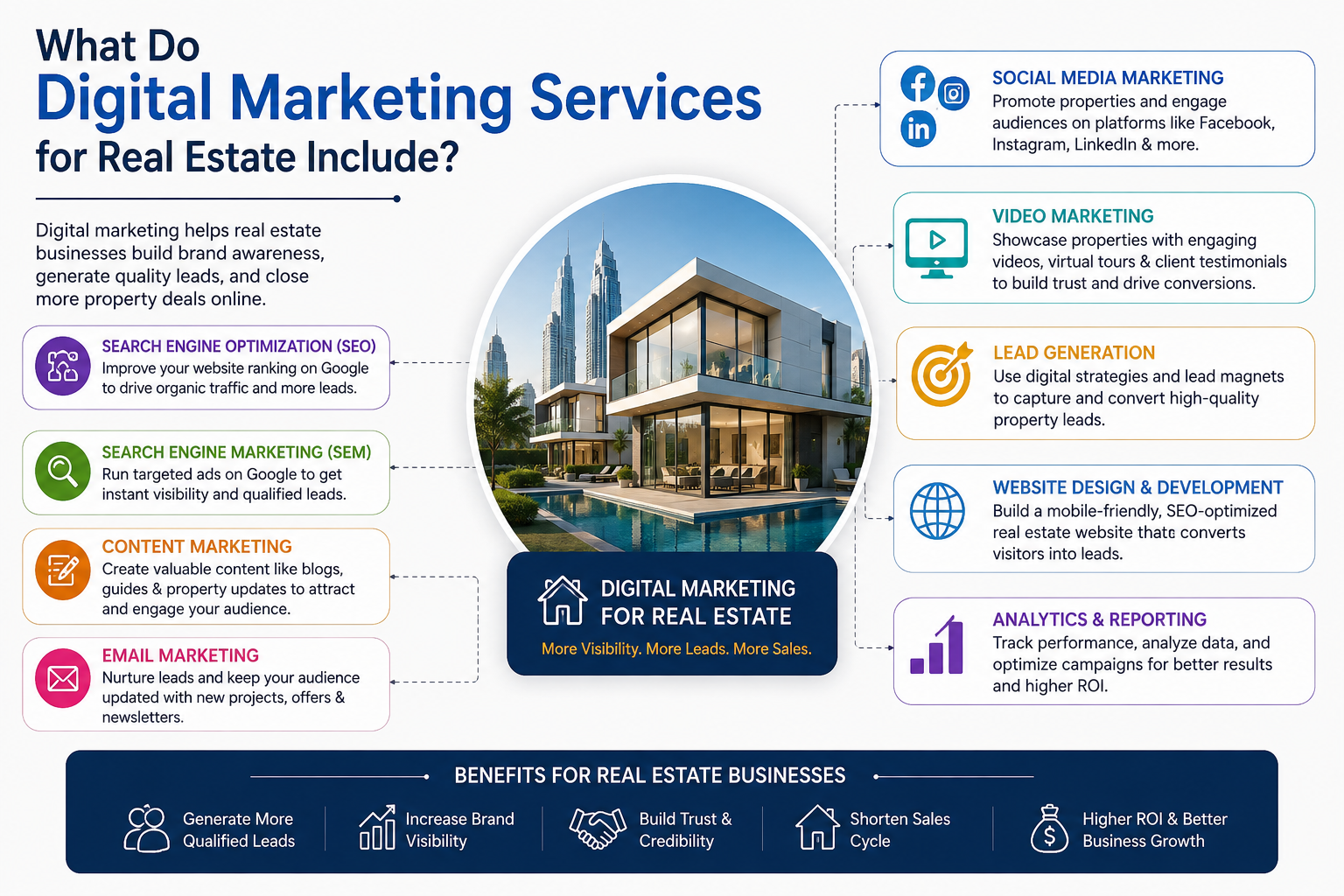
The real estate industry has changed dramatically over the last decade. Buyers no longer walk into an agency and flip through printed listings — they scroll through Instagram, search Google for "homes for sale near me," watch virtual tours on YouTube, and compare agents based on online reviews before ever picking up the phone. This shift has made digital marketing services for real estate is not just useful but essential professionals, agencies, developers, and property management companies.
But "digital marketing" is a broad term. What does it actually include when applied to real estate? This article breaks down the core services that make up a comprehensive real estate digital marketing strategy, so you know exactly what to look for whether you're hiring an agency or building an in-house plan.
1. Real Estate Website Design and Development
Everything in digital marketing points back to one central hub: the website. A real estate digital marketing service typically starts here, because a slow, outdated, or hard-to-navigate site will undo the value of every other marketing effort.
Key elements of a strong real estate website
- IDX/MLS integration so visitors can search live listings directly on the site
- Mobile responsiveness, since most property searches now happen on phones
- Fast load times, which affect both user experience and search rankings
- Lead capture forms placed strategically on listing pages, valuation tools, and contact pages
- Clean property pages with high-quality photos, floor plans, and neighborhood details
A well-built website acts as the foundation that every campaign — paid ads, email, or social — ultimately drives traffic toward.
2. Search Engine Optimization (SEO)
SEO is the practice of improving a website's visibility in organic (unpaid) search results. For real estate, this means showing up when someone searches for terms like "3-bedroom homes in [city]" or "best realtor in [neighborhood]."
What real estate SEO services usually cover
- Local SEO and Google Business Profile optimization, which is critical since most real estate searches have local intent
- On-page SEO for listing pages, service pages, and blog content, including title tags, meta descriptions, and header structure
- Neighborhood and market guide content that targets long-tail searches from buyers researching an area
- Backlink building through partnerships, local press, and directory listings
- Technical SEO audits to fix crawl errors, broken links, and site speed issues
Because real estate is inherently local, SEO strategies are usually built around specific cities, zip codes, and neighborhoods rather than broad national keywords.
3. Pay-Per-Click (PPC) Advertising
While SEO builds long-term visibility, PPC advertising delivers immediate traffic. Real estate PPC campaigns are typically run on Google Ads and are designed to capture buyers and sellers who are actively searching.
Common PPC services for real estate
- Google Search ads targeting keywords like "sell my house fast" or "homes for sale in [area]"
- Display and remarketing ads that follow website visitors across the web to keep the brand top-of-mind
- YouTube ads for property tours and agent branding
- Landing page creation specifically designed to convert ad traffic into leads, rather than sending clicks to a generic homepage
PPC is especially valuable for new agents or agencies entering a competitive market, since it can generate leads quickly while SEO efforts build up in the background.
4. Social Media Marketing
Social platforms have become one of the most powerful tools for real estate marketing because they combine visual storytelling with precise audience targeting.
Core components of real estate social media services
- Content calendars covering listings, market updates, client testimonials, and behind-the-scenes content
- Platform-specific strategy, since Instagram and Facebook favor visual listing content while LinkedIn works better for commercial real estate and industry networking
- Paid social advertising, including Facebook and Instagram lead ads that let users submit contact information without leaving the app
- Community engagement, such as responding to comments, joining local groups, and building relationships with followers
- Influencer and local partnership campaigns to expand reach within a target city or region
Video content, in particular, has become central to real estate social strategy — property walkthroughs, drone footage of neighborhoods, and short-form "day in the life of an agent" content tend to perform especially well.
5. Email Marketing and Marketing Automation
Email remains one of the highest-ROI channels in digital marketing, and real estate is no exception. It's particularly effective because buying or selling a home is a long decision-making process, often stretching over months.
What this typically includes
- Drip campaigns for new leads, nurturing them with market insights and relevant listings over time
- Newsletter content featuring new listings, market trends, and mortgage rate updates
- Automated workflows triggered by specific actions, such as a visitor requesting a home valuation
- Segmented lists separating buyers, sellers, investors, and past clients so messaging stays relevant
- CRM integration to track lead activity and hand off warm leads to agents at the right moment
Automation is especially important here, since it allows agents to stay in touch with hundreds of leads without manually following up with each one individually.
6. Content Marketing
Content marketing supports nearly every other channel by giving SEO something to rank, social media something to share, and email something to send. For real estate, content also builds trust with buyers and sellers who are making one of the biggest financial decisions of their lives.
Types of content commonly produced
- Blog articles on topics like market trends, buying/selling tips, and financing guides
- Neighborhood guides that showcase schools, amenities, and lifestyle factors
- Video content, including property tours, agent introductions, and client testimonials
- Downloadable guides, such as first-time homebuyer checklists, used to capture leads
- Market reports that position agents or agencies as knowledgeable local experts
7. Online Reputation and Review Management
Trust is a major factor in real estate decisions, and reviews often influence whether a buyer or seller reaches out at all. Reputation management services help maintain a strong online presence across review platforms.
This usually includes
- Actively requesting reviews from satisfied clients after a closed deal
- Monitoring platforms like Google, Zillow, and Realtor.com
- Responding professionally to both positive and negative feedback
- Highlighting testimonials across the website and social channels
8. Virtual Tours and Visual Media Production
As buyers increasingly begin their search online, high-quality visual content has shifted from a nice-to-have to a near-requirement.
Common visual media services
- Professional photography for listings
- Drone videography for aerial views of properties and neighborhoods
- 3D virtual tours that let buyers walk through a property remotely
- Video walkthroughs for use on YouTube, social media, and listing pages
9. Analytics, Reporting, and Lead Tracking
Finally, a complete digital marketing service includes measurement. Without tracking, it's impossible to know which channels are actually generating leads and closings.
What this involves
- Traffic and conversion tracking using tools like Google Analytics
- Call tracking to measure leads generated from phone inquiries
- Lead source attribution, connecting closed deals back to the original marketing channel
- Monthly or quarterly reporting that shows ROI on ad spend, SEO progress, and lead volume
Bringing It All Together
Digital marketing for real estate isn't a single service — it's an ecosystem of interconnected efforts. A strong website captures the leads that SEO and PPC drive in. Social media and content marketing build trust and visibility over time. Email marketing nurtures leads until they're ready to act. And analytics tie it all together, showing what's actually working.
For agents and agencies evaluating a digital marketing partner, the key is making sure these pieces work together rather than existing as disconnected tactics. A cohesive strategy — where SEO informs content, content fuels social and email, and analytics guide ongoing adjustments — is what ultimately turns online visibility into closed deals.

 English
 Arabic
 French
 Spanish
 Portuguese
 Deutsch
 Dutch
Dutch
 Italiano
 Russian
 Romaian
 Portuguese (Brazil)
 Greek
Greek
