


How Does Compositemould Prepreg Mould Supplier Fit Production Needs
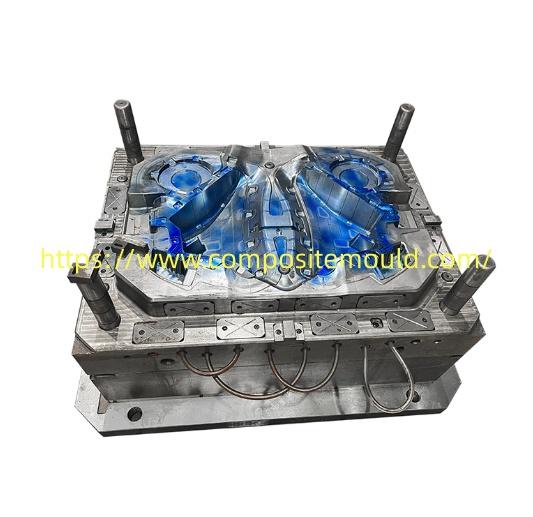
Prepreg Mould Supplier services can cover much more than producing a cavity for composite parts. In a custom manufacturing project, the tooling partner may be involved in design review, material selection, cavity development, machining, surface preparation, testing, inspection, and production coordination. Composite tooling needs to correspond with the material system and curing process, since temperature, pressure, thermal expansion, and dimensional behavior can influence the finished component. Tooling materials and processes are commonly selected according to the cure conditions and requirements of the intended application.
Product And Drawing Review
The process often begins with the component rather than the tool. Buyers can provide 2D drawings, 3D models, dimensions, laminate information, surface requirements, expected production volume, and details about inserts or core materials.
A tooling manufacturer can review these materials before production starts. This stage helps identify features that may affect machining, layup, release, thermal behavior, or inspection.
Curved sections, deep cavities, changing wall thicknesses, ribs, openings, and mounting points can all influence the final tooling structure. Early technical communication can therefore reduce unnecessary design changes later.
Mold Design And Development
A custom tooling project normally requires a detailed engineering stage. The manufacturer needs to translate the component geometry into a practical cavity structure while considering the selected manufacturing method.
Important areas can include parting lines, draft conditions, reference points, vacuum arrangements, release access, surface requirements, and support structures.
Compositemould states that its capabilities cover product part design, 3D printing, mold design and development, manufacturing, and finished part production. Its equipment includes CNC machining, wire EDM, EDM, deep-hole drilling, and other tooling machinery.
Tooling Material Selection
The material used to build the tool should correspond with the intended cure cycle and production conditions. Aluminum, steel, composite structures, and other tooling materials can be considered depending on the application.
Thermal expansion is an important consideration. The tool may experience repeated heating and cooling, so dimensional behavior needs to be considered during engineering.
Tooling materials can also affect machining, weight, heat transfer, surface finishing, and maintenance requirements. A useful manufacturing discussion should therefore cover the complete operating environment rather than focusing only on the initial purchase price.
Surface Preparation
The working surface directly influences the appearance of the finished composite component. Depending on the application, buyers may require a smooth surface, specific texture, gloss level, or other visual characteristics.
Surface preparation can include machining, polishing, coating, and release treatment. The specific procedure depends on the tooling material and production process.
For components with visible exterior surfaces, it is useful to establish a surface reference before manufacturing begins. A sample or approved reference can help designers and production teams maintain consistent expectations.
Thermal And Curing Considerations
Curing conditions are closely connected with tooling design. Temperature, heating rate, pressure, cure time, and cooling can influence resin behavior and dimensional results.
Tooling systems used for composite manufacturing can be designed for autoclave or out-of-autoclave processes, depending on the selected material and application. Industry tooling material suppliers describe systems intended for different cure conditions and tooling temperatures.
For buyers, the important point is to provide the intended cure cycle before the tool is finalized. This gives the engineering team information needed to evaluate thermal requirements and dimensional stability.
Vacuum And Release Arrangements
Vacuum consolidation is commonly used during composite layup and curing. The tooling therefore needs to accommodate the relevant vacuum bagging arrangement and sealing requirements.
Release is another practical concern. After curing, the component needs to separate from the working surface without unnecessary damage. Part geometry, draft, corners, surface condition, and release treatment can all influence this stage.
These considerations should be discussed during design rather than addressed only after the finished tool reaches production.
Testing And Inspection
Tooling production does not necessarily end when machining is complete. Inspection can include dimensional measurement, surface checking, assembly verification, and other project-specific procedures.
Trial production can also provide useful information. A test part may reveal issues related to layup, release, surface appearance, dimensional results, or curing conditions.
For custom projects, establishing an approval process before regular production can help both parties agree on drawings, tooling details, sample parts, and inspection criteria.
Manufacturing And Production Support
Some projects require only a tool, while others benefit from broader manufacturing coordination. A manufacturer with integrated design and production capabilities can discuss tooling alongside the finished component.
Compositemould focuses on thermoset composite molds and injection molds and reports experience with phenolic prepreg molds and aramid composite molds. Its manufacturing capabilities cover different stages from design development through mold production and finished parts.
This type of integrated approach can be useful when the component design is still being refined or when the tooling needs to correspond closely with a specific production process.
Industry Applications
Composite tooling is used across a range of sectors. Automotive, transportation, aviation, energy, infrastructure, environmental equipment, and industrial products can involve components requiring customized forming tools.
The requirements vary between applications. A transportation component may involve large curved surfaces, while an electrical or industrial housing may require mounting features and openings. Aviation components can involve strict dimensional and laminate requirements.
The tooling should therefore be developed around the actual component rather than relying on a generic configuration.
What Should Buyers Ask Before Ordering?
Before selecting a manufacturing partner, buyers can prepare a short list of practical questions:
Can the manufacturer review 2D and 3D drawings?
Which tooling materials are available?
What cure temperatures can the tool accommodate?
How are dimensional references established?
How are surface requirements handled?
What inspection procedures are available?
Can trial production be arranged?
How are design revisions managed?
Can finished components be supported alongside tooling?
These questions can help buyers compare manufacturing capabilities based on the actual project instead of comparing quotations alone.
Why Consider Compositemould?
Compositemould provides tooling development and manufacturing services for composite applications, with capabilities covering design, machining, mold development, testing, and finished component production. Its published information also identifies applications across transportation, railways, aviation, hydropower, environmental sanitation, and safety equipment.
For a custom composite project, buyers can begin by sharing component drawings, material information, cure conditions, production quantity, and surface requirements. This creates a practical basis for discussing cavity structure, tooling materials, inspection, and manufacturing arrangements.
A suitable tooling partner should be evaluated according to engineering communication, manufacturing capability, material knowledge, thermal considerations, dimensional control, surface preparation, testing, and production support.
For manufacturers planning custom composite tooling, related product categories and project information are available at https://www.compositemould.com/product/

 English
 Arabic
 French
 Spanish
 Portuguese
 Deutsch
 Dutch
Dutch
 Italiano
 Russian
 Romaian
 Portuguese (Brazil)
 Greek
Greek
