When machinery needs controlled and repeatable linear movement, choosing a dependable Linear Guide Supplier can have a direct impact on equipment performance, while an experienced Linear Guide Supplier can provide suitable rail and block configurations for CNC equipment, automation systems, inspection machines, and specialized industrial applications. Linear guides are designed to support moving components along a defined path, helping engineers create motion systems that are smooth, organized, and suitable for repeated operation.
Why Linear Guides Matter in Machine Design
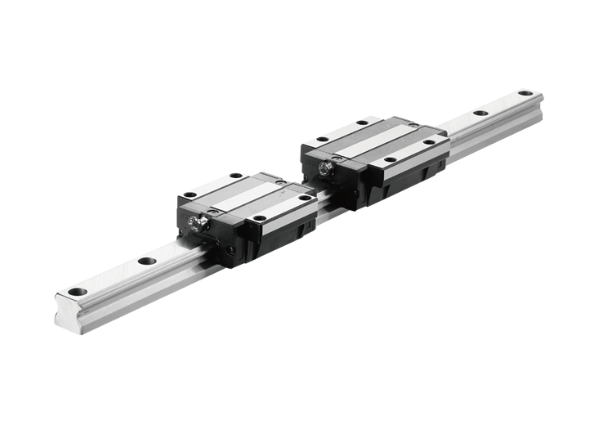
Linear guides provide a structured path for moving machine components. A typical system includes a precision rail and one or more blocks that travel along the rail using rolling elements.
This arrangement can reduce friction between moving surfaces and provide controlled travel. It is especially useful when machinery requires repeatable movement rather than unrestricted sliding.
The guide does not work independently. It normally forms part of a larger system that can include a ball screw, motor, coupling, bearing, worktable, and machine frame. These components need to be coordinated during the design stage.
A suitable guide can help support the moving load while maintaining a defined travel direction. This makes linear guides useful in machines where positioning and movement quality are important.
Selecting Rails and Blocks for Applications
Choosing a linear guide requires attention to the actual working conditions. Load capacity is an important starting point because the guide must support the moving assembly during operation.
Travel distance also needs to match the machine design. The rail should provide sufficient movement while fitting within the available installation area.
Speed and acceleration should be considered as well. Machines performing frequent positioning cycles may place greater demands on the guide system than equipment operating at lower speeds.
Accuracy and repeatability can be important for CNC machinery and automated equipment. The guide should be selected together with the machine's positioning system rather than treated as an isolated component.
Installation dimensions are another practical concern. Rail width, block height, mounting holes, and surrounding structures should be checked before ordering.
Environmental conditions may also affect the selection. Dust, moisture, temperature, lubrication, and maintenance access can influence which guide configuration is most appropriate.
Wangong Manufacturing and Product Consistency
A linear guide requires careful manufacturing because the rail, block, and rolling elements must work together accurately. Production consistency can influence how smoothly the completed assembly moves.
Manufacturing may involve material preparation, machining, heat treatment, grinding, surface finishing, assembly, and inspection. The exact process depends on the product design and required performance.
Rail straightness and dimensional accuracy are important considerations. The contact surfaces also need suitable finishing so that the rolling elements can move along their intended paths.
Quality inspection can be performed at different stages. Checking components before assembly can help identify dimensional differences early, while final inspection can verify completed products.
For industrial buyers, consistency between batches is particularly useful. When replacement components or additional quantities are needed, compatible dimensions make installation and inventory management easier.
Clear technical documentation can support this process. Drawings, product specifications, approved samples, and inspection requirements can give production and purchasing teams a common reference.
Applications Across Industrial Equipment
Linear guide systems are used in a broad range of machinery. CNC machines may use them to move worktables, machining heads, and other precision assemblies.
Automation equipment can incorporate linear guides into positioning platforms, handling systems, assembly machines, and production lines. Their defined travel path makes them suitable for repeated machine movements.
Inspection equipment may also require controlled linear motion when sensors, cameras, or measuring components need to move along a specific axis.
Robotics and specialized machinery can use similar guide systems depending on the structure and required travel. Packaging equipment, electronics manufacturing machines, and material handling systems may also benefit from linear guidance.
The application determines the appropriate product. A guide designed for a compact positioning unit may not be suitable for a larger machine carrying heavier loads.
For custom equipment, engineers can provide drawings or detailed specifications when standard dimensions do not match the existing machine. This can help manufacturers understand the required installation conditions before production begins.
Building a Reliable Motion System
Correct integration is just as important as product selection. The mounting surfaces should be properly prepared, and rail alignment needs to be coordinated with the rest of the machine.
Ball screws are often used alongside linear guides. While the guide controls the direction of movement, the ball screw can provide the driving force. Good alignment between the two can help reduce unnecessary mechanical stress during operation.
Lubrication is another part of regular maintenance. The appropriate maintenance approach depends on operating frequency, environment, and equipment design.
For buyers, supplier evaluation should cover more than product dimensions. Manufacturing capabilities, inspection procedures, customization support, communication, packaging, and repeat-order consistency are all useful factors to review.
Sample testing can be especially helpful for new projects. Engineers can check dimensions, mounting compatibility, movement characteristics, and integration before approving larger quantities.
A clear sourcing process can also support long-term cooperation. When product specifications and approved samples are maintained, repeat orders can be handled with fewer uncertainties.
Linear guides remain an important part of many modern motion systems because they provide a defined path for controlled machine movement. By considering load, travel, speed, accuracy, installation conditions, and manufacturing consistency together, businesses can select products that better match their equipment requirements. For further information about linear guide solutions, visit https://www.wangong.net/ .




 Arabic
 French
 Spanish
 Portuguese
 Deutsch
 Turkish
 Dutch
Dutch
 Italiano
 Russian
 Romaian
 Portuguese (Brazil)
 Greek
Greek
