


Precision Transmission Solutions for Automated Equipment
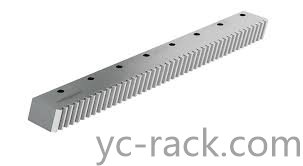
Modern industrial machinery requires transmission components that can maintain accurate movement, stable contact, and dependable operation throughout repeated production cycles. In robotics, CNC equipment, automated assembly systems, and intelligent manufacturing lines, Ground Gear technology represents a precision-oriented manufacturing approach that combines refined working surfaces, controlled material processing, and carefully managed production methods to support reliable mechanical transmission.
Material engineering provides the foundation for transmission quality. Components used in industrial environments experience repeated mechanical contact, friction, vibration, and changing operational conditions. Alloy materials are commonly selected because they can provide a balanced combination of strength, toughness, and resistance to wear. Appropriate material preparation and heat treatment can further improve structural stability while preserving the properties needed for precision machining and finishing.
Precision grinding is particularly important because transmission components depend on consistent contact between working surfaces. Grinding technology refines surfaces after earlier machining processes, helping improve dimensional consistency and contact quality. Controlled grinding can remove small irregularities and create a smoother interface between interacting components, supporting more stable movement and reducing unnecessary mechanical resistance.
Surface quality has a direct influence on transmission efficiency and durability. Uneven working surfaces can cause irregular contact, localized stress, friction, and vibration. Precision finishing helps establish more uniform contact conditions, allowing mechanical forces to move through the system more smoothly. Better surface integrity can also support effective lubrication and help reduce wear during prolonged industrial operation.
Structural engineering works together with material and surface processing to determine overall mechanical behavior. Engineers evaluate tooth geometry, contact patterns, alignment, and force distribution when optimizing transmission components. Balanced structural design can reduce excessive stress concentration and improve the consistency of force transfer. This is especially important for automated machinery where stable motion must be maintained over many repeated cycles.
Thermal performance is another important engineering consideration. Mechanical contact generates heat through friction, while changes in temperature can influence material characteristics and dimensional stability. Engineers address these effects through appropriate material selection, lubrication methods, precision processing, and controlled manufacturing conditions. Effective thermal management helps preserve reliable contact and movement as equipment operating environments change.
Vibration control also depends on manufacturing accuracy. Refined surfaces and consistent contact can reduce mechanical impact and unwanted oscillation during operation. Lower vibration supports smoother equipment behavior and reduces unnecessary stress on connected machine assemblies. In automated manufacturing facilities, stable mechanical operation can contribute to improved reliability and more predictable production processes.
Digital engineering technologies have become increasingly valuable in the development of precision transmission components. Simulation and analytical tools allow engineers to examine structural stress, contact behavior, movement characteristics, and potential weaknesses before physical production. These technologies support more efficient design optimization and help manufacturers improve consistency while developing solutions for different industrial applications.
Zhejiang Yuchen Transmission Technology Co., Ltd. combines precision manufacturing capabilities with engineering expertise to support industrial automation and mechanical transmission applications. The company emphasizes material evaluation, controlled machining, surface treatment, and continuous process improvement to provide reliable components for equipment manufacturers seeking stable motion and dependable operational performance.
As industrial production becomes increasingly automated, transmission components must provide consistent accuracy while supporting efficient mechanical movement and long-term reliability. The second appearance of Ground Gear highlights its role in precision contact, controlled force transfer, and stable operation within advanced industrial machinery. For additional technical information and product solutions from Zhejiang Yuchen Transmission Technology Co., Ltd., visit https://www.yc-rack.com/product/spur-gear-rack/ to explore precision transmission technologies for modern industrial applications.

 English
 Arabic
 French
 Spanish
 Portuguese
 Deutsch
 Turkish
 Dutch
 Italiano
 Russian
 Romaian
 Greek
