


What Is the MEAN Stack and Why Use It?
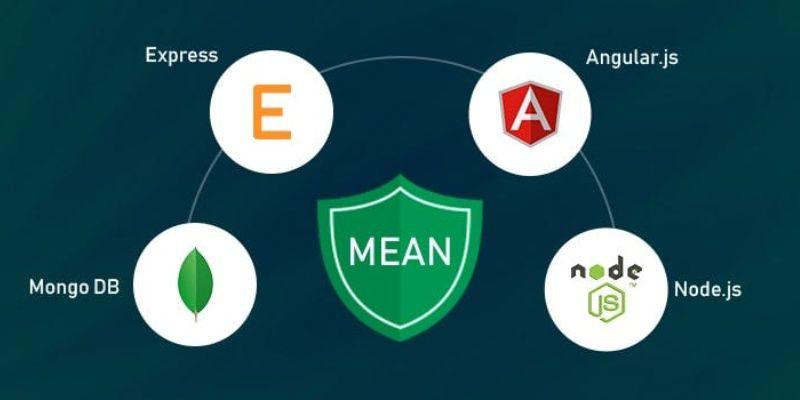
Esthetically pleasing interfaces are not enough for modern web applications. Technologies that can handle user interactions, analyze data, connect to servers, and provide dependable performance are essential for developers. Full-stack development, in which developers work on both frontend and backend components, has become more common as a result of this demand. By combining MongoDB, Express.js, Angular, and Node.js into a unified JavaScript-based development environment, the MEAN Stack provides a useful method.
Developers can use JavaScript for a large portion of the application development process rather than jumping between different programming languages for different levels. This can facilitate cooperation and streamline development. You can also learn through FITA Academy. MEAN Stack technology can serve a wide range of online projects, from enterprise apps to interactive dashboards and e-commerce platforms. Aspiring developers can select the best tools and lay a solid basis for a future in full-stack development by understanding how various technologies interact.
What Is the MEAN Stack?
A technological stack called MEAN is used to create scalable and dynamic web applications. Its four main technologies MongoDB, Express.js, Angular, and Node.js are the source of the moniker. Every technology has a distinct function in the application. MongoDB serves as the database and uses a versatile document-oriented format to store application data. Express.js offers a framework for using Node.js to create server-side apps and APIs.
Developers can construct interactive user interfaces with the help of Angular, which manages the frontend. JavaScript may run on the server thanks to the runtime environment provided by Node.js. The MEAN Stack's use of JavaScript throughout the development process is one of its main draws. While creating various components of an application, developers might use a consistent programming language. This strategy can facilitate information sharing between frontend and backend developers and lessen context switching.
Understanding the Four Components of MEAN Stack
Every MEAN Stack component serves a certain purpose during the development process. MongoDB employs a document-based structure that can adapt to changing data requirements and saves application information. Express.js, which is based on Node.js, facilitates the efficient creation of middleware, backend logic, routes, and APIs. Google created Angular, an organized framework for creating front-end apps with lots of features.
It offers forms, routing, components, services, and other elements needed for contemporary web interfaces. JavaScript can be executed outside of a browser using Node.js as the runtime environment. You can learn it form Training Institute in Chennai with expert guidance. These technologies come together to provide an entire development ecosystem. For instance, an Express.js API running on Node.js may get a request from the frontend when a user submits data via an Angular application. Before providing a response to the user interface, the backend can then interact with MongoDB to obtain or modify the necessary data.
How Does the MEAN Stack Work?
The frontend, server-side logic, and database are all connected via the MEAN Stack's flow. Consider an application for online buying where a consumer looks for a product. After receiving user input, the Angular frontend submits a request to the backend. While Express.js manages the request and decides what the server should do, Node.js provides the environment in which the backend application runs. If product details are required by the application,
Express.js has the ability to interact with MongoDB and obtain pertinent records. The requested data is subsequently sent back to the backend using MongoDB. After processing the response, Express.js returns it to the Angular application. Angular shows the products to the customer and refreshes the interface. Instead of working with static web pages, users can work with dynamic applications thanks to this ongoing interaction. Because it illustrates how each MEAN component contributes to the overall program, it is crucial for novices to comprehend this flow.
Why Use the MEAN Stack for Web Development?
For developers and development teams, the MEAN Stack has a number of benefits. A more consistent development experience can be achieved by utilizing JavaScript on both the frontend and back end. Instead of learning different languages for every component, developers can apply well-known programming techniques across several application layers. Because MEAN's technologies offer well-established frameworks, libraries, and development tools, it also facilitates quick application development.
While Node.js allows asynchronous operations that can help applications manage many requests effectively, MongoDB gives flexibility when applications need to handle changing data structures. Express.js streamlines backend and API development, while Angular offers an organized framework for creating intricate user interfaces. You can also learn through MEAN Stack Training in Chennai for expert guidance. The vast JavaScript ecosystem, which offers access to a multitude of packages and resources, is another benefit. However, rather than picking MEAN just because it's popular, developers should still choose technologies based on project requirements.
MEAN Stack vs Other Full-Stack Technologies
One of the many well-liked methods for full-stack development is MEAN. For instance, the MERN Stack uses React in favor of Angular. For database and backend development, both stacks make use of Express.js, Node.js, and MongoDB.
However, frontend technology is where they diverge most. React concentrates on the user interface and lets developers choose extra libraries according to project requirements, whereas Angular offers a more structured framework with built-in functionalities. The MEVN Stack is an alternative that substitutes Vue.js for Angular. The ideal option is determined by a number of variables, including long-term maintenance, team experience, development preferences, and application needs. Teams that like Angular's built-in development features and structured design may find MEAN especially useful. Teams who value React's flexibility might find MERN appealing. Developers can choose a stack based on real-world project requirements rather than just adhering to technological trends by being aware of these distinctions.
Can You Build with MEAN Stack?
The MEAN Stack can be used by developers to build a variety of online apps. It can be used by companies to create booking systems, e-commerce platforms, administrative dashboards, customer portals, content management software, and company management tools. It is appropriate for applications that need frequent user-server interaction since it combines frontend and backend technologies. This is the overview of MEAN technology. For example, Angular can be used by an online learning platform to provide student dashboards and courses.
MongoDB is used to store user profiles, course data, and progress records, while Express.js and Node.js are used to manage application functionality and APIs. When the program needs frequent data changes, developers can also create real-time functionality. However, the project's architecture, performance requirements, security demands, and anticipated scalability determine if MEAN is appropriate. Before choosing a technological stack, developers should consider these aspects. A well-thought-out MEAN application can offer a solid basis for expanding web-based products.
Career Opportunities After Learning MEAN Stack
Gaining knowledge of the MEAN Stack can lead to a variety of web development career options. A developer who is well-versed in the entire stack can work as a Full-Stack Developer or MEAN Stack Developer. Additionally, developers can seek careers as Angular developers, Node.js developers, or backend-focused JavaScript developers by specializing on particular technologies. Aspiring professionals should construct projects while learning the stack because employers typically value both theoretical knowledge and practical skills.
An analytics dashboard, task management platform, booking system, or e-commerce application could all be included in a portfolio. Additionally, REST APIs, databases, authentication, Git, debugging, and fundamental deployment techniques should be understood by developers. Because developers often collaborate with designers, testers, project managers, and other technical experts, communication and problem-solving abilities are equally important. For beginners who prefer supervised instruction while building their technical foundation, completing a MEAN Stack course in Chennai can offer structured learning and practical exposure.
Conclusion
The MEAN Stack offers a complete environment for creating contemporary online applications by combining MongoDB, Express.js, Angular, and Node.js. Developers may work across frontend, backend, server, and database layers with ease thanks to its JavaScript-focused approach. Developers can use MEAN technologies for a wide range of useful projects, from e-commerce apps and company dashboards to learning platforms and consumer portals.
Beginners can develop their skills by starting with JavaScript, moving on to Angular, Node.js, Express.js, and MongoDB, and then using what they've learned in practical applications. Although there are other options for full-stack development, MEAN is a good fit for many applications due to its unified technological ecosystem and structured architecture. Understanding the MEAN Stack can give ambitious developers useful technical knowledge and lay the groundwork for careers in full-stack development.

 English
 Arabic
 French
 Spanish
 Portuguese
 Deutsch
 Turkish
 Dutch
Dutch
 Italiano
 Russian
 Romaian
 Greek
Greek
