


End-to-End Logistics Solutions Company: From Transportation to Delivery
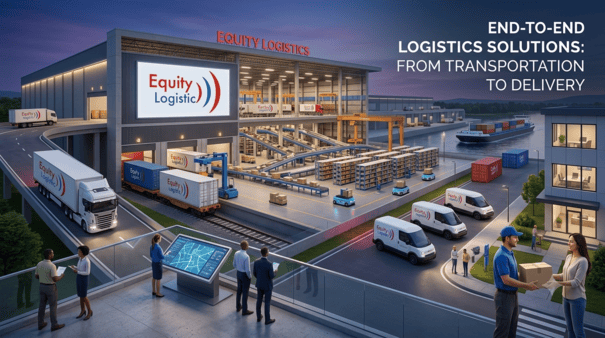
Every supply chain looks simple on a slide and complicated in the field. A shipment doesn't just need to move from point A to point B it needs the right vehicle, the right permits, the right route, the right storage window, and the right person taking responsibility if something goes wrong along the way. For most businesses, especially those moving heavy, oversized, or high-value cargo, this is exactly where things fall apart: not because nobody was hired to move the goods, but because too many different people were hired to move different pieces of the journey.
That's the core problem a true Logistics Solutions Company is built to solve replacing a chain of disconnected vendors with a single, accountable partner who owns the process from the first planning call to the final signed delivery note.
Why "transportation" and "logistics" aren't the same thing
It's easy to use these words interchangeably, but the difference matters more than most businesses realise until they've been burned by it.
Transportation is the physical act of moving cargo a truck, a driver, a route from origin to destination. It's one piece of the puzzle.
Logistics is everything that has to happen around that movement for it to succeed: assessing the cargo, surveying the route for clearance and access issues, selecting the right vehicle or trailer configuration, securing permits and escorts, ensuring the shipment, tracking it in transit, and managing the handover at the other end. A transporter gets a truck from one place to another. A logistics partner engineers the entire movement so nothing is left to chance.
This distinction becomes critical the moment cargo gets complicated — oversized industrial equipment, transformers, solar modules, telecom infrastructure, or project consignments bound for remote or high-altitude locations. These aren't shipments you can hand to the lowest-cost trucking company and hope for the best. They require planning before a single wheel turns.
What end-to-end logistics actually looks like
A genuinely end-to-end logistics solutions company in India typically works through a disciplined sequence rather than jumping straight to dispatch:
1. Assess the cargo. Before anything else, the dimensions, weight, value, and sensitivity of the consignment are studied in detail. A transformer, a wind turbine blade, and a telecom tower section all demand entirely different handling strategies.
2. Survey the route. For heavy or over-dimension cargo, the road itself becomes part of the engineering problem — bridge load limits, turning radii, overhead clearances, and local permit requirements all need to be mapped before departure.
3. Engineer the movement. This is where the right multi-axle or hydraulic trailer, lifting equipment, and lashing method get selected based on what the survey and cargo assessment revealed.
4. Secure authorisation. Permits, escorts, and approved movement windows are arranged in advance, so the shipment isn't stalled waiting on paperwork mid-route.
5. Deliver and hand over. Real-time tracking, on-ground supervision, careful offloading, and complete documentation close the loop with a clean, auditable record for every consignment.
When one team owns every one of these stages instead of subcontracting them out separately, accountability never slips through the cracks. That's the difference between a shipment that arrives on schedule and one that becomes a chain of finger-pointing when it doesn't.
The industries that can't afford a broken link
Some sectors simply don't have room for logistics failure, because the cost of a delay or a damaged consignment isn't measured only in money — it can mean a stalled project, a missed commissioning date, or a safety risk.
-
Power & energy — transformers, turbines, and switchgear that are expensive, heavy, and often irreplaceable on short notice.
-
Renewable energy — solar module transportation that has to be protected, insured, and matched precisely to a project's installation schedule.
-
Heavy engineering — fabricated units and plant machinery that require specialised lifting and trailer configurations.
-
Infrastructure — oversized structural components that demand route surveys long before departure.
-
Telecom — telecom tower transportation for network infrastructure rollouts on tight timelines.
-
Defence and government — sensitive, heavily documented cargo where chain-of-custody matters as much as the delivery itself.
Businesses across these sectors don't just need a truck, they need a partner who understands why the cargo is difficult and has already solved for it before the vehicle leaves the yard.
Where logistics gets genuinely hard: India's toughest destinations
Anyone can move cargo between two major cities on a national highway. The real test of a logistics company is what happens when the destination isn't easy to reach at all.
Locations like Leh and Ladakh, the Andaman and Nicobar Islands, and Lakshadweep each bring their own set of constraints: high-altitude roads with seasonal accessibility, sea-plus-road combinations for island cargo, and limited infrastructure at the receiving end. A capable logistics solutions company doesn't treat these as exceptions to be handled reactively; it builds dedicated movement plans for them, because "we'll figure it out on the way" isn't a strategy when a consignment is worth lakhs and time-critical for a project team waiting on-site.
This is also where project handling becomes essential; not every job is a single shipment. EPC contractors and infrastructure developers often need multiple consignments sequenced around milestones and site readiness, arriving in the right order at the right time rather than all at once or, worse, out of sequence.
What separates a real logistics partner from a truck broker
If you're evaluating logistics providers, a few markers reliably separate a genuine end-to-end operator from someone simply reselling truck capacity:
-
Certified processes. ISO 9001:2015 certification signals that quality-management practices — not just goodwill — govern how consignments are handled.
-
Route surveys before dispatch. Constraints get solved on paper first, not discovered mid-journey.
-
Transit insurance built in. Commercial protection should be standard practice, not an upsell.
-
Consistent GPS tracking. Visibility throughout the movement, not just a call when the truck arrives.
-
Documented handover. A clean, auditable close-out at destination condition reports, permits, and delivery documentation all in order.
-
Warehousing and staging capability. Secure storage and phased release aligned to a project's actual schedule, not just point-to-point delivery. This matters enormously when warehousing services need to bridge the gap between manufacturing and site readiness.
These aren't features to ask about after something goes wrong, they're the things worth confirming before a single consignment is booked.
Why "one relationship" changes the outcome
The biggest practical advantage of working with an end-to-end logistics partner isn't convenience, it's accountability. When route surveys, permits, transport, insurance, and delivery all sit inside one relationship, there's no ambiguity about who is responsible when a route needs to be re-planned or a permit takes longer than expected. Compare that to managing five separate vendors for the same shipment, where every delay becomes a debate about whose fault it was.
For businesses moving heavy, high-value, or oversized cargo across India whether that's a transformer bound for a power project, solar modules headed to a renewable energy site, or telecom infrastructure for a network rollout this single point of accountability is often the difference between a shipment that lands on schedule and one that turns into a project-wide delay.
Choosing the right logistics partner for your business
Before signing on with any provider, it's worth asking a few direct questions:
-
Does the company survey routes and secure permits as standard practice, or only when something goes wrong?
-
Is there a single accountable team managing the shipment end-to-end, or will your cargo pass through multiple subcontractors?
-
Can they demonstrate experience with your specific cargo type over-dimension, high-value, project-based, or destination-specific challenges like island or high-altitude delivery?
-
Is documentation — insurance, permits, condition reports handled proactively, or will you be chasing paperwork after delivery?
A logistics solutions company that can answer all four with confidence is one built for the kind of cargo where failure genuinely isn't an option, not just the easy, predictable freight that any transporter can handle.
Final thoughts
Logistics stops being a back-office function the moment your cargo is heavy, valuable, time-sensitive, or headed somewhere difficult to reach. At that point, the choice between a transporter and a true logistics partner becomes the choice between hoping a shipment arrives intact and knowing it will, because every stage of the journey from the first cargo assessment to the final documented handover — was planned, engineered, and owned by one accountable team.
That's the standard an end-to-end Logistics Solutions Company in India should be held to, and it's the standard worth insisting on before your next consignment leaves the yard.

 English
 Arabic
 French
 Spanish
 Portuguese
 Deutsch
 Turkish
 Dutch
Dutch
 Russian
 Romaian
 Portuguese (Brazil)
 Greek
Greek
