


Tooth Canal Treatment in Islamabad for Healthy Teeth
Dental pain can make even simple daily activities uncomfortable. A damaged or infected tooth may cause sensitivity, swelling, difficulty chewing, or persistent pain that does not go away on its own. In such situations, timely dental care can help protect the natural tooth and prevent the problem from becoming more serious.
For patients looking for tooth canal treatment in Islamabad, understanding the procedure, its benefits, expected cost, and aftercare can make the experience much easier. A professional Dental Clinic in Islamabad can assess the affected tooth and recommend the most suitable treatment based on the condition of the tooth, the level of infection, and the patient's overall oral health.
What Is Tooth Canal Treatment?
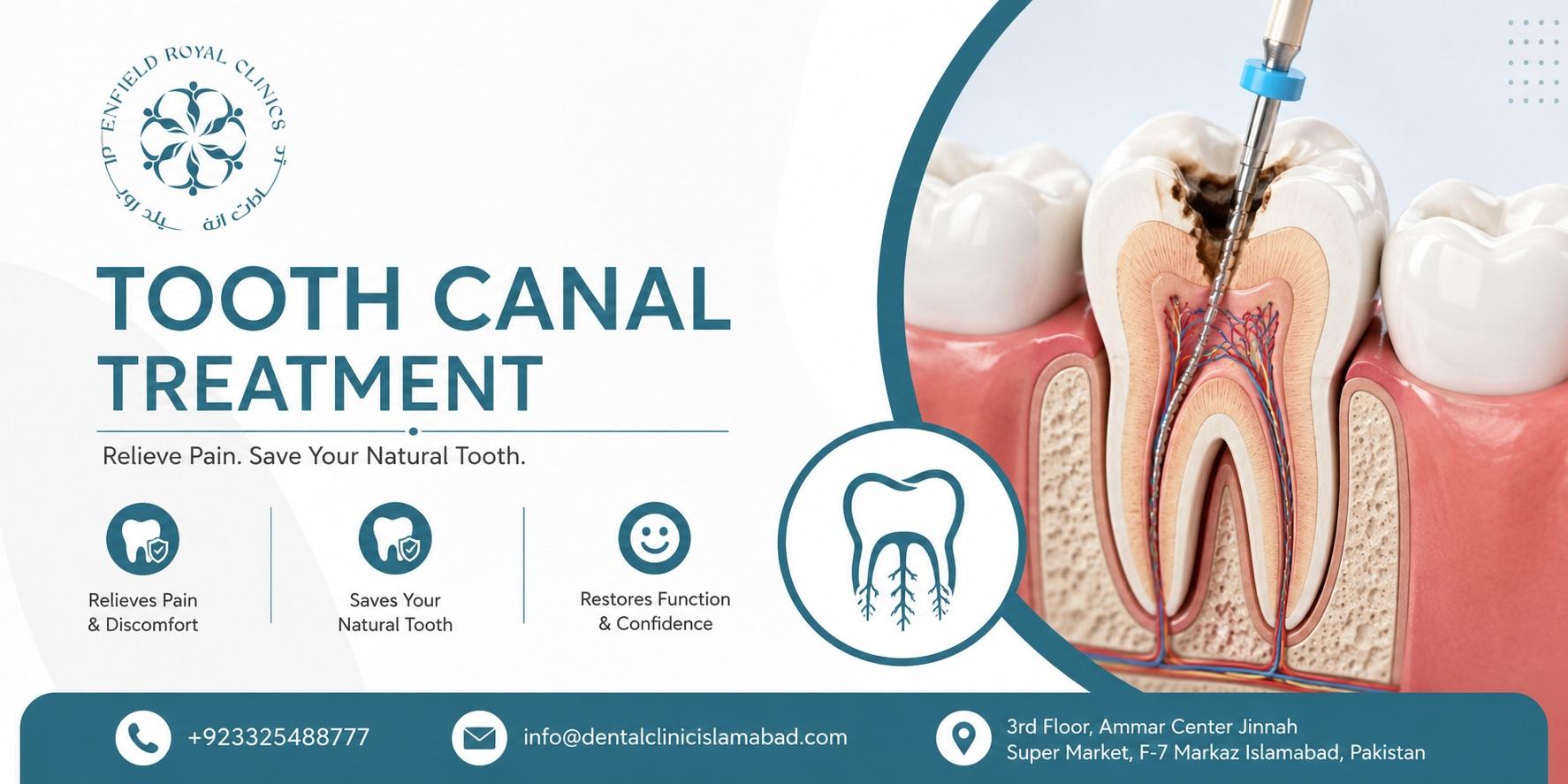
Tooth canal treatment, commonly known as root canal treatment, is a dental procedure used to treat a tooth when its inner pulp becomes infected, inflamed, or severely damaged. The pulp contains nerves and blood vessels and is located inside the tooth. When decay, trauma, or repeated dental procedures affect this area, bacteria can enter the pulp and cause infection.
During tooth canal treatment, the infected or damaged pulp is carefully removed. The inside of the tooth is then cleaned, disinfected, shaped, and sealed. In many cases, a dental crown is placed afterward to strengthen the treated tooth and restore its appearance and function.
The main purpose of the treatment is not simply to stop pain. It is also intended to save the natural tooth and prevent the infection from spreading to surrounding tissues.
Why Is a Tooth Canal Needed?
A tooth may require canal treatment when the pulp has become irreversibly damaged. Several dental problems can lead to this condition.
Deep Tooth Decay
Untreated cavities can gradually move deeper into a tooth. If the decay reaches the pulp, bacteria can cause inflammation or infection. A filling may no longer be sufficient, making tooth canal treatment necessary.
Cracked or Damaged Teeth
A crack or fracture can allow bacteria to reach the inner part of a tooth. Depending on the severity and location of the damage, a dentist may recommend a tooth canal to remove infected tissue and preserve the remaining tooth.
Dental Trauma
An accident or strong impact can damage the pulp even when there is no obvious crack on the outside of the tooth. In some cases, the pulp may die over time and eventually become infected.
Repeated Dental Procedures
A tooth that has undergone several restorations may sometimes experience pulp irritation or damage. If the pulp cannot recover, canal treatment may become the appropriate option.
Common Signs That a Tooth May Need Canal Treatment
Recognizing warning signs can encourage patients to seek dental care before an infection becomes more complicated. Some common symptoms include:
-
Persistent toothache
-
Strong sensitivity to hot or cold foods and drinks
-
Pain while biting or chewing
-
Swelling around the affected tooth
-
Tender or swollen gums
-
A darkening or discoloration of the tooth
-
An unpleasant taste in the mouth
-
A recurring pimple or abscess on the gums
-
Pain that continues even after the source of temperature sensitivity is removed
Not every toothache requires a root canal. Tooth sensitivity and pain can have several causes, so a dentist generally needs to examine the tooth and may use dental X-rays before making a diagnosis.
How Tooth Canal Treatment Is Performed
The exact treatment plan depends on the condition of the tooth. However, a typical tooth canal procedure generally follows several stages.
1. Dental Examination
The dentist first examines the affected tooth and discusses the patient's symptoms. An X-ray may be taken to identify the location and extent of infection and to understand the shape of the tooth's roots.
2. Local Anesthesia
Local anesthesia is used to numb the area around the tooth. This helps make the procedure more comfortable for the patient.
3. Accessing the Tooth
The dentist creates a small opening in the tooth to reach the infected or inflamed pulp inside.
4. Removing the Infected Pulp
Special dental instruments are used to remove the damaged pulp from the pulp chamber and root canals.
5. Cleaning and Shaping
The canals are carefully cleaned and shaped to remove bacteria, infected material, and debris. Proper cleaning is an important part of successful treatment.
6. Sealing the Canals
After cleaning, the canals are filled and sealed with a suitable dental material. The purpose is to prevent bacteria from entering the treated space again.
7. Restoring the Tooth
A filling may be used to close the opening initially. Depending on the tooth's condition and its location, a crown may later be recommended to provide additional protection and strength.
Is Tooth Canal Treatment Painful?
One of the most common concerns among patients is whether tooth canal treatment will hurt. Modern dental techniques and local anesthesia have made the procedure considerably more comfortable than many people expect.
The tooth may already be painful because of infection or inflammation before treatment begins. Once the area is properly numbed, the procedure itself is generally manageable. Some mild soreness or sensitivity may occur after treatment, particularly when biting on the treated tooth, but this usually improves with time.
Patients should follow the dentist's instructions and inform the dental team if they experience significant or persistent discomfort after the procedure.
Tooth Canal Treatment Price in Islamabad
The tooth canal treatment price in Islamabad can vary from one patient to another. There is no single price that applies to every case because several factors can affect the total treatment cost.
These factors may include the type of tooth being treated, the severity of infection, the complexity of the root canals, the number of visits required, the dentist's experience, diagnostic requirements, and whether a crown or other restoration is needed.
The cost of treatment may also differ between dental clinics based on the equipment, materials, sterilization standards, and services provided.
Patients considering tooth canal treatment price in Islamabad should therefore ask the dental clinic for a complete estimate after an examination rather than choosing a clinic based solely on the lowest advertised price. A detailed quotation can help patients understand whether consultation, X-rays, canal treatment, temporary restoration, and final crown placement are included.
Why Choosing the Right Dental Clinic Matters
Choosing a suitable Dental Clinic in Islamabad can make a significant difference to the overall treatment experience. A professional clinic should maintain high standards of hygiene, use appropriate dental equipment, and provide a clear explanation of the recommended procedure.
An experienced dentist can also evaluate whether a tooth can realistically be saved and determine which treatment approach is most appropriate. Patients should feel comfortable asking questions about the diagnosis, expected number of visits, treatment alternatives, aftercare, and estimated expenses.
A reliable dental clinic should also explain the treatment plan instead of rushing the patient into a procedure without adequate examination.
Benefits of Tooth Canal Treatment
One of the biggest advantages of canal treatment is that it can allow a damaged natural tooth to remain in place. Saving the natural tooth can help maintain normal chewing and preserve the alignment of neighboring teeth.
Other potential benefits include:
-
Relief from infection-related tooth pain
-
Protection against the spread of dental infection
-
Preservation of the natural tooth
-
Improved ability to chew
-
Restoration of normal tooth function
-
Better appearance after appropriate restoration
With proper treatment and good oral hygiene, a successfully treated tooth can remain functional for many years.
What Happens After Tooth Canal Treatment?
Some tenderness can occur after the procedure, particularly during the first few days. Patients should avoid putting unnecessary pressure on the treated tooth until the dentist confirms that the final restoration is ready or complete.
Good oral hygiene remains important after a tooth canal. Regular brushing, flossing, and dental checkups can help protect the treated tooth as well as the surrounding teeth and gums.
If a crown has been recommended, patients should have it placed according to the dentist's treatment plan. A crown can provide additional protection for teeth that have lost substantial structure during decay or canal treatment.
How Long Does a Tooth Canal Take?
The duration of tooth canal treatment depends on the tooth and the complexity of the infection. Some straightforward cases may be completed in one appointment, while more complicated cases may require multiple visits.
Molars can sometimes take longer because they generally have more canals and a more complicated internal structure. If there is a significant infection, the dentist may also need additional time to manage the condition before completing the final restoration.
The dentist can provide a more accurate estimate after examining the tooth.
Tooth Canal Treatment vs. Tooth Extraction
When a tooth is badly infected, patients may wonder whether extraction would be easier than canal treatment. Extraction removes the problematic tooth, while tooth canal treatment aims to clean and preserve it.
Whenever a tooth can be predictably saved, preserving the natural tooth may offer important functional advantages. However, canal treatment is not appropriate for every tooth. A tooth that is severely fractured, structurally compromised, or otherwise impossible to restore may require extraction.
The decision should be based on a professional dental examination rather than pain level or cost alone.
How Patients Can Reduce the Need for Canal Treatment
Prevention is always better than waiting for dental problems to become severe. Regular dental checkups can help identify cavities and other issues at an early stage.
Patients can also support their oral health by brushing twice a day with fluoride toothpaste, cleaning between the teeth regularly, limiting frequent sugary snacks and drinks, and wearing suitable protection during activities where dental injuries are possible.
Early treatment of cavities is especially important because a small cavity can often be treated much more simply than an infection that has reached the pulp.
When Should a Dentist Be Consulted?
A persistent toothache should not be ignored, particularly when it is accompanied by swelling, fever, sensitivity, or pain while chewing. Dental infections can progress and may affect surrounding tissues if they are left untreated.
Anyone experiencing these symptoms should arrange a dental examination as soon as possible. A dentist can determine whether the problem requires tooth canal treatment, a filling, periodontal care, or another form of dental treatment.
Final Thoughts
Tooth canal treatment can be an effective way to manage an infected or severely damaged tooth while preserving the natural tooth structure. Although the idea of a root canal may initially seem concerning, modern dental care can make the procedure much more comfortable and predictable.
For individuals searching for tooth canal treatment in Islamabad, selecting a reputable Dental Clinic in Islamabad and obtaining a proper examination should be the first step. Understanding the procedure and asking about the tooth canal treatment price in Islamabad can also help patients make an informed decision.
Most importantly, dental pain should not be treated as something that simply has to be tolerated. Early professional assessment can identify the underlying problem and help determine the right treatment before the condition becomes more difficult to manage.

 English
 Arabic
 French
 Spanish
 Portuguese
 Deutsch
 Turkish
 Dutch
Dutch
 Italiano
 Russian
 Romaian
 Greek
Greek
