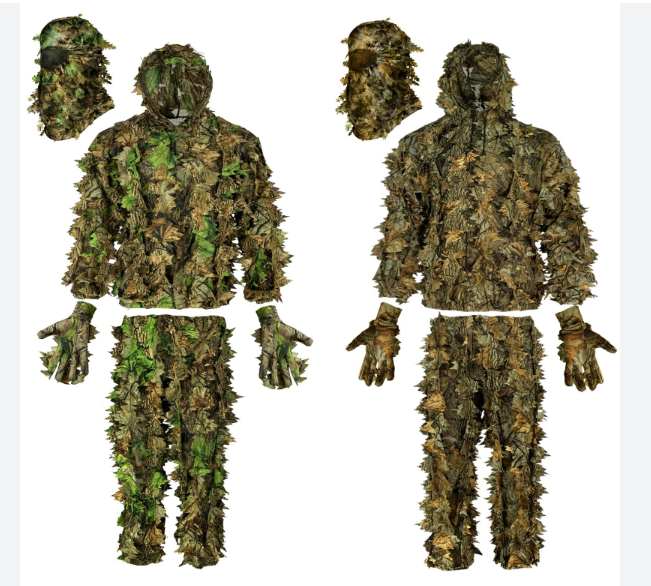
Choosing suitable clothing can make a significant difference during hunting, wildlife observation, photography, and other outdoor activities where remaining visually discreet is important. A camouflage suit is designed to help break up the wearer's outline and blend clothing with the surrounding environment. Beyond camouflage patterns, today's outdoor clothing can also provide protection from changing weather, vegetation, moisture, and everyday wear. Selecting the right combination of pattern, material, fit, and construction allows outdoor users to remain comfortable while adapting to the conditions around them.
A quality camouflage suit should match the environment and activity rather than simply look similar to a particular landscape. Hunters and outdoor professionals may encounter changing temperatures, dense vegetation, open terrain, rain, wind, and rough surfaces during a single outing. Clothing that performs well in one setting may be unsuitable in another. Understanding terrain, seasonal conditions, movement requirements, layering needs, and fabric characteristics can help buyers choose equipment that provides practical concealment without sacrificing comfort or mobility.
Understanding How Camouflage Clothing Works
Camouflage clothing is primarily intended to reduce the visual distinctness of the wearer. Patterns can break up the human silhouette by combining colors, shapes, and contrasting areas that correspond with the surrounding environment. However, camouflage effectiveness depends on more than the printed pattern. Movement, posture, lighting, distance, and background conditions can all influence how noticeable a person becomes. A pattern designed for dense woodland may perform differently in grassland or open terrain. For this reason, users should evaluate where and when they expect to wear the clothing rather than assuming one design will work equally well everywhere.
Choosing a Pattern for Different Environments
Terrain is one of the most important factors when selecting camouflage clothing. Forest environments may contain combinations of leaves, bark, shadows, and earthy colors, while grasslands often feature lighter greens, browns, and muted seasonal tones. Dry environments can require patterns with more tan, beige, or subdued brown elements. Snow-covered landscapes create an entirely different visual background. Seasonal changes should also be considered because vegetation can change significantly throughout the year. Buyers who regularly travel across different environments may prefer clothing that can be layered with additional camouflage accessories rather than relying on a single pattern for every situation.
Considering Weather and Seasonal Conditions
Outdoor clothing must provide appropriate protection for the conditions in which it will be used. Lightweight materials can be useful during warmer weather, while insulated layers may be more appropriate in cold conditions. Rain and wind can also affect comfort and performance, making water-resistant or weather-protective outer layers valuable in wet environments. A versatile system often involves multiple clothing layers rather than one extremely heavy garment. This allows users to add or remove insulation as temperatures change. Before purchasing, outdoor users should consider the expected temperature range, precipitation, wind exposure, activity level, and whether they will spend long periods sitting or moving.
Evaluating Fabric and Construction Quality
Material selection affects durability, comfort, noise, and weather performance. Outdoor clothing may be exposed to branches, rocks, dirt, moisture, and repeated washing, so reinforced seams and durable construction can be important. Some activities also benefit from quieter fabrics that produce less sound when moving through vegetation. Breathability matters during active periods because trapped heat and moisture can make clothing uncomfortable. Buyers should examine stitching, zippers, closures, cuffs, pockets, and other high-use components rather than focusing solely on the printed pattern. A well-constructed garment can be more useful over time than clothing selected primarily for appearance.
Choosing the Right Fit and Mobility
A camouflage garment should allow natural movement without becoming excessively loose or restrictive. Hunters and outdoor users may need to walk, crouch, climb, sit, or move through vegetation, so mobility is an important consideration. The fit should also allow room for the layers that may be worn underneath during colder conditions. Excess fabric can snag on branches, while overly tight clothing can restrict movement and reduce comfort. Adjustable cuffs, waist sections, hoods, and other features can help users customize the fit. Trying clothing with the intended base and insulating layers can provide a more accurate idea of how it will perform during actual outdoor use.
Balancing Comfort With Concealment
Concealment is useful only if the wearer can remain comfortable and focused. Clothing that traps excessive heat, restricts movement, or causes irritation may become a distraction during extended outdoor activity. Breathable materials, appropriate ventilation, moisture management, and suitable layering can improve comfort. Users should also consider the weight of the complete clothing system, particularly when hiking significant distances. Pockets and storage features can provide practical value, but excessive bulk may interfere with movement. The best clothing choice balances concealment with the physical demands of the activity and the conditions in which it will be worn.
Practical Features to Look For
Outdoor camouflage clothing can include features designed for convenience and environmental protection. Adjustable hoods can provide additional coverage, while secure pockets can help organize small essentials. Reinforced areas may be valuable where clothing experiences repeated contact with the ground or vegetation. Some designs include ventilation openings to help regulate temperature, while others emphasize insulation for cold-weather use. Buyers should evaluate these features according to actual needs rather than choosing the garment with the largest number of additions. Every feature can affect weight, comfort, durability, and cost, so practical usefulness should guide the decision.
Caring for Camouflage Outdoor Clothing
Proper maintenance can help preserve both fabric performance and camouflage appearance. Garments should be washed according to their care instructions because excessive heat, unsuitable detergents, or aggressive washing can affect fabrics and finishes. After use in wet conditions, clothing should be dried thoroughly before being stored to reduce the risk of persistent odors or material deterioration. Dirt and plant residue should be removed before long-term storage. Users should also inspect seams, closures, pockets, and other high-wear areas periodically. Promptly addressing minor damage can help prevent it from becoming more extensive during a future outdoor trip.
Adapting Camouflage to Outdoor Activity
The ideal clothing system depends on the activity as much as the environment. A hunter waiting in one location may have different requirements from someone hiking through dense terrain or conducting wildlife photography. Stationary activities can place greater emphasis on insulation and weather protection, while active movement may make breathability and lightweight construction more important. Users should also consider whether additional equipment, backpacks, harnesses, or protective layers will be worn. Clothing should work with that equipment rather than create unnecessary pressure points or restrict movement. Evaluating the complete setup before an outdoor trip can reveal practical issues that may not be obvious when considering the garment by itself.
Conclusion
Selecting appropriate outdoor clothing requires careful consideration of terrain, weather, mobility, materials, durability, and comfort. A camouflage suit can support visual concealment, but its effectiveness depends on choosing a pattern and construction suited to the environment and activity. Buyers should look beyond appearance and evaluate fabric performance, fit, layering capacity, weather protection, quiet movement, and practical features before making a decision. Proper care can further extend the useful life of outdoor clothing and preserve its performance through repeated use. By matching clothing to real-world conditions rather than relying on a one-size-fits-all approach, hunters and outdoor users can build a more comfortable, functional, and dependable gear system.




 English
 Arabic
 French
 Spanish
 Portuguese
 Deutsch
 Turkish
 Dutch
Dutch
 Italiano
 Russian
 Portuguese (Brazil)
 Greek
Greek
