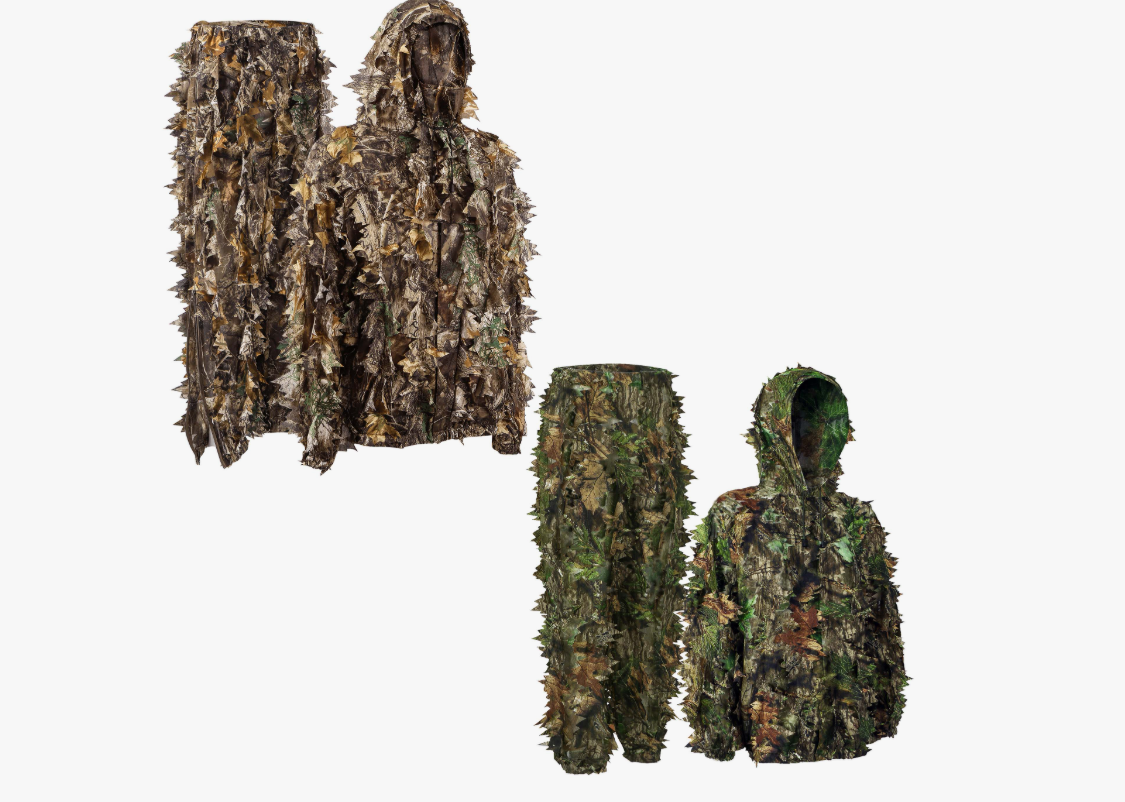
Outdoor activities often require clothing that provides both practical protection and visual concealment. A leafy camo suit uses three-dimensional fabric elements and natural-looking shapes to help break up the wearer's outline against vegetation and woodland surroundings. This type of camouflage can be useful for hunting, wildlife observation, photography, and other activities where reducing visual contrast is important. Beyond its appearance, the right garment should also provide comfortable movement, suitable weather protection, and enough durability for repeated use in demanding outdoor environments.
Choosing a leafy camo suit requires more consideration than selecting a pattern based solely on color. Forests, brush, fields, and seasonal vegetation can vary considerably in texture and appearance. The garment's material, construction, fit, ventilation, weight, and layering capacity can influence how practical it is during an extended outing. Outdoor users should therefore consider the environment in which the suit will be used, the expected weather, the amount of movement involved, and the type of clothing worn underneath.
Understanding Leafy Camouflage Design
Leafy camouflage differs from conventional printed camouflage because it incorporates three-dimensional elements that create additional texture and help disrupt the wearer's outline. Instead of presenting a smooth surface, the fabric can introduce irregular shapes that visually interact with nearby vegetation. This can be useful in environments where leaves, grasses, branches, and brush create complex backgrounds. However, three-dimensional camouflage does not eliminate the importance of movement, positioning, or environmental conditions. The garment works best when its overall appearance is compatible with the surrounding terrain rather than being treated as a universal solution for every outdoor setting.
Selecting Camouflage for the Right Terrain
Terrain should be one of the first considerations when choosing outdoor camouflage. Dense woodland may contain dark greens, brown branches, shadows, and layered vegetation, while open fields can have lighter grasses and fewer vertical structures. Seasonal changes can also alter the appearance of natural surroundings. A leafy design that works well during lush vegetation may look less appropriate when foliage becomes sparse. Users should consider the dominant colors, textures, and vegetation where they expect to spend time. Choosing clothing that visually complements those surroundings can create a more coherent appearance than relying on a generic camouflage design.
Evaluating Material and Durability
A camouflage suit may encounter branches, thorns, damp vegetation, dirt, and rough terrain, so fabric durability is an important consideration. Users should examine stitching, attachment points, elastic sections, closures, and areas likely to experience repeated friction. Lightweight materials can make movement easier, but very delicate construction may not be suitable for dense brush. Conversely, heavier fabrics may offer greater durability while increasing warmth and weight. The ideal balance depends on the environment and activity. Buyers should consider how often the suit will be used and whether it needs to withstand repeated exposure to demanding terrain.
Considering Weight and Breathability
Three-dimensional camouflage can add weight and bulk compared with conventional clothing, making breathability and ventilation particularly important. Active outdoor users can generate significant body heat, especially when walking through uneven terrain or carrying equipment. A garment that traps excessive heat or moisture may become uncomfortable during extended use. Ventilation openings, lightweight construction, and breathable base layers can help manage temperature. Users should also consider the local climate and whether the suit will be worn over insulated clothing. Selecting a garment based on expected activity level can help prevent unnecessary discomfort.
Choosing a Comfortable Fit
A camouflage suit should allow users to move naturally while leaving enough room for underlying clothing. Hunters, photographers, and wildlife observers may need to crouch, sit, kneel, climb, or move carefully through vegetation. Tight clothing can restrict movement, while excessively loose garments can snag on branches or become cumbersome. Adjustable cuffs, waist sections, and other fit features can help create a more secure configuration. The suit should also work with backpacks and other equipment that may be carried during an outdoor outing. Testing the complete clothing system before use can reveal whether the garment interferes with movement or equipment.
Weather Protection and Layering
Weather conditions can change rapidly during outdoor activities, making layering an important consideration. A leafy camouflage outer layer can be worn over lightweight clothing during mild weather or over insulating layers during colder conditions. In wet environments, users may need additional waterproof protection beneath or over the camouflage layer, depending on the garment's construction. Wind can also influence comfort, particularly when remaining stationary for long periods. Buyers should examine whether the suit is designed primarily for warm-weather use, transitional conditions, or colder environments. Matching the garment to the expected climate can make outdoor activity more comfortable and manageable.
Reducing Unnecessary Noise
Noise can be an important consideration for activities that involve moving quietly through natural environments. Some fabrics can produce noticeable sounds when they brush against vegetation or rub against themselves. Three-dimensional elements can also move during walking, depending on their construction. Users should consider how the garment behaves during ordinary movement before relying on it for extended outdoor use. Quiet construction can be especially valuable when moving through dense vegetation, although the ideal choice will vary according to the activity and surroundings. Comfort and durability should still be considered alongside noise characteristics rather than sacrificing one quality entirely for another.
Practical Features for Outdoor Use
Useful features can make a camouflage suit more convenient during extended outings. Adjustable openings can help secure the garment, while integrated hoods may provide additional coverage. Reinforced sections can improve durability in areas that experience frequent contact with vegetation. Storage pockets can also be helpful, although their placement should not interfere with backpacks or other equipment. Users should evaluate features according to their actual needs instead of choosing a garment simply because it includes more components. A straightforward design with durable construction may be more practical than a heavily equipped garment that adds unnecessary weight.
Maintaining a Leafy Camouflage Suit
Proper care is essential for preserving the garment's fabric and three-dimensional elements. Users should follow the manufacturer's washing instructions and avoid cleaning methods that could damage attached materials. After exposure to rain or damp vegetation, the suit should be dried thoroughly before storage. Dirt, leaves, and plant residue should be removed carefully rather than pulled aggressively from the fabric. Regular inspection can identify loose attachments, damaged seams, or worn elastic before these issues become more serious. Proper storage also helps prevent unnecessary compression or damage to the three-dimensional components.
Choosing a Suit Based on Activity
Different outdoor activities place different demands on camouflage clothing. A stationary wildlife observer may prioritize comfort and weather protection, while someone moving frequently through dense brush may place greater emphasis on lightweight construction and durability. Photographers may also need easy access to equipment, while hunters may spend long periods alternating between movement and stationary observation. Understanding the activity helps determine whether ventilation, insulation, flexibility, quiet movement, or storage should receive the greatest priority. The best garment is not necessarily the most elaborate option; it is the one that fits the user's environment and practical requirements.
Conclusion
A leafy camo suit can be a useful addition to an outdoor clothing system when its design matches the surrounding terrain and intended activity. Three-dimensional elements can help disrupt the wearer's outline, while appropriate fabric, fit, breathability, weather protection, and durability contribute to practical performance. Buyers should consider seasonal vegetation, climate, movement requirements, noise, layering, and equipment compatibility before making a selection. Proper maintenance can also extend the garment's useful life and preserve its construction. By evaluating camouflage as part of a complete outdoor clothing system rather than focusing only on appearance, users can choose equipment that offers a practical balance of concealment, comfort, and durability.




 English
 Arabic
 Spanish
 Portuguese
 Deutsch
 Turkish
 Dutch
Dutch
 Italiano
 Russian
 Romaian
 Portuguese (Brazil)
 Greek
Greek
