


How Can YG-1 Rubber Accelerator Support Sustainable Manufacturing
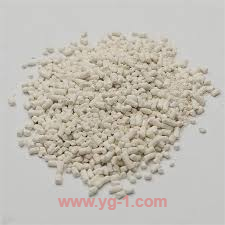
How Can Rubber Accelerator Reduce Environmental Impact During Production?
Rubber manufacturing involves several interconnected processes, including mixing, compounding, molding, heating, curing, inspection, and finishing. Among these stages, vulcanization requires careful chemical control because curing conditions can influence processing efficiency, energy consumption, product consistency, and material utilization. A properly selected rubber accelerator can assist with controlled vulcanization and help manufacturers establish suitable processing conditions. YG-1, operated by Taizhou Huangyan Donghai Chemical Co., Ltd., focuses on rubber chemicals and related additives for industrial applications, providing information about different product categories and their potential uses. As manufacturers pay greater attention to resource management and cleaner production, how can curing chemistry contribute to a responsible manufacturing strategy?
Efficient Vulcanization and Resource Management
Vulcanization transforms an uncured rubber compound into a material with useful physical properties. The process depends on a carefully balanced combination of polymer, sulfur, activators, accelerators, processing aids, and other ingredients. Without suitable chemical assistance, curing may require extended processing conditions, while an unsuitable formulation can create problems such as premature curing, inconsistent crosslinking, or insufficient development of physical properties.
A controlled curing system gives manufacturers an opportunity to manage production conditions with greater precision. Appropriate reaction characteristics can help processing teams coordinate heating, molding, and curing stages according to the requirements of the compound. This can support rational energy use while reducing unnecessary processing time.
Energy management is only one part of environmental responsibility. A stable curing process can also contribute to consistent product quality. When defective pieces are reduced, manufacturers have less reason to consume additional raw materials, electricity, labor, and packaging resources for replacement production.
Selecting Appropriate Formulation Components
Sustainable production begins with formulation development. Different elastomers have different chemical characteristics, while products such as tires, seals, hoses, belts, cables, footwear components, and industrial rubber parts can require distinct performance profiles.
Accelerator selection should therefore consider curing behavior, scorch safety, compatibility, dispersion, dosage, processing temperature, and the physical properties expected from the finished product. A material that works effectively within one formulation may not provide the same result in another compound.
A balanced formulation can help manufacturers avoid unnecessary chemical consumption. Instead of simply increasing the amount of an additive, technical teams can evaluate how each ingredient interacts with the rest of the compound. Laboratory testing and production trials can provide useful information before a formulation is introduced into routine manufacturing.
Such an approach also helps connect product performance with resource management. When a formulation is carefully designed, production teams can establish a clearer processing window and make adjustments according to actual test results.
Reducing Material Waste
Material waste can arise from numerous sources during rubber manufacturing. Mixing errors, incorrect weighing, poor dispersion, molding problems, curing deviations, trimming losses, and failed inspections can all contribute to resource consumption.
Chemical formulation has an indirect connection with these losses because curing behavior influences the quality and consistency of finished components. A controlled curing profile can help manufacturers maintain stable production conditions and reduce defects associated with insufficient or excessive curing.
Waste reduction should not depend on one production parameter. Accurate weighing equipment, suitable mixing procedures, proper storage, reliable molds, regular equipment inspection, and effective quality control all have an important role.
When these practices operate together, manufacturers can create a production environment where material usage is monitored from the initial formulation stage through final inspection. This approach can support responsible resource management without compromising the technical requirements of the finished product.
Raw Material Quality and Process Control
The environmental profile of rubber manufacturing is also connected with raw material consistency. Variations in chemical characteristics can influence formulation behavior and may require additional adjustments during processing.
YG-1 states that its raw materials undergo screening and repeated testing, while its manufacturing approach incorporates technical equipment and quality management practices. The company also highlights sustainable development as part of its business philosophy.
For industrial buyers, raw material control can be an important consideration when evaluating a chemical supplier. Consistent materials can simplify formulation development, laboratory testing, production planning, and quality inspection.
A systematic quality management approach may also reduce unnecessary experimental batches. When technical parameters remain stable, production teams can work from established formulation data instead of repeatedly adjusting the process because of unexpected material variation.
This creates a connection between quality management and sustainability. Consistency can support predictable processing, while predictable processing can help manufacturers manage materials and production resources with greater efficiency.
Product Performance and Service Life
Sustainable manufacturing should also consider what happens after a rubber product leaves the factory. The service life of a component can influence the amount of material required for replacement products.
Rubber products used in demanding environments may experience heat, oxygen, ozone, mechanical stress, chemicals, moisture, or repeated deformation. Formulation design has an important role in determining how the finished material responds to these conditions.
The curing system can influence crosslink density and consequently affect properties such as elasticity, hardness, tensile strength, abrasion resistance, and aging behavior. For this reason, manufacturers should evaluate the complete performance requirement instead of focusing only on curing speed.
A formulation that provides suitable durability can contribute to a longer service period under its intended conditions. This can reduce the frequency of replacement and help limit the material demand associated with additional manufacturing cycles.
Practical Strategies for Cleaner Production
Manufacturers seeking to reduce environmental pressure can begin by examining their existing production processes. Energy consumption, material losses, rejected products, curing conditions, mixing efficiency, and equipment performance can all provide useful points for evaluation.
Laboratory testing can then be used to compare alternative formulations. Rheometer analysis, mechanical testing, aging evaluation, and processing trials can provide information about curing behavior and final product characteristics.
Supplier cooperation is also valuable. Technical teams can provide details about the rubber type, application, processing method, target properties, and operating environment. This information allows chemical specialists to consider suitable product categories rather than relying on a generic solution.
YG-1 provides an online platform where industrial users can review information about rubber chemicals, accelerator categories, antioxidants, processing aids, and related materials. The website can serve as a useful starting point for manufacturers researching formulation components and industrial rubber chemistry.
Building a Responsible Manufacturing Approach
Reducing environmental impact in rubber production requires cooperation between formulation development, equipment management, energy control, quality inspection, and production planning. No single ingredient can solve every environmental challenge, but thoughtful chemical selection can become one component of a wider strategy.
Manufacturers can evaluate curing conditions, monitor material consumption, identify sources of production waste, and conduct formulation trials before making process changes. These steps can help establish a production system based on measured results rather than assumptions.
For companies researching industrial curing materials, Rubber Accelerator information is available through the YG-1 product platform, including product categories and related technical resources at https://www.yg-1.com/. Reviewing formulation characteristics before production can help manufacturers connect product performance, process control, and responsible resource utilization in a practical way.

 English
 Arabic
 French
 Spanish
 Deutsch
 Turkish
 Dutch
Dutch
 Italiano
 Russian
 Romaian
 Portuguese (Brazil)
 Greek
Greek
