


Why Even Forged Aluminum Wheels Can Develop Cracks
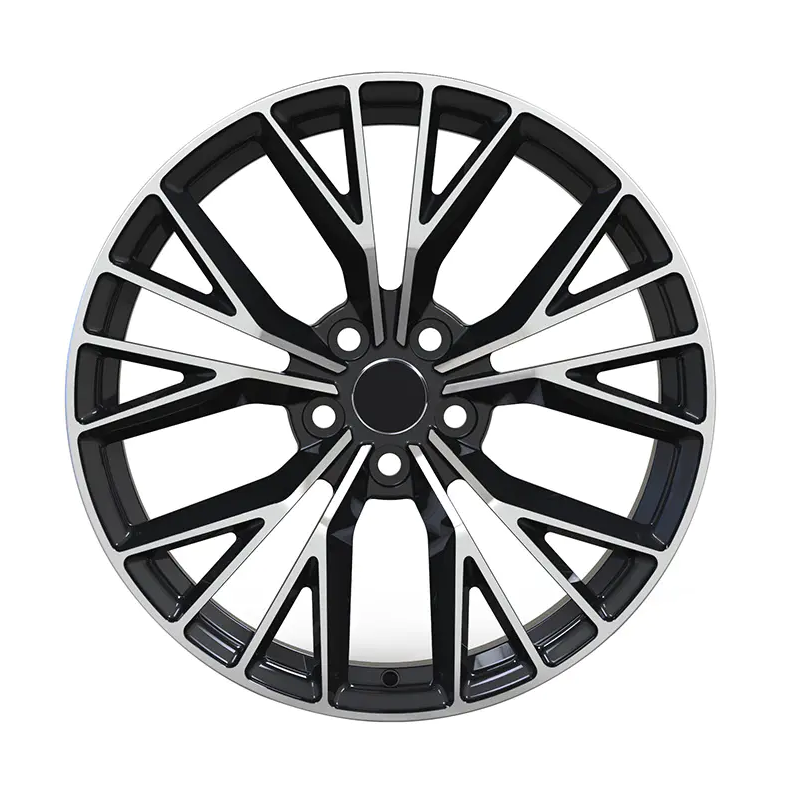
Concave forged wheel designs are widely used in performance and luxury modification markets. Deep spoke geometry, aggressive offset setups, and lightweight forged construction create an appealing combination. Still, pothole damage reports continue to appear even on high-end concave forged wheels.
Cracking does not originate from a single weakness. It develops from stress concentration patterns, geometry constraints, and real-world road shock behavior documented in wheel fatigue research and repair cases.

Concave Geometry Changes Stress Direction Inside the Wheel
Concave design reshapes how force travels from tire to hub. Instead of a near-linear spoke structure, the load path becomes angled and elongated.
Key structural shifts:
- Longer spoke span increases bending load during vertical impact
- Angular force transfer replaces straight compression flow
- Reduced mid-spoke reinforcement due to aesthetic hollowing
Pothole energy does not remain evenly distributed. It concentrates at spoke roots and hub transition zones where geometry changes abruptly.
Why Cracks Appear Even on High-Grade Forged Aluminum
Forging improves grain structure and removes many casting defects, but it does not remove fatigue behavior in aluminum alloys. Repeated stress cycles still accumulate micro-damage over time.
Observed failure mechanisms:
- Microvoid growth under repeated impact loading
- Slip band formation inside grain structure
- Interfacial separation at inclusion points
Research on forged 6061 aluminum wheel hubs shows fatigue cracks often initiate from microscopic defects or interfacial weak zones under multiaxial stress conditions.
Where Concave Forged Wheels Commonly Crack
Damage patterns are not random. Specific geometry zones repeatedly appear in inspection reports and repair discussions.
- Spoke base junction near hub center
- Inner barrel edge exposed to direct pothole compression
- Valve hole interruption area
- Thin mid-spoke region on deep concave profiles
These zones combine structural discontinuity and high load transfer intensity, creating natural crack initiation points.
Concave Forged Aluminum Alloy Wheels Under High-Speed Impact
Road shocks are not uniform. A pothole strike introduces rapid vertical deceleration followed by rebound vibration. Concave geometry influences how this energy propagates.
Behavior during impact:
- Outer rim edge absorbs initial shock load
- Spokes transmit force diagonally into hub center
- Internal stress waves reflect at curvature transitions
Because concave spokes are angled inward, bending stress increases compared to flatter wheel designs. This does not immediately reduce strength, but it shifts fatigue accumulation toward specific joints.
Passenger Car Modification Use Increases Real Stress Exposure
Modified vehicles often operate under conditions outside original OEM assumptions. Lower profile tires, wider rims, and reduced sidewall cushioning amplify wheel stress.
Common real-world contributors:
- Reduced tire sidewall absorption height
- Frequent urban pothole contact cycles
- Curb edge impacts during parking maneuvers
Even small impacts become significant when tire cushioning is minimized, transferring more energy directly into the forged structure.
Material Strength Versus Structural Design Reality
Forged wheels are often associated with racing durability. That reputation is correct under controlled conditions. Road environments introduce unpredictable loading angles and repeated shock patterns.
Important structural reality points:
- Forging increases density and grain alignment but does not remove fatigue behavior
- Concave geometry redistributes stress rather than eliminating it
- Rigid structures transfer impact faster into weak transition zones
Cracks appear not because the wheel is “weak,” but because localized stress exceeds long-term fatigue tolerance in specific zones.
Hub Interface and Load Convergence Effect
The wheel hub region acts as a central load convergence point. All spoke forces terminate at this interface, creating a high-stress accumulation area.
Stress behavior characteristics:
- Radial forces converge toward center bore
- Torsional stress builds during cornering impact combinations
- Micro-discontinuities amplify under repeated load cycles
Once micro-cracks begin at the hub interface, propagation accelerates due to continuous stress cycling during normal driving.
Why Cracking Can Appear Suddenly
Many drivers notice cracks only after cleaning or a tire change, creating the impression of sudden failure. The process is usually gradual.
Progression pattern:
- Micro-damage accumulation from repeated road shocks
- Subsurface crack growth along grain boundaries
- Final surface crack opening after a stronger impact event
This staged development aligns with fatigue behavior observed in forged aluminum wheel studies.
Concave forged wheels deliver strong performance characteristics and reduced weight, yet they operate under strict structural limits defined by geometry and material fatigue behavior. Pothole impacts introduce concentrated energy that travels through angled spoke structures and accumulates at hub and barrel transition zones. The presence of concave forged aluminum alloy wheels does not guarantee immunity from cracking. Instead, it changes how and where stress concentrates. Crack formation reflects a combination of impact energy, structural geometry, and long-term fatigue accumulation rather than a simple material weakness.

 English
 Arabic
 French
 Spanish
 Portuguese
 Deutsch
 Dutch
Dutch
 Italiano
 Russian
 Romaian
 Portuguese (Brazil)
 Greek
Greek
