


Why Strong Compression Springs Still Fail Under Peak Loads
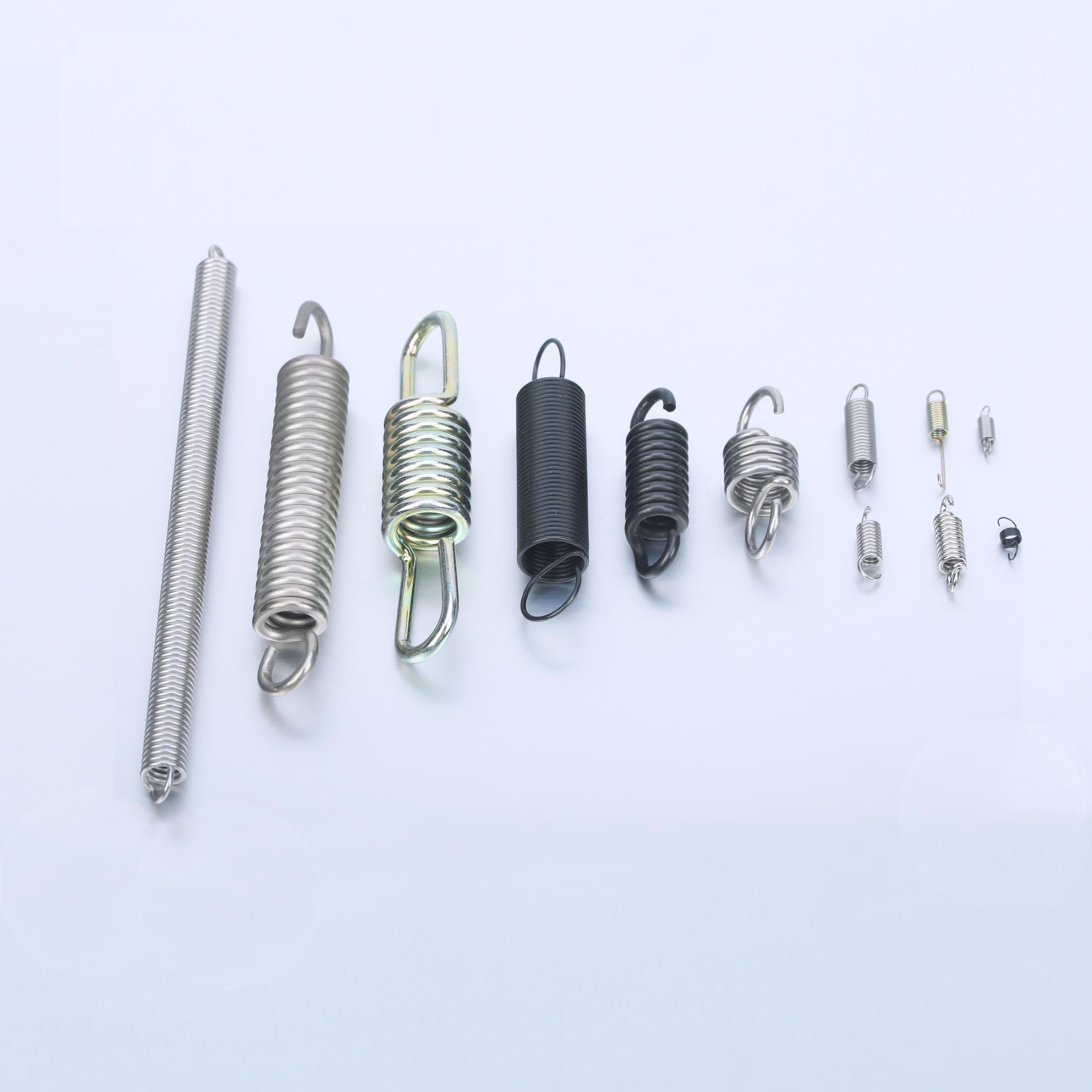
High-load mechanical systems often rely on a High Load Capacity Compression Spring to withstand harsh axial force. Despite high material strength and reinforced wire geometry, unexpected buckling events still appear under peak loading conditions, creating abrupt loss of stability rather than gradual deformation.
Such behavior is not only a material strength issue. It is closely tied to structural instability, load path deviation, and geometric slenderness effects that activate once the system crosses a critical equilibrium point.
Buckling as a Structural Instability Phenomenon
Transition from axial compression to lateral deflection
Buckling occurs once a compression element stops deforming purely along its axis and begins bending sideways. This transition can happen even before material yield strength is reached, meaning the spring is still “strong enough” but no longer stable.
Engineering studies describe buckling as a sudden change in shape under compressive load, where equilibrium shifts from a stable to an unstable configuration under critical force levels.
- Stable state loss: axial compression path becomes energetically unfavorable.
- Lateral deviation: spring centerline begins to bend under load.
- Rapid propagation: deformation increases quickly once instability starts.
Slenderness Ratio and Critical Buckling Threshold
Geometry-driven instability in high-force springs
Even high-load springs can buckle if geometry is not properly constrained. A key factor is the free length-to-diameter ratio, which defines how slender the spring behaves under compression.
Design references show that springs with free height greater than roughly four times their diameter are significantly more prone to buckling without guidance support.
| Geometry condition | Buckling tendency | Behavior under peak load |
| L/D < 3 | Low | Stable axial compression |
| L/D ≈ 4 | Moderate | Minor lateral sensitivity |
| L/D > 4 | High | Sudden sideways deflection possible |
Load Concentration and Dynamic Instability
Peak force effects during rapid compression
Under peak force conditions, springs rarely compress slowly. Instead, dynamic loading introduces inertia effects where different coil sections respond at different speeds. This mismatch generates internal wave-like stress propagation.
Research into helical spring behavior shows that rapid compression can cause stress waves along coils, temporarily increasing local stress close to solid height conditions.
- Stress wave delay: coils do not compress uniformly under sudden load.
- Temporary overload zones: local sections experience higher stress than average.
- Instability amplification: slight misalignment becomes critical under dynamic force.
Misalignment and Eccentric Loading Effects
Small deviations with large consequences
Perfect axial loading is rarely achieved in real assemblies. Even minor angular offset or uneven end contact introduces bending moments that amplify buckling risk under peak compression.
- Eccentric force path: load shifts away from central axis.
- Side bending moment: compression force converts partly into lateral stress.
- Progressive deformation: initial tilt increases with additional load.
Even high-strength springs become vulnerable once eccentric loading interacts with slender geometry, as lateral stiffness is significantly lower than axial stiffness in helical structures.
Guidance Conditions and Constraint Loss
Role of sleeves, rods, and end supports
High load capacity springs often rely on external guidance systems such as rods or sleeves to maintain alignment. Failure or looseness in these constraints removes stabilizing support, allowing lateral movement under compression.
- Guide clearance issues: excessive gap allows sideways motion.
- Friction imbalance: uneven contact creates asymmetric force distribution.
- Support discontinuity: partial loss of constraint triggers instability.
Material Strength vs Structural Stability
Why stronger wire does not eliminate buckling
Increasing wire diameter or using stronger alloys improves load capacity but does not fundamentally resolve buckling risk. Instability is governed more by geometry than by yield strength.
Even a high-strength spring can fail under peak load if its slenderness ratio and boundary conditions allow lateral deflection to develop faster than axial compression stabilizes the structure.
Typical Failure Pattern Under Peak Load
Sequence of sudden buckling event
- Initial axial compression under rising force
- Minor lateral deviation appears at weak alignment point
- Dynamic amplification of sideways deflection
- Rapid transition into full buckled shape
- Loss of force transmission capability
Closing Technical Insight
Buckling in High Load Capacity Compression Springs is a stability problem rather than a pure strength limitation. Peak force conditions expose hidden geometric sensitivity, especially in slender or poorly guided designs. Once axial equilibrium is disturbed, lateral deformation grows faster than restoring stiffness can counteract it, resulting in sudden structural failure even in otherwise high-strength components.

 English
 Arabic
 French
 Spanish
 Portuguese
 Turkish
 Dutch
Dutch
 Italiano
 Russian
 Romaian
 Portuguese (Brazil)
 Greek
Greek
