


How Does Qinlang Low Noise Duct Fan Manufacturer Support Home Projects
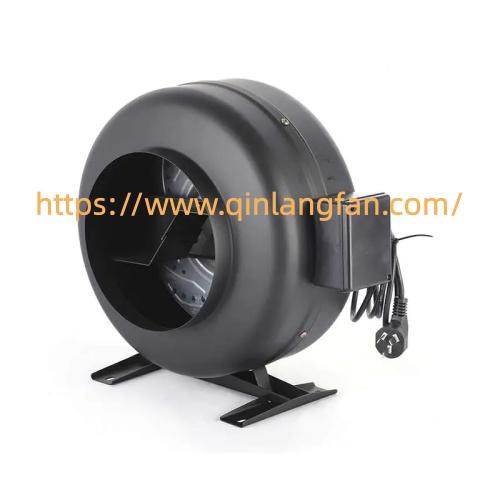
Low Noise Duct Fan Manufacturer selection for home ventilation should begin with the room, the duct route, and the way the system will actually be used. Bedrooms, bathrooms, kitchens, laundry rooms, and utility areas do not have identical ventilation needs. Buyers should consider airflow, static pressure, duct diameter, sound level, motor type, installation space, control options, and expected operating hours before deciding on a model. Inline ventilation equipment is commonly used in residential bathrooms, kitchens, laundry areas, and whole home systems because the fan can be positioned away from occupied rooms.
Sound is often the detail homeowners notice every day. A unit may have suitable airflow, yet an unsuitable sound level can become irritating when it operates near a bedroom, study, or living area. Buyers should therefore look at published sound data and ask how that figure was measured. ENERGY STAR residential ventilation criteria include sound requirements for qualifying products, showing why acoustic performance deserves attention alongside airflow and efficiency.
Installation location also changes the experience. When equipment is positioned within a ceiling cavity, attic, or another remote area, the distance from the occupied room can help reduce audible sound when the installation is properly arranged. Vibration control matters too. A rigid mounting connection can transfer vibration into surrounding structures, while suitable mounting methods can help limit that effect.
Airflow is the next practical checkpoint. Buyers should estimate how much air the room needs rather than simply choosing a larger capacity. A larger rating does not automatically mean a better household experience. Excessive airflow can increase air movement noise and energy use, while insufficient airflow may leave moisture and stale air behind. Residential ventilation guidance commonly uses room size and required air changes as starting points for determining airflow needs.
The duct route deserves the same attention. A short and straight path creates different resistance from a long route containing several bends, filters, grilles, or dampers. Each restriction affects the pressure that the equipment needs to overcome. This is why buyers should not select a unit based only on duct diameter or free air capacity. Airflow and static pressure need to be considered together.
Duct size should still be checked carefully. The connection needs to fit the existing system, while the route should avoid unnecessary restrictions. Flexible ducting can become problematic when it is sharply bent, compressed, or installed with uneven sections. Good installation practice keeps the air path reasonably smooth and helps reduce avoidable resistance.
Motor selection is another useful comparison point. Homeowners should check voltage, frequency, rated power, speed control, and expected operating schedule. If ventilation demand changes during the day, a controllable motor may offer useful flexibility. Some modern ventilation products use EC motor technology for variable speed operation, which can be relevant when airflow requirements are not constant.
Maintenance should not be forgotten simply because the equipment is intended for home use. Buyers should know where the unit will be installed and whether the motor, electrical connections, and surrounding components can be reached later. A difficult service location may turn a simple inspection into a much larger job. Before installation, it is worth checking clearance around the equipment and planning a practical access route.
Qinlang can work with buyers who need ventilation equipment for different household layouts and operating conditions. Instead of treating every home as the same, a useful discussion starts with the room type, airflow target, duct dimensions, route length, sound expectations, power supply, and available installation space. These details give the manufacturer a clearer basis for discussing suitable configurations.
For homeowners, the purchasing process does not need to be complicated. Start with the room, estimate the airflow, map the duct route, check pressure requirements, review sound data, confirm electrical details, and consider how the equipment will be maintained. Looking at these points together creates a more realistic picture of how the system will perform after installation. Buyers interested in Qinlang ventilation products can review the available range at https://www.qinlangfan.com/ and match the product information with their specific home ventilation requirements.

 English
 Arabic
 French
 Spanish
 Portuguese
 Deutsch
 Turkish
 Italiano
 Russian
 Romaian
 Portuguese (Brazil)
 Greek
Greek
