


How Modern Tailstocks Improve Support During Precision Turning
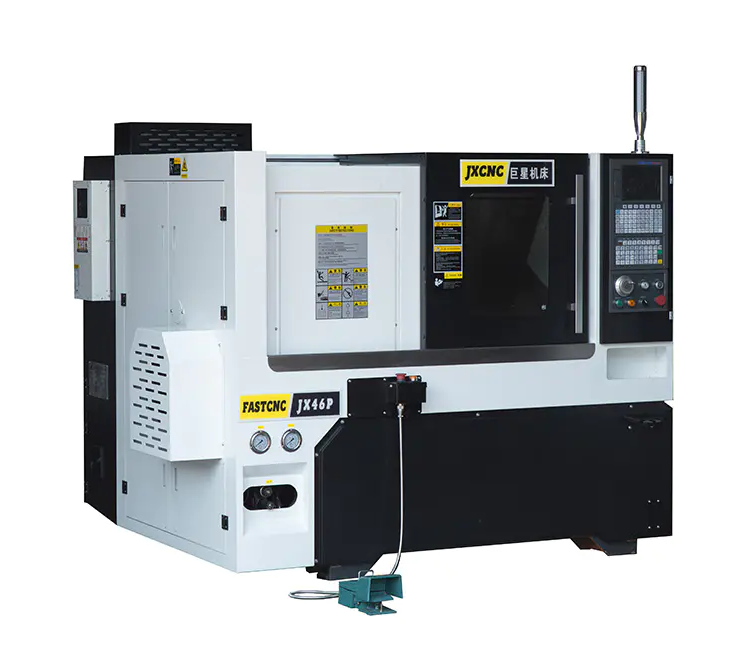
Modern CNC turning continues to move toward higher rotational speeds, tighter tolerances, and more complex component designs. Parts with multiple surfaces, irregular profiles, and extended lengths often require stronger support systems to maintain machining stability. The tailstock, which was once considered a simple supporting component, now plays a more important role in precision turning applications.
A hexagonal tailstock design is attracting attention because of its potential to improve rigidity and positioning stability during multi-shape machining operations. Combined with advanced CNC control systems and rigid machine structures, this type of support solution can help maintain accuracy during demanding production tasks. A high speed precision CNC lathe relies not only on spindle performance but also on how effectively the workpiece remains supported throughout the cutting process.
Tailstocks with rotating centers or hydraulic movement systems are commonly used to provide additional support for long workpieces during CNC turning. These systems reduce vibration and help maintain alignment during high-speed rotation.
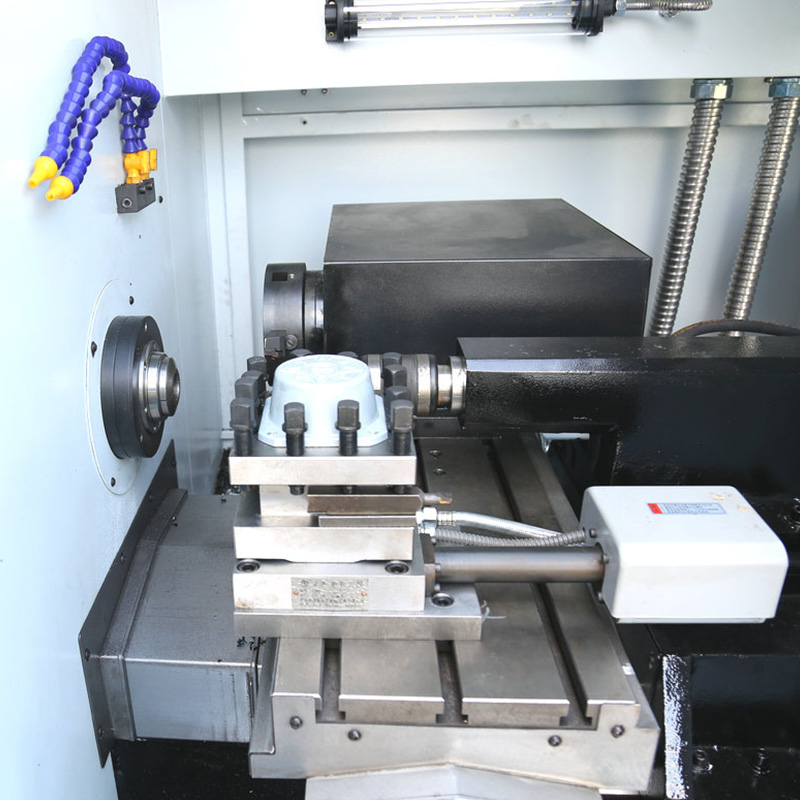
Why does workpiece support influence turning accuracy?
During multi-shape turning, cutting forces constantly change as the tool contacts different sections of the material. A workpiece with insufficient support may experience deflection, especially during deep cuts, high feed rates, or machining of long shafts.
- Reduced workpiece movement: Stable tailstock pressure keeps the component aligned with the spindle centerline.
- Lower vibration transmission: Additional support minimizes unwanted movement during interrupted cutting.
- Improved surface consistency: Stable positioning helps maintain uniform tool engagement.
A properly adjusted tailstock creates a balanced machining environment between the spindle side and support side. This becomes increasingly valuable during operations involving hexagonal sections, multiple flats, or changing cutting directions.
How can a hexagonal structure improve tailstock rigidity?
The hexagonal concept focuses on increasing structural contact and improving resistance against external forces. Compared with simpler support designs, a multi-face structure can distribute mechanical stress across several directions instead of concentrating force in a limited area.
During CNC turning, cutting forces are rarely applied from only one direction. Radial pressure, axial pressure, and vibration forces act together. A hexagonal support configuration can provide a more balanced response by strengthening different load paths.
- Multi-directional support: Helps resist movement caused by changing cutting loads.
- Enhanced contact stability: Supports accurate positioning during repeated machining cycles.
- Better force distribution: Reduces localized stress on individual components.
Does a hexagonal tailstock benefit complex profile machining?
Complex turning applications often involve parts that combine cylindrical surfaces with polygon sections, grooves, tapers, or multiple diameters. These shapes create different cutting conditions throughout one machining cycle.
A conventional turning process may face accuracy challenges because each profile change modifies cutting resistance. A stable tailstock system helps reduce the influence of these variations by maintaining firm support behind the workpiece.
Applications that may benefit from stronger tailstock support include:
- Automotive shafts: Long components requiring consistent concentricity.
- Hydraulic components: Parts requiring accurate cylindrical and multi-surface machining.
- Precision connectors: Small parts requiring stable positioning at high rotation speeds.
How does tailstock design affect high-speed operation?
High-speed turning creates greater demand on every mechanical component. A tailstock that lacks rigidity may produce small alignment errors, which become visible on finished surfaces.
Modern CNC machines often combine hydraulic tailstocks, precision live centers, and automatic positioning functions to maintain consistent support. Some CNC turning centers use independent tailstock guide systems to improve movement accuracy and reduce interference with the main machine structure.
For high-speed machining, several tailstock factors require attention:
- Center pressure control: Excessive force may deform smaller parts, while insufficient force may allow vibration.
- Bearing performance: Rotating centers need smooth movement to reduce friction and heat.
- Positioning repeatability: Accurate movement supports consistent batch production.
Can the tailstock replace advanced CNC control functions?
A stronger support structure improves mechanical stability, but it cannot replace precision control technology. CNC accuracy depends on the interaction between machine frame, spindle system, servo drives, tooling, and programming strategy.
Research on high-speed and high-precision CNC systems highlights that mechanical structures and motion control systems must work together to achieve stable dynamic performance.
A hexagonal tailstock should therefore be viewed as one part of a complete precision machining system rather than an independent accuracy solution.
What technical features should users consider?
Before applying a specialized tailstock design, manufacturers should evaluate the relationship between workpiece size, machining speed, and cutting conditions.
- Workpiece length-to-diameter ratio: Longer components usually require stronger supporting capability.
- Spindle speed range: Higher RPM requires better balance and lower vibration.
- Material characteristics: Hard materials generate higher cutting resistance and require stable support.
- Machining profile complexity: Multi-shape parts need consistent positioning throughout the cutting cycle.
Future development of tailstock technology
As CNC machining continues toward automation and intelligent production, support components are also becoming more advanced. Automatic positioning, sensor monitoring, and adaptive pressure adjustment are expected to improve tailstock performance in future machining systems.
The hexagonal tailstock concept reflects a broader trend: precision turning is no longer determined by one component alone. Every mechanical element contributes to stability, repeatability, and final part quality.
A well-designed tailstock can significantly support multi-shape turning operations, especially under high-speed conditions. Combined with rigid machine construction and accurate CNC control, it helps create a more stable machining environment for complex components.

 English
 Arabic
 French
 Spanish
 Portuguese
 Deutsch
 Turkish
 Dutch
Dutch
 Italiano
 Russian
 Portuguese (Brazil)
 Greek
Greek
