


Why Door Panel Quality Depends on Mold Design

Interior fit quality is often judged at the end of vehicle assembly, yet the true origin of door panel alignment starts much earlier. Before a single clip engages with the door frame, the geometry of the molded structure already defines how tightly every edge will sit against the vehicle body.
A car door panel mold is not only responsible for shaping the visible trim. It establishes the hidden framework that controls clip engagement force, mounting stiffness, edge flatness, and long-term dimensional stability. Small deviations in these areas often appear later as gaps, vibration noise, or uneven panel seating along the beltline and armrest zones.
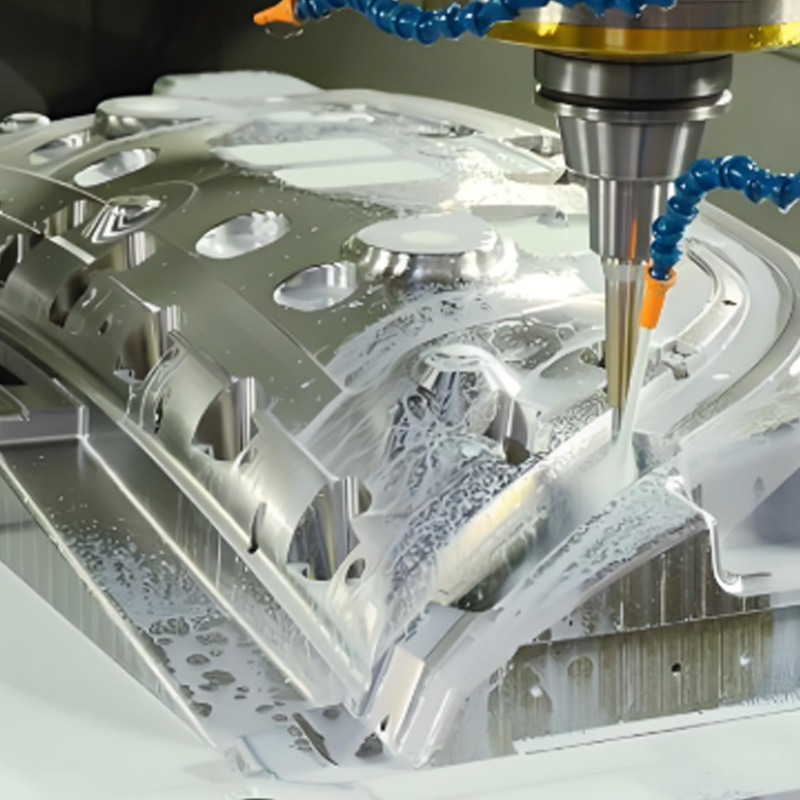
Fit Quality Starts at the Molded Backbone
Door panel structures typically consist of a semi-rigid substrate combined with decorative surfaces such as textile, PVC skin, or grain-textured PP/ABS blends. The substrate is where alignment behavior is defined.
Key structural parameters influenced during molding include:
- Clip boss height consistency (commonly controlled within ±0.15 mm)
- Rib stiffness distribution across large flat areas
- Edge curvature accuracy along window-side sealing zones
- Mounting hole concentricity for screws and retainers
Even minor mismatch in these values can accumulate into visible misalignment once installed on the door frame. Research on automotive trim defects shows that dimensional variation and clip instability are among the most frequent contributors to door panel rattles and poor seating performance.
Why Clip Engagement Defines Final Alignment
Door panels rely heavily on snap-fit clips and hidden retainers to maintain position against the metal door structure. These components do not behave independently; their effectiveness depends on mold precision.
Important mechanical factors include:
- Undercut accuracy controlling retention strength
- Draft angle stability affecting insertion smoothness
- Elastic deformation space inside clip geometry
- Stress distribution at clip root sections
Real-world service cases frequently report rattling or loose fit conditions caused by broken or weakened clips, especially after repeated removal during repairs or upgrades.
However, those failures often trace back to molding inconsistencies such as uneven wall thickness or insufficient reinforcement around clip bases.
Dimensional Stability Shapes Door-to-Body Interface
The interface between door panel and metal frame depends on how well the molded part resists deformation over time. Temperature cycling inside a parked vehicle can range from sub-zero winter conditions to over 70°C interior heat exposure.
Common deformation behaviors include:
- Upper edge lift near window belt seals
- Armrest sagging due to internal stress relaxation
- Corner pull-away near A-pillar transition zones
Field observations show that heat exposure can trigger visible warping and detachment along the upper door region, affecting overall panel alignment.
These issues are not purely assembly-related. They are strongly influenced by shrinkage behavior established during molding, especially in long-flow, thin-wall regions.
Surface Replication and Hidden Fit Influence
Door panels are classified as Class A or visible interior surfaces, meaning appearance consistency is closely tied to perceived fit quality. However, surface replication quality also affects how tightly components appear to sit within the cabin.
Molding defects that indirectly influence fit perception include:
- Flow marks creating uneven light reflection across panels
- Weld lines forming weak visual transition zones
- Poor texture transfer reducing perceived continuity
- Sink marks near rib intersections affecting flatness
These surface variations are linked to melt flow behavior, cooling imbalance, and gate design decisions inside the mold cavity.
Material Shrinkage Sets the Baseline for Fit
Most automotive door panels use PP-based compounds, talc-filled polypropylene, or ABS blends. Each material carries a distinct shrinkage profile, typically ranging from approximately 0.3% to 2.0% depending on reinforcement and processing conditions.
Once the mold cavity is machined, shrinkage compensation becomes the only mechanism for achieving correct final dimensions. Any miscalculation in this stage directly affects:
- Gap consistency along door perimeter
- Alignment between panel and dashboard side trim
- Flushness of switch bezel and handle modules
Because shrinkage is not uniform across geometry, ribs, bosses, and decorative zones behave differently, creating subtle twisting or edge mismatch after cooling.
Assembly Can Only Reveal What the Mold Has Defined
During final vehicle assembly, technicians can adjust clips, torque screws, or apply minor shimming, yet these adjustments cannot fully correct structural imbalance inherited from molding.
Typical symptoms observed at assembly stage include:
- Upper edge not fully seating into window channel
- Gap variation near door handle recess
- Intermittent vibration noise over road roughness
- Localized separation under thermal expansion
Forum and field feedback often highlights that missing or misaligned clips during reinstallation can create persistent fit issues, even when the panel itself appears intact.
Where Fit Really Begins
Door panel fit does not begin at installation. It begins at cavity design, material flow control, cooling balance, and structural reinforcement strategy inside the tooling.
The car door panel mold defines how every mounting point behaves, how each edge responds to stress, and how consistently the part returns to its intended geometry after production cycles. Once these factors are established correctly, assembly becomes a verification step rather than a correction stage.
True alignment quality is therefore not achieved at the vehicle level alone. It is embedded at the moment molten plastic starts filling the mold cavity, long before the panel ever reaches the production line.

 English
 Arabic
 French
 Spanish
 Portuguese
 Deutsch
 Turkish
 Dutch
Dutch
 Italiano
 Russian
 Romaian
 Greek
Greek
