


Reliable Manufacturing Solutions for Vehicle Components
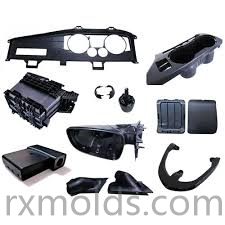
Modern vehicle production depends on tooling systems capable of transforming complex engineering concepts into consistent physical components. Within this manufacturing environment, the Auto Parts Mould provides an essential foundation for producing automotive components with controlled geometry, stable surfaces, and reliable production performance. Vehicle parts may include structural features, mounting elements, decorative surfaces, and integrated functional details, requiring different approaches to cavity design and material management. Successful mold development therefore combines material engineering, digital design, precision machining, thermal analysis, and systematic quality control.
Material selection directly influences tooling durability and manufacturing stability. Tool steels and specialized alloys are commonly evaluated according to their hardness, toughness, wear resistance, thermal stability, and machinability. A suitable material must maintain cavity integrity through repeated molding cycles while resisting mechanical and thermal stress. Heat treatment can enhance the mechanical characteristics of the tooling, while surface treatments can protect areas exposed to repeated contact with molding materials. For components with visible surfaces, appropriate finishing technology is also important because cavity condition can directly influence the appearance of the molded part.
Cavity engineering begins with understanding the geometry and functional requirements of the vehicle component. Modern automotive parts may contain curved sections, ribs, clips, openings, mounting points, and other integrated structures. Engineers use three-dimensional modeling to examine these features and develop an appropriate cavity and core configuration. Mold-flow analysis can provide insight into material movement, filling behavior, and potential areas of concern. Structural analysis can also help evaluate the relationship between cavity geometry and tooling support. This integrated approach allows potential manufacturing challenges to be addressed during the design stage.
Material flow is closely connected with cavity design. During injection molding, polymer material must travel through runners and gates before filling the cavity. Complex geometries can create different flow paths, which may influence weld lines, air entrapment, surface quality, and dimensional stability. Engineers therefore evaluate gate locations and runner structures together with material characteristics and product geometry. Optimizing the flow system helps promote more consistent filling and reduces unnecessary processing difficulties. This becomes particularly important for components containing varied wall structures or detailed surface features.
Thermal management is another fundamental aspect of mold engineering. Polymer materials must cool in a controlled manner after entering the cavity, and uneven heat transfer can contribute to shrinkage differences or deformation. Cooling structures are designed according to cavity geometry, material characteristics, and production requirements. Engineers can use thermal analysis to identify areas where heat may accumulate and optimize cooling paths accordingly. Balanced thermal conditions help improve dimensional consistency and contribute to more stable manufacturing cycles.
Precision machining transforms the digital mold design into a functional tooling system. CNC machining provides accurate processing of complex cavity surfaces, while electrical discharge machining is useful for intricate structures and difficult-to-reach areas. After machining, polishing and surface treatment establish the desired condition for each cavity region. Decorative areas may require controlled textures, whereas functional surfaces may prioritize dimensional accuracy and durability. Measurement technologies such as three-dimensional scanning and coordinate inspection allow engineers to verify tooling geometry against digital engineering data.
Quality management continues after the mold enters production. Monitoring tooling condition and molded-part consistency provides valuable information for ongoing optimization. Regular inspection can identify wear on important cavity surfaces, while maintenance of cooling and ejection systems helps preserve manufacturing stability. Production feedback can also guide improvements in future mold designs and processing methods. As automotive manufacturers adopt new materials and increasingly integrated component designs, tooling technology must remain adaptable to changing production requirements.
The combination of material expertise, precision cavity engineering, thermal analysis, machining technology, and quality management creates a comprehensive approach to automotive tooling development. Through these interconnected technologies, the Auto Parts Mould supports efficient production of complex vehicle components while maintaining stable manufacturing quality. Taizhou Renxin Mould Co., Ltd. provides professional automotive mold design and precision manufacturing services, with further information available at https://www.rxmolds.com for global automotive component applications.

 English
 Arabic
 French
 Spanish
 Portuguese
 Deutsch
 Turkish
 Dutch
 Italiano
 Russian
 Romaian
 Portuguese (Brazil)
