


Repeated Thermoforming: Is HIPS Conductivity Still Reliable?
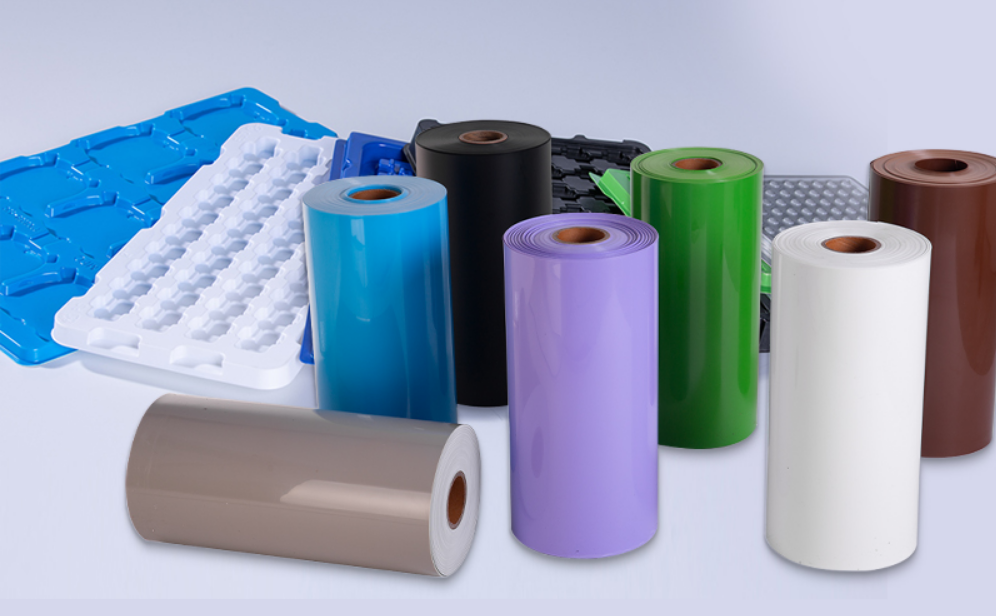
Thermoformed electronics packaging continues to rely heavily on polymer sheets that can survive repeated heating, stretching, and reshaping without losing electrostatic performance. Among these materials, HIPS conductive sheets are widely used in ESD trays, carrier boxes, and precision component packaging due to their balance of rigidity and moldability.
Vacuum forming cycles introduce a combination of thermal stress and mechanical deformation. The key question from engineers and product designers is not only shape retention, but whether electrical conductivity remains consistent after multiple forming operations.
Material structure behind conductivity stability
Conductive performance in HIPS systems is generally achieved through bulk-modified carbon-based fillers rather than surface coatings. This structure plays a critical role in post-forming stability.
- Bulk conductive network ensures electrical pathways remain inside the material instead of sitting on the surface layer
- Carbon black dispersion creates a continuous conductive chain even after stretching during vacuum forming
- Polymer rubber modification in HIPS improves elongation behavior under heat deformation
Typical conductive grades show surface resistivity values around 10⁴ to 10⁶ Ω/sq, which is widely used for ESD-sensitive trays and electronic transport packaging.
Behavior during vacuum forming cycles
Vacuum forming involves heating the sheet to a softened state (often around 140°C–170°C depending on formulation) and stretching it over a mold. Repeated cycles raise concerns about microstructure fatigue and conductive pathway disruption.
- Thermal exposure stability remains consistent because conductive fillers are thermally stable carbon materials rather than volatile additives
- Flow orientation effects may slightly shift resistance distribution, especially in deep-draw geometries
- Thickness thinning zones near corners can show minor resistivity variation, typically within one order of magnitude
Industry references show that properly compounded conductive HIPS formulations maintain ESD performance even after multiple forming cycles, especially in extrusion-grade sheets designed for thermoforming lines.
Key performance parameters affected by forming repetition
Vacuum forming does not only affect shape; it also influences internal filler alignment and surface texture, which indirectly impacts electrical behavior.
- Surface resistivity uniformity may vary slightly across stretched regions but remains within ESD-safe ranges in bulk-modified systems
- Impact strength retention is generally stable due to rubber-modified HIPS backbone structure
- Dimensional recovery behavior stays predictable after cooling, supporting repeat tooling cycles
Most conductive HIPS formulations are designed for industrial packaging lines where forming consistency across hundreds or thousands of cycles is required rather than single-use laboratory conditions.
Comparison with coating-based conductive sheets
Not all conductive plastic sheets behave the same after thermoforming. Coated systems and bulk conductive systems respond differently under repeated heating.
- Coated conductive sheets may experience surface layer thinning or micro-cracking after repeated forming, affecting long-term conductivity
- Bulk-modified HIPS conductive sheets maintain conductivity throughout the entire material cross-section
- Environmental sensitivity is lower in carbon-filled systems compared to humidity-dependent antistatic coatings
This structural difference explains why bulk conductive HIPS conductive sheets are commonly preferred in high-volume ESD tray production.
Industrial observations from thermoforming applications
Real-world production data from electronics packaging lines provides insight into long-term behavior under repeated forming and reheating conditions.
- ESD tray production lines report stable resistivity ranges even after mold adjustments and repeated prototyping cycles
- Thickness ranges from 0.3 mm to 1.8 mm show consistent conductivity behavior after forming
- Batch-to-batch variation is typically more significant than cycle-to-cycle forming variation
These observations indicate that process control during extrusion has a stronger impact on final electrical performance than the number of vacuum forming cycles itself.
Vacuum forming introduces mechanical and thermal stress, yet bulk-modified conductive HIPS systems demonstrate strong resilience against performance degradation. Conductive pathways remain embedded inside the polymer matrix, allowing stable electrostatic discharge behavior even after repeated thermoforming operations.
Rather than showing rapid conductivity decay, the material tends to exhibit minor geometric-related variation while maintaining overall ESD functionality. This makes it suitable for packaging systems that require repeated tooling adjustments, prototyping runs, or multi-stage forming processes without compromising electrical safety requirements.

 English
 Arabic
 French
 Spanish
 Portuguese
 Turkish
 Dutch
Dutch
 Italiano
 Russian
 Romaian
 Portuguese (Brazil)
 Greek
Greek
