


What Makes a Good Logo Design? A Complete Guide for Businesses
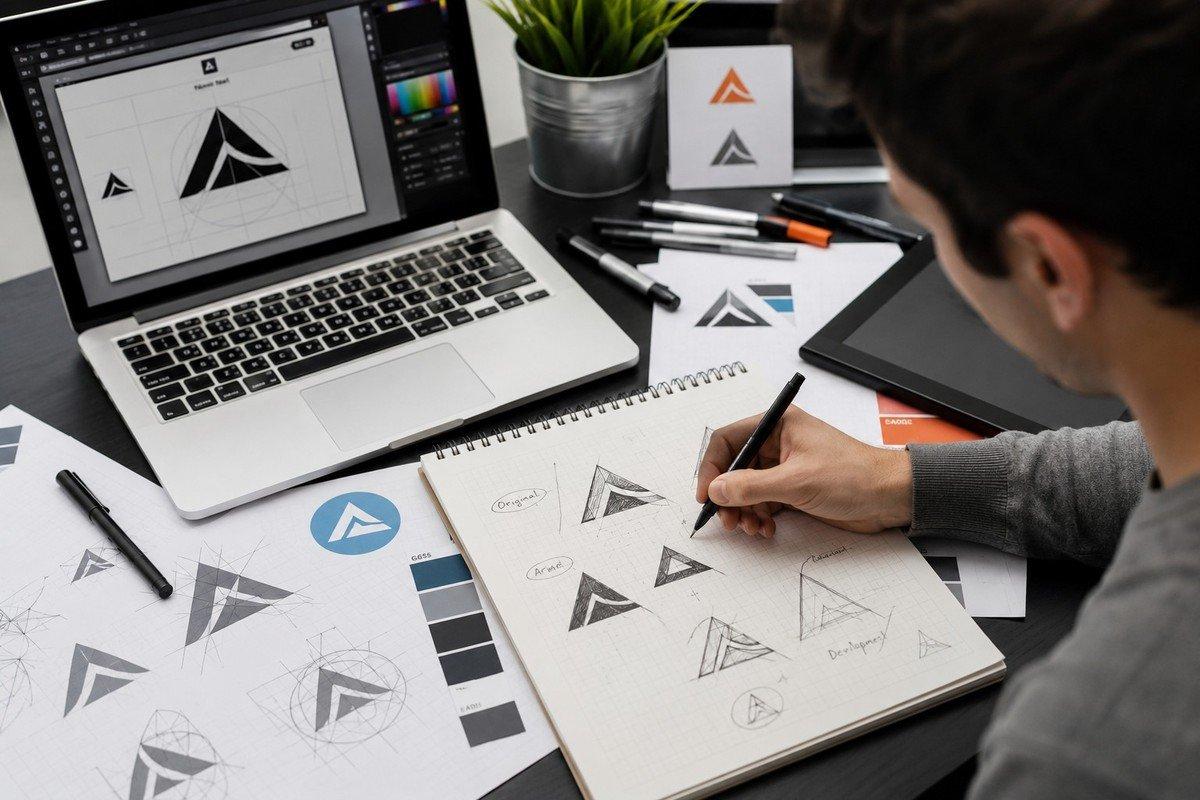
A logo is often one of the first things customers notice about a business. It appears on websites, social media profiles, packaging, advertisements, business cards, storefronts, and many other places. Because of this, businesses need an identity that is not only visually appealing but also meaningful, recognizable, and practical.
Many business owners wonder what makes a good logo design when there are so many different styles, colors, fonts, and visual approaches available. A successful logo is not simply a beautiful graphic. It should communicate the personality of a business while remaining clear and useful across different applications.
From simplicity and typography to originality and scalability, several factors contribute to an effective logo.
What Makes a Good Logo Design?
A good logo should be simple, memorable, relevant, distinctive, versatile, and appropriate for the business it represents. It should communicate an idea without trying to include every detail about the company.
The strongest logos usually have a clear visual concept. Customers should be able to recognize the main idea without needing a lengthy explanation.
Understanding what makes a good logo design also means recognizing that different businesses may require different visual approaches. A technology company may need a modern identity, while a restaurant, law firm, fashion brand, or children's business may require an entirely different personality.
The goal is not to create a logo that works for every business. The goal is to create one that works particularly well for the intended brand and audience.
1. Keep the Design Simple
Simplicity is one of the most important characteristics of effective logo design.
A logo with too many details can be difficult to understand and remember. Complex illustrations may also lose clarity when the logo is displayed at a small size.
A simple design focuses attention on the most important visual elements. This can make the logo easier to recognize across different platforms.
Simplicity does not mean the design has to be boring. A simple logo can still have personality through unique shapes, customized lettering, creative proportions, or carefully selected colors.
The key is removing unnecessary elements while preserving the central idea.
2. Make the Logo Memorable
A logo should give customers something they can remember.
Memorability often comes from a combination of simplicity, originality, and consistency. A distinctive shape, interesting letterform, or recognizable symbol can help customers associate the logo with a specific company.
A memorable logo does not need to explain the entire business. Instead, it should create a visual impression that can become stronger through repeated exposure.
Businesses should also use their logo consistently. When customers repeatedly encounter the same identity, they have more opportunities to associate it with the company's products and services.
3. Choose Relevant Visual Elements
A logo should make sense for the business.
This does not mean that a logo must literally show what the company sells. An abstract concept can be highly effective. However, the overall visual personality should be appropriate for the industry and target audience.
For example, a luxury brand may benefit from elegant typography and refined shapes, while a children's business could use friendlier forms and brighter visual elements.
Designers should consider the emotions and expectations of the intended audience when developing concepts.
4. Use Typography Carefully
Typography can completely change the personality of a logo.
A serif typeface can create a traditional or sophisticated impression, while a clean sans-serif font may feel modern and straightforward. Script or handwritten typography can create a more personal or creative appearance.
The font must also remain readable.
Spacing, letter weight, capitalization, and proportions can all affect how customers perceive the business name. In some cases, designers customize individual letters to make a wordmark more distinctive.
Typography should support the brand personality rather than simply following whatever font style is currently popular.
5. Select an Effective Color Palette
Color is another major part of logo design.
Different colors can create different associations and emotional impressions. Businesses should consider their audience, industry, positioning, and overall visual identity before choosing a palette.
A logo does not necessarily need multiple colors. In many cases, a focused palette creates a stronger and more consistent appearance.
Businesses should also have a version that works in black and white. This ensures that the logo remains useful for documents, stamps, photocopies, embroidery, and other situations where color may not be available.
6. Make It Original
Originality helps a logo stand apart from competitors.
Businesses should research their industry before finalizing a design. If many competitors use identical symbols, colors, or typography, creating something visually different can provide an opportunity to stand out.
Originality does not mean making the logo complicated or unusual for the sake of being different.
Instead, designers should look for a distinctive concept that remains relevant to the brand.
Custom symbols, unique letterforms, unusual but appropriate proportions, and carefully developed visual ideas can all contribute to originality.
7. Consider Scalability
A logo may appear at many different sizes throughout its lifetime.
It could be displayed on a large billboard one day and a small mobile screen the next. It might also appear on packaging, merchandise, business cards, social media icons, and website headers.
This makes scalability essential.
A logo should remain recognizable when enlarged or reduced. Very small details may disappear when the design is scaled down, so designers should test the identity in different sizes.
Businesses may also benefit from simplified logo variations for smaller applications.
8. Make It Versatile
Versatility is another important factor in determining what makes a good logo design.
A strong identity should work across both digital and physical environments.
It should look appropriate on:
- Websites
- Social media
- Business cards
- Packaging
- Advertisements
- Signage
- Merchandise
- Email signatures
- Presentations
- Promotional materials
The logo should also work on different backgrounds and in different color situations.
A versatile identity gives businesses greater freedom to use their branding consistently without redesigning it for every application.
9. Design for the Target Audience
A logo is ultimately created for the people who interact with the business.
Business owners may have personal preferences, but the design should also consider what is appropriate for the intended customers.
A visual identity aimed at teenagers may need a different personality from one designed for corporate executives.
Understanding the target audience can influence typography, colors, symbols, composition, and overall style.
Research can help designers make these decisions based on the market rather than personal assumptions.
10. Avoid Following Short-Term Trends
Design trends can be useful for inspiration, but businesses should be careful about building their entire identity around a temporary style.
A trend that looks modern today may appear outdated several years later.
A strong logo should ideally remain relevant as the business grows.
This does not mean every logo must look traditional or conservative. Modern design can still have longevity when it is based on a clear concept rather than a short-lived visual trend.
11. Make the Logo Appropriate for the Brand
A logo should communicate something about the personality of the company.
A serious professional service may require a different identity from an entertainment company. A high-end fashion business may use different typography and colors than a casual food brand.
The design should support the positioning that the business wants to establish.
When the visual identity feels disconnected from the company's personality, customers may receive mixed signals.
This is why brand research should happen before detailed logo development begins.
Professional Design Can Make a Difference
Creating an effective logo involves more than combining a symbol with attractive colors.
Professional designers consider composition, typography, color theory, visual hierarchy, scalability, audience expectations, and competitive differentiation.
Businesses interested in custom logo design services can work with professional designers to develop an identity based on their specific goals rather than relying on generic templates.
Logo Outlets can help businesses develop distinctive logo concepts designed around their industry, audience, and overall brand personality.
A professional design process can also provide multiple file formats and variations, making the finished logo easier to use across different marketing channels.
Test the Logo Before Launching
Before officially using a logo, businesses should test it in realistic situations.
Place the design on a website header, social media profile, business card, packaging, or advertisement.
Testing helps reveal problems that may not be obvious when viewing the logo alone.
For example, the logo may look excellent on a large screen but become difficult to read as a small social media icon.
It is also useful to test the design on both light and dark backgrounds.
Create Logo Variations
Businesses may need more than one version of their logo.
A complete logo might include the company name and symbol, while a simplified version could contain only the symbol.
Useful variations can include:
- Primary logo
- Horizontal logo
- Stacked logo
- Symbol-only version
- Black version
- White version
- Transparent-background version
These variations provide flexibility while maintaining a consistent visual identity.
Custom logo design services can help businesses develop these variations while ensuring that each version maintains the same core characteristics.
Consistency Builds Recognition
Even an excellent logo will have limited impact if a business uses it inconsistently.
Companies should maintain the same approved colors, proportions, typography, and overall appearance across their marketing materials.
Consistency allows customers to become familiar with the identity over time.
Businesses should also avoid stretching, distorting, recoloring, or unnecessarily modifying the logo.
A simple set of brand guidelines can help employees and marketing partners use the identity correctly.
A Good Logo Should Have Longevity
A logo is an investment in the future of a business.
Instead of designing something only for current marketing campaigns, companies should consider whether the identity can continue to represent them as they grow.
A strong logo can remain useful through changes in products, services, platforms, and marketing strategies.
This does not mean a logo can never be updated. Businesses may eventually refresh their identity to improve usability or modernize their appearance while preserving recognizable elements.
How to Evaluate a Logo Before Approval
Before approving a design, business owners should ask:
- Is the logo simple enough to understand quickly?
- Is it memorable?
- Does it represent the business?
- Is it distinctive from competitors?
- Is the typography readable?
- Are the colors appropriate?
- Does it work in black and white?
- Can it be used at different sizes?
- Does it work across digital and print applications?
- Will it remain relevant as the company grows?
If the answer to these questions is yes, the logo is more likely to function effectively as a long-term brand asset.
Final Thoughts
Understanding what makes a good logo design helps businesses move beyond choosing a graphic simply because it looks attractive. A successful logo should communicate the right personality, remain recognizable, work across different applications, and provide a distinctive visual representation of the company.
Simplicity, originality, typography, color, relevance, versatility, scalability, and consistency all contribute to an effective identity.
Businesses should also remember that a logo is only one part of a larger branding system. It should work alongside colors, typography, imagery, marketing materials, and the overall customer experience.
For companies that want professional assistance, custom logo design services can provide the expertise needed to create a strategic and practical visual identity.
Logo Outlets can help businesses develop professional logos that balance creativity, clarity, originality, and usability across different platforms.
Ultimately, what makes a good logo design is not a single color, font, or symbol. It is the combination of thoughtful strategy and effective visual design that makes the identity relevant, memorable, versatile, and valuable to the business over time.

 English
 Arabic
 French
 Spanish
 Portuguese
 Deutsch
 Turkish
 Dutch
Dutch
 Russian
 Romaian
 Portuguese (Brazil)
 Greek
Greek
