


Home Automation Systems in Dubai: A Practical Guide to Getting It Right the First Time
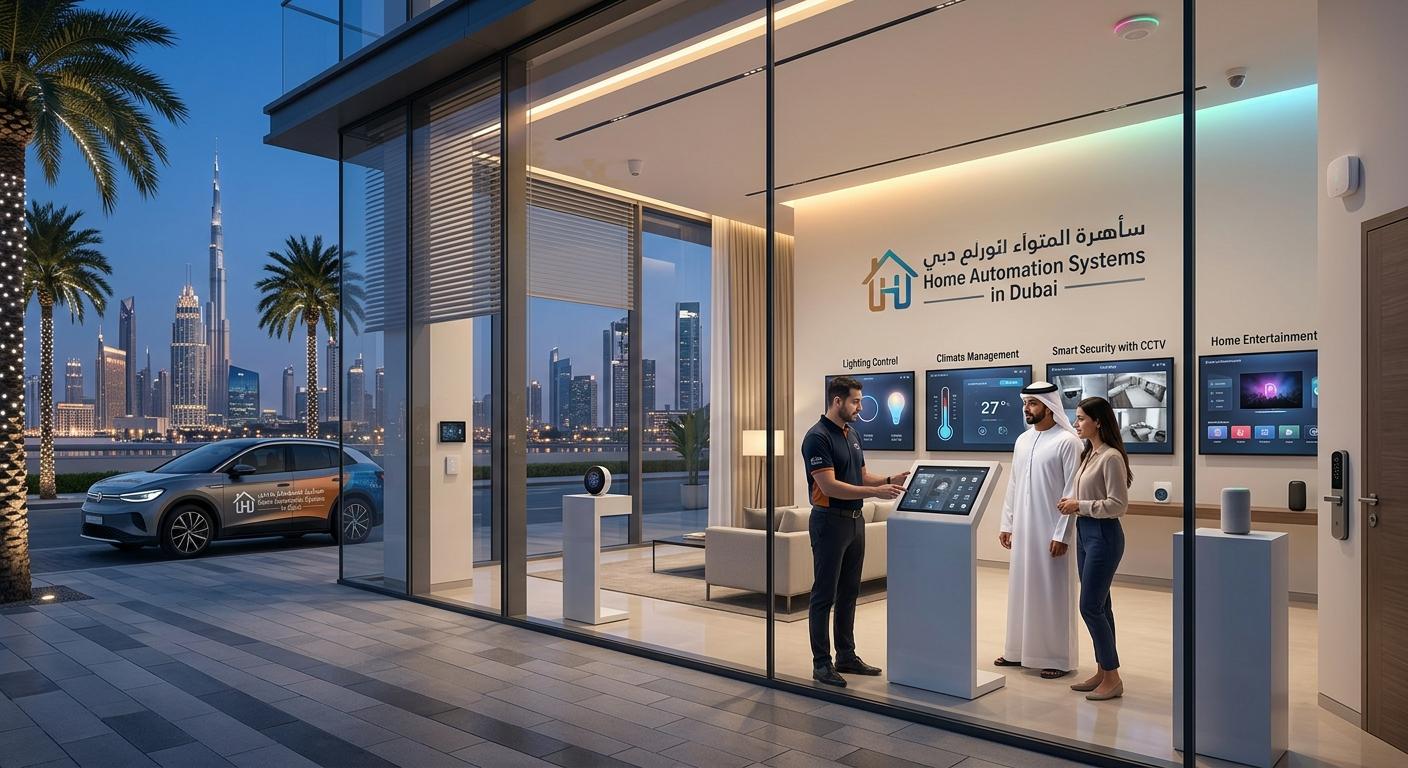
Most people don't start looking into home automation because they woke up wanting "smart home technology." They start because of something specific and annoying: the AC is running full blast in an empty house all day, the electricity bill keeps climbing every summer, they're tired of checking three different apps to control lights, curtains, and the thermostat, or they simply want to know their villa is secure and comfortable whether they're home or traveling.
That's the real starting point for this guide. Not "what is home automation" you already have a sense of that but how do I actually build a system that solves my specific daily frustrations, without overspending on gadgets I'll stop using after a month?
This is a practical walkthrough: what Home Automation Systems in Dubai actually means in the Dubai context, which parts of it deliver real day-to-day value versus which are just impressive demos, how to plan a system around your actual home and habits, what it costs, and the mistakes that lead to systems people abandon within a year.
Why Home Automation Matters More in Dubai Than Almost Anywhere Else
Dubai's climate and lifestyle make automation genuinely useful rather than a novelty, for reasons that don't apply the same way in cooler or smaller markets.
Air conditioning dominates the electricity bill. Cooling can account for the majority of a Dubai household's DEWA bill, especially across the summer months. A system that manages cooling intelligently — based on occupancy, time of day, and actual room use — has a direct, measurable financial impact that most other smart home features simply can't match.
Properties are often left empty for extended periods. Between work travel, summer trips home for expats, and weekend getaways, Dubai homes spend a lot of time unoccupied. Automation that manages energy use and monitors the property while you're away turns an empty house from a liability into a non-issue.
Villas and larger apartments benefit from centralized control. Managing lighting, curtains, AC, and security separately across a multi-room villa the manual way is genuinely tedious. Centralizing it into one system removes friction from daily life in a way that's noticeable within the first week.
Staff and family access needs to be flexible. Many households have domestic staff, drivers, or family members who need scheduled or limited access to parts of the home — automation makes this manageable without duplicating physical keys or micromanaging manually.
High-rise living changes what's useful. Apartment dwellers benefit less from irrigation or gate automation and more from lighting scenes, smart locks, and integrated security — the automation priorities shift by property type in ways worth planning for upfront.
The Real Problems Home Automation Should Solve
Before looking at any product, it's worth being specific about which problem you're actually solving, because "smart home" packages sold without this context often end up as expensive novelties.
"My electricity bill is too high." This points toward smart thermostats, AC scheduling tied to occupancy sensors, and smart plugs for high-draw appliances — the automation categories with the clearest return on investment.
"I don't know what's happening at home when I'm not there." This points toward integration between automation and your security system — cameras, door sensors, and smart locks feeding into the same app and alert system, rather than automation and security running as two disconnected purchases.
"Managing lights, curtains, and AC across the house is tedious." This points toward centralized scene control — one tap or one voice command to set "morning," "away," or "movie night" across multiple rooms at once.
"I want the house ready when I arrive, without wasting energy while I'm out." This points toward geofencing or scheduling that pre-cools rooms shortly before you're expected home, rather than running climate control all day on a fixed timer.
"I need to manage staff or guest access without handing out physical keys." This points toward smart locks with time-limited or scheduled digital access, which can be granted and revoked instantly from your phone.
Naming your actual problem first is what prevents a system from turning into a pile of disconnected gadgets.
Core Components of a Dubai Home Automation System
1. Smart Climate Control
Given how much of the electricity bill AC represents, this is usually the highest-impact starting point. Smart thermostats and AC controllers can schedule cooling by time, room occupancy, or your location, and some integrate directly with existing central AC systems rather than requiring a full unit replacement.
2. Smart Lighting
Beyond basic on/off convenience, scheduled and scene-based lighting reduces unnecessary use, supports security (lights that respond to motion or simulate occupancy while you're away), and adds genuine daily convenience — especially in larger villas with multiple zones.
3. Smart Locks and Access Control
Keyless entry with time-limited digital access solves the recurring headache of staff, guest, and family access without duplicating keys or losing track of who has one. Combined with a video doorbell, it also answers "who's at the door" without you needing to be home.
4. Motorized Curtains and Blinds
Particularly relevant in Dubai, where controlling sunlight exposure directly affects indoor temperature and cooling costs. Scheduled or sensor-based curtain automation can meaningfully reduce how hard your AC has to work during peak sun hours.
5. Integrated Security
Cameras, door and window sensors, and alarms tied into the same platform as your automation system mean a single app, a single set of alerts, and coordinated responses — a door sensor triggering lights and a camera alert simultaneously, for example, rather than three separate systems doing their own thing.
6. Voice and App Control, and Scene Automation
The interface layer — being able to say "goodnight" and have lights dim, doors lock, and AC adjust in one command, or tap a single "leaving home" scene on your phone that handles everything at once. This is what makes automation feel effortless rather than like extra chores.
7. Energy Monitoring
Smart plugs and sub-metering let you see which rooms, systems, or appliances are actually driving your electricity bill — turning "the bill is high" into specific, actionable information about where the usage is coming from.
How to Plan a System Around Your Actual Home
Start with the room or problem costing you the most. For most Dubai homes, that's climate control. Solve the highest-impact piece first rather than trying to automate everything simultaneously — you'll get more value faster and avoid decision fatigue.
Map your daily routine, not just your rooms. A useful automation plan follows how you actually move through your day — morning routine, leaving for work, arriving home, nighttime — rather than treating each room as an isolated project.
Decide what should be automatic versus what you want to trigger manually. Not everything benefits from full automation; sometimes a simple one-tap scene is more useful than a fully sensor-driven system, especially for spaces with unpredictable use.
Plan for scalability from day one. Choose a system and platform that can add rooms, devices, or integrations later, so your initial setup — say, just climate and lighting — doesn't become a dead end when you want to add locks or security next year.
Account for who else uses the home. Family members, staff, and guests all need a level of access and control that matches their role — this should be part of the plan from the start, not an afterthought bolted on later.
What It Actually Costs
Home automation pricing in Dubai varies enormously based on scope, and understanding the components helps you evaluate quotes fairly:
-
Per-device hardware cost — smart thermostats, lighting modules, curtain motors, locks, and sensors are typically priced individually, and costs add up quickly across a large villa.
-
Installation and configuration — particularly for retrofitting curtain motors, wiring lighting control, or integrating with existing central AC systems, labor can be a significant part of the total cost.
-
Hub or platform cost — some systems require a central hub or controller; others are fully app and cloud-based, which affects both upfront cost and long-term reliability.
-
Ongoing subscription fees — some platforms charge for advanced automation rules, cloud storage for connected cameras, or remote access features.
-
Scalability cost — adding a room or device category later is usually cheaper per-unit if the original system was chosen with future expansion in mind, versus retrofitting an incompatible platform.
A phased approach — starting with the highest-impact automation (usually climate) and expanding over time — is often more practical and financially sensible than trying to automate an entire villa in one go.
Common Mistakes That Lead to Abandoned Systems
Buying gadgets before defining the problem. A smart bulb here, a smart plug there, with no coordinating plan, tends to become a pile of underused devices rather than a system that actually changes daily habits.
Choosing devices from incompatible ecosystems. Mixing platforms that don't talk to each other recreates the exact "too many apps" problem automation is supposed to solve — check compatibility before purchasing, not after.
Ignoring Wi-Fi coverage and network capacity. Automation adds dozens of connected devices to a home network; weak Wi-Fi in certain rooms or an under-specified router leads directly to devices that randomly disconnect or respond slowly.
Over-automating from day one. Systems configured with too many rules and triggers at once often confuse the household more than they help — introducing automation gradually, room by room, leads to setups people actually keep using.
Skipping professional setup for complex integrations. DIY installation can work well for simple lighting and plugs, but curtain motorization, central AC integration, and multi-device scene automation typically benefit from professional configuration to actually function reliably together.
What a Well-Planned System Looks Like in Practice
For a typical Dubai villa, a well-sequenced rollout often starts with smart climate control tied to occupancy and scheduling, followed by centralized lighting and curtain automation for energy savings, then smart locks and integrated security once the core comfort and efficiency layer is working reliably all unified under one app rather than added as disconnected pieces.
For an apartment, the priority list usually shortens to smart climate control, lighting scenes, and a smart lock with video doorbell integration delivering the bulk of the day-to-day value without the added scope of curtain motorization or perimeter security a villa requires.
Final Thoughts
Home automation succeeds when it's built around a specific problem you actually have — a high electricity bill, the hassle of managing a large home manually, the peace of mind of knowing your property while you're away — rather than assembled as a collection of impressive-sounding gadgets. Starting with your highest-impact problem, planning for how your household actually moves through its day, and choosing a system that can grow with you is what separates automation people use for years from automation that gets abandoned within months.
At Smart Living Technology, every automation project starts with understanding what's actually costing you time, money, or peace of mind — because the best smart home system is the one designed around how you really live, not a demo reel of features.
Frequently Asked Questions
1. What's the best place to start with home automation in a Dubai home?
For most households, smart climate control delivers the fastest and most noticeable return, since AC typically makes up the largest share of a Dubai electricity bill. Starting there — before lighting, curtains, or full security integration — tends to produce the clearest results and the best foundation to expand from later.
2. Can home automation actually reduce my DEWA bill?
Yes, particularly through smart thermostats and AC scheduling based on occupancy and time of day, combined with motorized curtains that reduce solar heat gain during peak sun hours. The exact savings depend on your current usage patterns and home size, but climate-related automation is generally where the most measurable impact happens.
3. Do I need to replace my existing AC system to automate it?
Not usually. Many smart thermostats and AC controllers are designed to integrate with existing central AC systems rather than requiring full replacement — though this depends on your specific AC setup, so it's worth confirming compatibility during a consultation rather than assuming either way.
4. Is home automation worth it for an apartment, or only for villas?
It's worth it for both, but the priorities differ. Villas benefit from the full range — climate, lighting, curtains, locks, and perimeter security — while apartments typically see the most value from climate control, lighting scenes, and a smart lock with video doorbell, since building management often already covers common-area security.
5. What happens if I only want to automate one or two things now and expand later?
That's a common and sensible approach. The key is choosing a platform and system architecture that supports adding devices and integrations later without needing to replace what you've already installed — a phased rollout starting with your highest-priority problem is often more practical than automating everything at once.

 English
 Arabic
 French
 Spanish
 Portuguese
 Deutsch
 Turkish
 Dutch
Dutch
 Italiano
 Russian
 Romaian
 Greek
Greek
