


Why MSMEs Should Compare Life-Cycle Cost Before Buying New Machinery
For manufacturing MSMEs, machinery purchase decisions are often based mainly on the quoted price. However, the cheapest machine at the time of purchase may not always remain the most economical option over several years.
A better approach is to evaluate the life-cycle cost of equipment. This means looking at the total cost of owning and operating a machine throughout its useful life, not only its initial purchase price.
What Is Life-Cycle Cost?
Life-cycle cost includes all major expenses connected with machinery from purchase to replacement.
These may include:
- Initial equipment cost
- Installation expenses
- Electricity or fuel consumption
- Routine maintenance
- Spare parts
- Repair expenses
- Operator training
- Production downtime
- Financing cost
- Replacement or disposal cost
When these factors are considered together, businesses can make more informed investment decisions.
Why Is Purchase Price Alone Not Enough?
Two machines may perform the same function but have very different operating costs.
For example, one machine may be cheaper to purchase but consume more electricity and require frequent maintenance. Another may cost more initially but use less energy and require fewer repairs.
Over several years, the second machine may prove more economical despite its higher upfront cost.
This is why MSMEs should compare the total operating impact rather than focusing only on the supplier quotation.
How Can Energy Performance Be Compared?
Energy performance is an important part of machinery evaluation, especially in power-intensive manufacturing operations.
Businesses can compare:
- Energy consumed per unit of output
- Operating hours
- Peak power requirement
- Expected annual electricity consumption
- Maintenance-related energy losses
- Efficiency at different production loads
This helps identify whether a proposed machine is likely to reduce energy costs in real operating conditions.
Why Does Financing Cost Matter?
If machinery is purchased through a loan, the cost of borrowing also becomes part of the investment.
Interest payments can influence the overall economics of the project, particularly during the first few years.
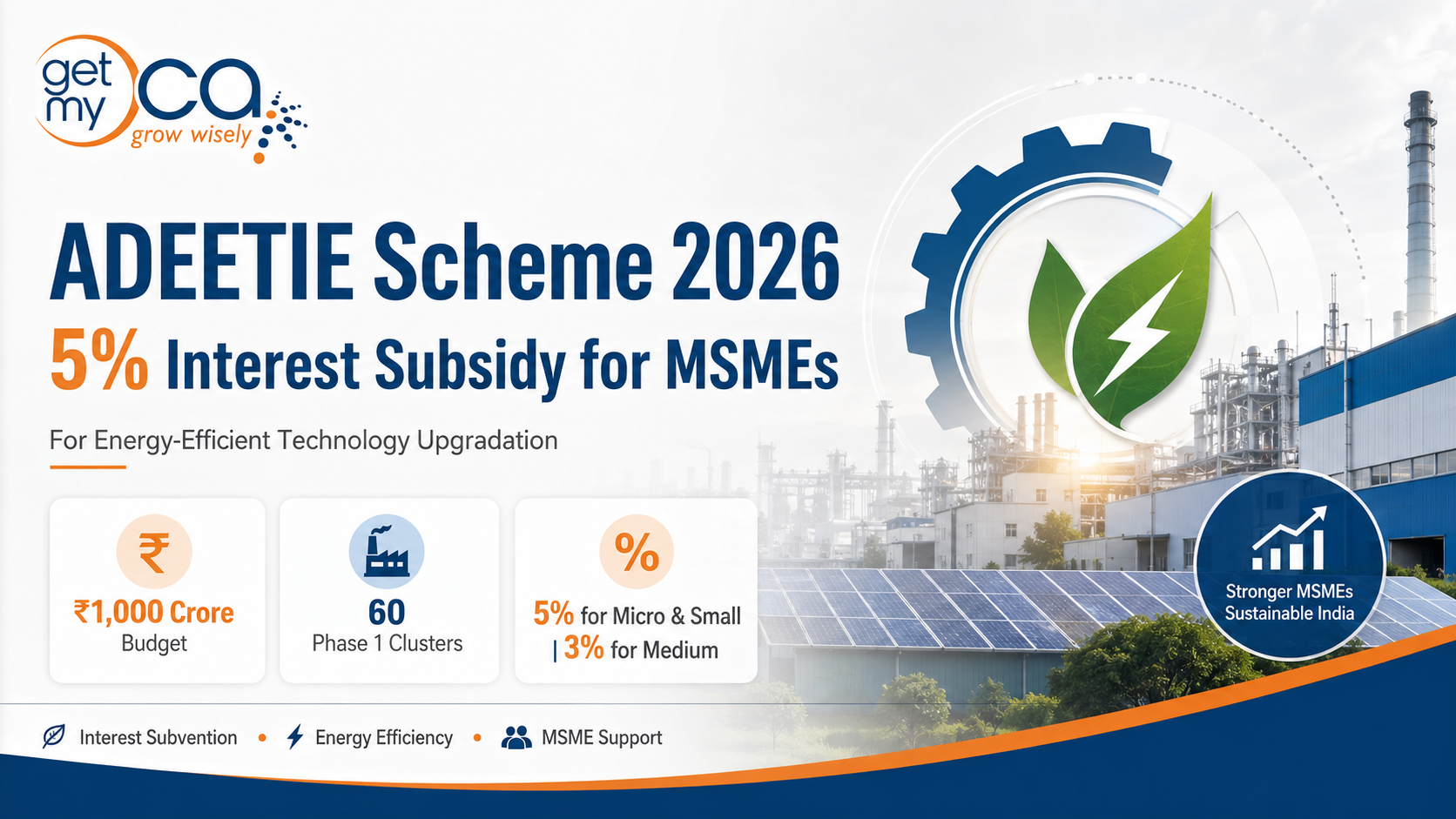
Eligible MSMEs planning energy-efficient technology investments may review the ADEETIE Interest Subsidy Scheme while evaluating available support for eligible projects.
However, financing support should be considered together with expected energy savings, operating cost, and repayment capacity.
Compare Cost Per Unit of Production
One useful method is to estimate how much a machine contributes to the cost of producing each unit.
This may include:
- Energy cost
- Maintenance cost
- Labour requirement
- Downtime
- Consumables
- Financing expenses
A machine that produces more output with lower recurring cost may provide better long-term value even if the initial investment is higher.
Why Is Benchmarking Useful?
Benchmarking means comparing the performance of existing equipment with newer alternatives or industry standards.
It can help businesses identify whether:
- Energy consumption is unusually high
- Maintenance costs are increasing
- Production efficiency is falling
- New technology offers meaningful improvement
- Replacement is financially justified
Benchmarking can therefore support more objective investment decisions.
Sector-Specific Upgrades Need Separate Evaluation
Different industries have different technology priorities.
A general manufacturing unit may focus mainly on energy consumption and production efficiency, while regulated sectors may also need to consider quality, utility systems, and facility standards.
Pharmaceutical manufacturers, for example, may assess upgrades involving production equipment, HVAC systems, laboratories, utilities, clean rooms, or water systems.
Eligible pharmaceutical units evaluating such improvements may also examine the RPTUAS Subsidy Scheme while planning their technology-upgradation investment.
What Should MSMEs Record Before Comparing Machinery?
Before evaluating replacement options, businesses can maintain basic performance data for existing machinery.
Useful records include:
- Monthly energy consumption
- Production output
- Breakdown frequency
- Maintenance expenses
- Spare-part costs
- Operating hours
- Rejection or wastage levels
- Downtime
This information creates a practical baseline against which new technology can be compared.
Think Beyond Immediate Savings
Some technology investments may not provide the lowest upfront cost but can still offer stronger long-term value.
Possible benefits may include:
- Lower energy consumption
- Reduced maintenance
- Improved reliability
- Higher production capacity
- Better process control
- Lower operating cost
These benefits should be considered over the expected useful life of the equipment.
Conclusion
Machinery investment should be evaluated as a long-term operating decision rather than a one-time purchase.
By comparing life-cycle cost, energy performance, maintenance requirements, financing expenses, and expected output, MSMEs can better understand the true economics of a technology upgrade.
A detailed comparison can help businesses choose equipment that supports sustainable production efficiency instead of simply selecting the lowest-priced option.

 English
 Arabic
 French
 Spanish
 Portuguese
 Deutsch
 Turkish
 Dutch
Dutch
 Italiano
 Russian
 Romaian
 Greek
Greek
