


Pilot Training in India: A Student’s Guide to DGCA Exams, Costs and Career Preparation
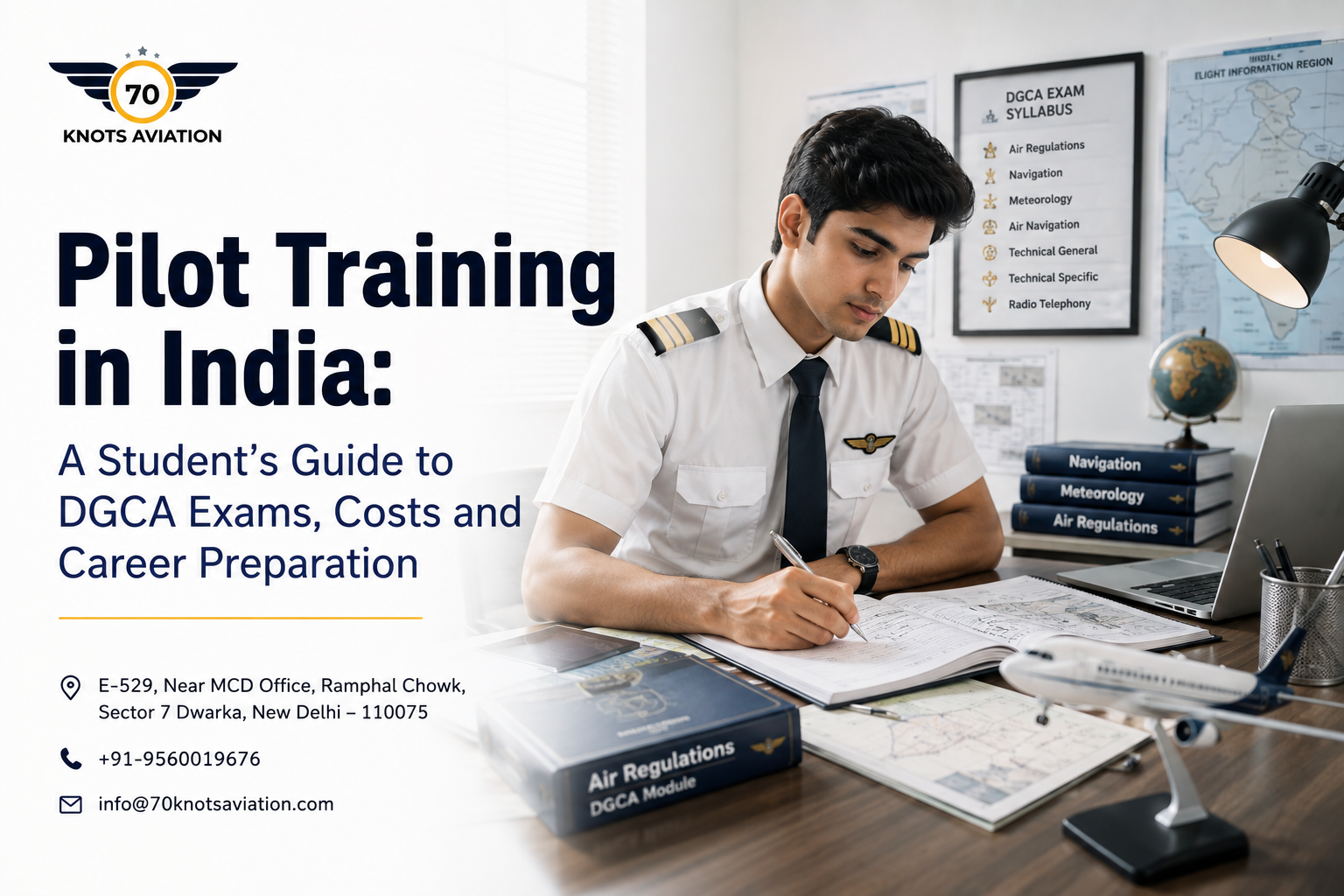
For many students, becoming a pilot is more than a career choice—it is a long-term ambition that combines technical knowledge, discipline, responsibility, and a passion for aviation. However, students who are considering aviation after school often have several questions. What qualifications are required? How does flight training work? What is involved in the DGCA examination process? How much does training cost? And how should a student select the right aviation training institute?
Understanding these questions before beginning the journey can help students make informed decisions and prepare themselves more effectively.
If you are researching how to become a pilot, it is important to understand that professional pilot training involves both theoretical education and practical flying experience. Students need to meet applicable eligibility and medical requirements, complete the required examinations and flight training, and fulfil the licensing requirements prescribed by the Directorate General of Civil Aviation.
Starting Your Journey Toward a Pilot Career
Students generally begin exploring aviation during or after their Class 12 education. At this stage, it is useful to research the complete pathway instead of focusing only on flight lessons.
Aviation requires knowledge across several areas, including regulations, navigation, meteorology, aircraft systems, communication, and operational procedures. Therefore, students should be prepared for both classroom learning and practical training.
Before enrolling, students should understand:
- Educational eligibility
- Applicable medical requirements
- DGCA examination requirements
- Ground school training
- Flight training requirements
- Licensing procedures
- Expected expenses
- Possible career pathways after licensing
This preparation allows students to approach pilot training with realistic expectations.
How to Become a Pilot: Understanding the Basic Pathway
The question of how to become a pilot has a different answer depending on the type of pilot career a student wants to pursue. Someone interested in recreational flying may follow a different pathway from a student who wants to become a commercial airline pilot.
For students targeting a professional flying career, the pathway generally includes education, medical assessment, theoretical examinations, flight training, and licensing.
A simplified progression may look like this:
Class 12 → Medical Assessment → Ground Training → DGCA Examinations → Flight Training → Licensing Requirements → Further Qualifications and Career Preparation
The exact requirements should always be checked against the latest DGCA regulations because aviation rules and procedures can be updated.
The Importance of DGCA Examinations
Theoretical knowledge plays a major role in professional aviation. DGCA Pariksha is therefore an important part of the preparation process for aspiring pilots.
Students may need to study subjects related to areas such as air regulations, air navigation, aviation meteorology, technical knowledge, and communication procedures, depending on the applicable licence and examination requirements.
These subjects are not simply academic topics. Pilots use this knowledge when making operational decisions.
For example, understanding meteorology helps pilots interpret weather conditions, while navigation knowledge supports route planning and positional awareness. Air regulations help pilots operate within the established legal and safety framework.
How Students Can Prepare for DGCA Pariksha
Many students struggle with aviation examinations because they try to memorise large amounts of information without first understanding the concepts.
A better approach is to develop a consistent study routine.
Build a Subject-Wise Study Plan
Divide the syllabus into manageable sections and allocate specific study time to each subject. Avoid leaving difficult topics until the final stage of preparation.
Understand the Concepts
Instead of memorising every answer, understand why a particular procedure or rule exists. Conceptual understanding is particularly useful when dealing with technical aviation subjects.
Practise Regularly
Question practice can help students identify weak areas and become familiar with the examination format.
Revise Consistently
Aviation subjects contain terminology and technical information that can become difficult to recall if students do not revise regularly.
Follow Current Information
Students should use updated material and verify examination procedures through official DGCA sources because requirements and processes can change.
Understanding Pilot Training Cost in India
Financial planning is one of the most important parts of beginning flight training. The pilot training cost in India is not necessarily the same for every student or training organisation.
The total expenditure can depend on several factors, including:
- Training organisation
- Flying-hour charges
- Aircraft type
- Location
- Accommodation
- Ground school fees
- Examination expenses
- Medical costs
- Licensing and documentation expenses
- Additional flying hours
- Training duration
This is why students should avoid making decisions based solely on a single advertised course price.
A transparent fee structure should clearly explain what is included in the package and what expenses may need to be paid separately.
Why Additional Flying Hours Can Affect Your Budget
Every student learns at a different pace. Although training programmes have prescribed requirements, a student may require additional flying time to become sufficiently comfortable with particular manoeuvres or skills.
Aircraft maintenance, weather conditions, operational schedules, and availability can also affect flying continuity.
When comparing training options, students should ask what happens if additional hours are required and how those hours are charged.
This can give students and parents a more realistic understanding of their potential training budget.
What Should Students Look for in a Pilot Training Institute?
Searching online for the Best pilot training institute in India can produce many results. However, students should not choose an institute based only on marketing claims.
Instead, they should compare important practical factors.
Regulatory Compliance
Check the organisation's current approvals and regulatory status relevant to the training being offered.
Aircraft Availability
Students should understand the size and operational status of the training fleet. A large advertised fleet does not necessarily mean every aircraft is available for training at all times.
Instructor Support
Experienced and accessible instructors can help students develop both theoretical understanding and practical flying skills.
Flying Schedule
Ask how frequently students typically receive flying slots and how delays caused by weather, maintenance, or operational issues are managed.
Fee Transparency
The institute should provide clear information about fees, payment schedules, additional charges, and refund or cancellation policies where applicable.
Training Environment
Students should consider whether the institute provides a disciplined and professional learning environment.
Why Students Should Not Choose a Flying School Only on Price
A lower initial fee may appear attractive, but students need to consider the overall training experience.
For example, if aircraft availability is limited and students cannot fly regularly, training may take longer. Additional accommodation or living expenses may also accumulate if the training period extends.
Therefore, when calculating the pilot training cost in India, students should consider the complete financial picture rather than simply comparing the starting package price.
The Role of Ground School in Pilot Training
Ground school forms the academic foundation of pilot training.
Students study subjects that help them understand how aircraft operate and how pilots make decisions in different situations. Topics such as navigation, meteorology, regulations, aircraft technical knowledge, and communication provide essential background before and during practical flight training.
A student who develops strong theoretical knowledge can often approach flight training with greater confidence because they understand the reasoning behind different procedures.
At 70Knots Aviation, students can focus on developing a strong aviation knowledge base alongside their broader preparation for a professional pilot career.
Medical Preparation Should Begin Early
Medical eligibility should not be treated as something to consider after spending substantial amounts on training.
Students should familiarise themselves with the applicable DGCA medical requirements and seek assessment through the appropriate aviation medical process.
Medical fitness is an essential part of professional aviation because pilots have significant safety responsibilities.
Starting the medical process early can help students identify any concerns and understand their eligibility before making major financial commitments.
Skills That Can Help Students Become Better Pilots
Being academically strong is valuable, but professional pilots need several additional skills.
Students should gradually develop:
- Clear communication
- Situational awareness
- Decision-making ability
- Discipline
- Time management
- Technical curiosity
- Teamwork
- Attention to detail
- Professional behaviour
- Consistent learning habits
These qualities can support students throughout both their training and future aviation careers.
Career Expectations After Pilot Training
Students should understand that obtaining a pilot licence is an important milestone, but it does not automatically guarantee employment with an airline.
Airline recruitment can depend on multiple factors, including:
- Required licences and qualifications
- Flying experience
- Airline hiring requirements
- Interview performance
- Aptitude assessments
- Medical fitness
- Market conditions
- Additional airline-specific training
This is why students should view pilot training as the foundation of a professional career rather than the final destination.
Questions Students Should Ask Before Joining a Training Programme
Before paying an admission fee, students and parents can ask the institute several practical questions.
What approvals and authorisations does the organisation currently hold?
Understanding the organisation's regulatory status should be one of the first priorities.
What is included in the advertised course fee?
Ask whether ground classes, flying hours, study materials, examinations, accommodation, and other services are included or charged separately.
What happens if additional flying hours are required?
Knowing the applicable charges beforehand can help with financial planning.
How are flying schedules managed?
Students should ask about aircraft availability, instructor scheduling, maintenance-related delays, and weather disruptions.
What academic support is available for DGCA examinations?
Good examination preparation can make the theoretical stage more manageable.
How 70Knots Aviation Supports Aviation Aspirants
Choosing aviation as a career requires preparation, patience, and a willingness to learn continuously. 70Knots Aviation aims to provide students with a structured learning environment where aviation concepts can be understood clearly and preparation can be approached systematically.
For students exploring how to become a pilot, the focus should be on building a strong foundation rather than rushing through individual stages of training.
From understanding aviation subjects to preparing for examinations, students can benefit from structured guidance and consistent practice.
Frequently Asked Questions Before Starting Pilot Training
What should I study before starting pilot training?
Students should develop a strong foundation in Physics, Mathematics, English, and general scientific concepts. They should also begin familiarising themselves with basic aviation terminology.
How important is DGCA Pariksha for aspiring pilots?
The examinations are an important part of the theoretical licensing process. Students should take them seriously and prepare using current requirements and reliable study material.
Is pilot training expensive in India?
Professional pilot training represents a significant financial investment. The pilot training cost in India varies depending on the training organisation, flying hours, location, accommodation, examinations, and other expenses.
How do I find the best pilot training institute in India?
Rather than relying on a single ranking or marketing statement, students should compare regulatory status, aircraft availability, instructors, training quality, flying schedules, fee transparency, and student support.
Can I become a pilot immediately after Class 12?
Students can begin the applicable pilot training pathway after meeting the required educational, age, medical, and regulatory conditions. The exact requirements should be verified against the latest DGCA rules.
Final Thoughts for Future Pilots
Aviation can offer an exciting and professionally challenging career, but becoming a pilot requires careful preparation. Students should understand the complete training pathway before making decisions about admission or finances.
The answer to how to become a pilot involves much more than learning to operate an aircraft. It requires academic preparation, medical eligibility, examination success, flight training, discipline, and continuous professional development.
Students should also research the pilot training cost in India carefully and compare complete training expenses rather than focusing only on an advertised course price.
For those preparing for DGCA Pariksha, consistent study and conceptual understanding are essential. And when evaluating the Best pilot training institute in India, students should focus on training quality, regulatory compliance, instructor support, infrastructure, transparency, and their own long-term career goals.
With the right preparation and realistic expectations, students can approach their aviation journey with greater confidence and a clearer understanding of what it takes to build a professional career in the cockpit.

 English
 Arabic
 French
 Spanish
 Portuguese
 Turkish
 Dutch
Dutch
 Italiano
 Russian
 Romaian
 Portuguese (Brazil)
 Greek
Greek
