


What Makes Compositemould Prepreg Mould Suitable For Industrial Production
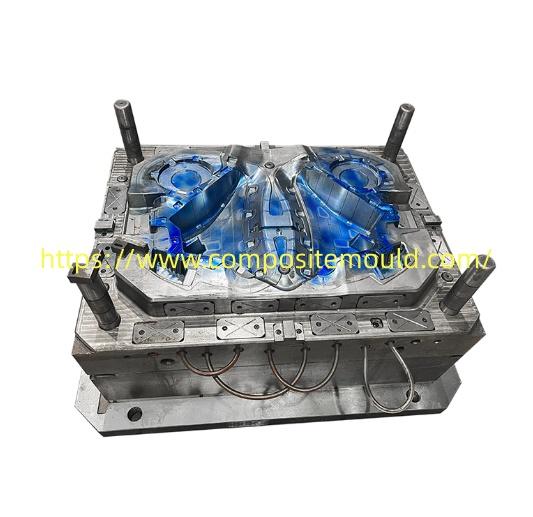
Prepreg Mould is a tooling solution used to form pre impregnated composite materials into specific component shapes during controlled manufacturing processes. The prepared reinforcement already contains a measured resin system, while the tooling provides the required cavity, surface shape, dimensions, and forming structure. Compositemould provides composite tooling solutions for industrial applications and supports project discussions covering component design, material conditions, surface requirements, sample development, and production planning.
What Is Prepreg Material
Prepreg refers to reinforcement material that has already been combined with a resin system in a controlled manner.
The material can be stored and handled according to its specific requirements before production.
During manufacturing, selected layers are positioned according to the component design.
The material arrangement can influence the final mechanical characteristics, thickness distribution, and appearance of the finished part.
Because the resin is already incorporated into the reinforcement, the manufacturing process focuses on controlled placement, forming, heat management, and curing.
The Role Of Tooling In Prepreg Processing
Tooling provides the physical shape needed to form the prepared material.
The cavity determines the external geometry of the component, while additional features can control edges, openings, mounting areas, curves, and other details.
During production, the material is arranged over or within the tooling before the curing stage.
The tooling must therefore correspond closely with the finished part design.
A well prepared technical drawing gives the tooling team information about dimensions, tolerances, surface requirements, and other important features.
Product Geometry Comes First
Tool development should begin with a clearly defined component.
Buyers can provide three dimensional models, drawings, dimensions, wall structures, openings, mounting areas, curves, and surface details.
These details influence cavity design, parting areas, draft requirements, inserts, and removal methods.
If the product changes after tooling development has already progressed, modifications may be necessary.
For this reason, early communication between the product designer and tooling manufacturer can help reduce avoidable changes.
Surface Requirements Need Early Planning
Composite components can have different surface expectations.
Some products may require a smooth visible finish, while others may include textured sections, markings, or other surface features.
The tooling surface can influence how these details appear on the finished component.
Buyers should communicate appearance requirements before tooling fabrication starts.
Sample evaluation can then provide a practical opportunity to check texture, surface quality, edges, dimensions, and other visual details before larger production begins.
Controlled Heating And Curing
Curing is a central stage of prepreg manufacturing.
The resin system needs suitable thermal conditions to develop the intended properties within the finished component.
The specific cycle depends on the selected material and manufacturing process.
Tooling design may therefore include considerations related to heat distribution, thermal stability, surface condition, and processing equipment.
Buyers should provide information about the material system and expected curing method before the tooling design is finalized.
This helps connect the tool with the actual production conditions.
Producing Complex Composite Components
Prepreg processing can support components with detailed shapes.
Products may include curved surfaces, thin sections, reinforcing structures, openings, mounting points, and other geometry.
The tooling needs to reproduce these features while allowing the completed component to be removed without unnecessary difficulty.
Engineers can review draft angles, parting positions, inserts, and release arrangements during development.
This is particularly important for components that contain deep or irregular sections.
Applications Across Different Industries
Prepreg composite manufacturing can be used in many industries.
Transportation projects may require lightweight structural or exterior components. Industrial equipment can involve covers, panels, and functional parts.
Sporting goods may use formed composite structures where controlled geometry is important.
Electrical and specialized equipment can also require shaped composite components with defined insulating or structural characteristics.
The tooling should always be designed according to the actual component rather than selected solely according to its industry category.
Why Material And Tooling Must Match
Different prepreg systems can have different processing requirements.
These may involve curing temperature, pressure, cycle duration, storage conditions, and resin behavior.
Tooling needs to support these conditions throughout production.
Material information should therefore be discussed before detailed tool development.
Buyers can provide the material specification, processing conditions, expected quantity, surface requirements, and production equipment information.
This gives the engineering team a clearer foundation for creating the tooling structure.
Sample Development Supports Product Approval
A sample component provides a useful reference before regular manufacturing.
Buyers can review dimensions, surface appearance, thickness, mounting areas, openings, edges, and assembly compatibility.
If adjustments are needed, they can be discussed before larger quantities are produced.
The approved sample can then serve as a reference for future inspection and production.
For customized products, keeping the approved drawing and sample together can also help maintain consistency when additional orders are placed later.
Quality Inspection During Production
Inspection should cover both tooling and finished parts.
Relevant checks may include dimensions, surface condition, geometric features, openings, mounting locations, and other agreed specifications.
For recurring production, documented inspection requirements can provide a common reference across different batches.
Buyers may also discuss pre shipment inspection procedures when projects involve large quantities or several component variations.
A defined quality process helps connect the finished part with the approved design.
Maintenance And Tool Life Planning
Tooling can be used repeatedly, so maintenance should be considered from the beginning.
Cleaning, surface checks, component inspection, and scheduled service can help maintain the required condition.
Buyers should ask about recommended maintenance practices and the replacement of serviceable components.
For long production programs, maintenance planning can also help coordinate production schedules.
Keeping maintenance records with the tooling documentation provides a useful reference for future production teams.
Custom Tooling For Special Requirements
Not every component can use a standard tooling arrangement.
A project may require unusual dimensions, specific surface details, special mounting structures, inserts, or other custom features.
Compositemould supports customized composite tooling projects and can discuss drawings, material conditions, surface requirements, quantities, and production schedules.
For custom development, providing complete technical information early can help the tooling team identify special requirements before fabrication begins.
Why Consider Compositemould
Compositemould provides composite tooling solutions for different industrial and commercial applications.
Buyers can discuss component geometry, material conditions, surface details, curing requirements, quantities, sample development, inspection, and maintenance planning.
For manufacturers working with transportation, industrial equipment, electrical products, sporting goods, and other composite applications, a project based discussion can connect tooling development with the actual production process.
Supplier evaluation can also include engineering communication, sample approval, production support, and delivery coordination.
Building A Practical Prepreg Tooling Process
A useful process can begin with component design and continue through material confirmation, tooling development, sample production, process adjustment, approval, repeat manufacturing, inspection, and maintenance.
Each stage should have clear technical references.
If the component design changes, both parties should review whether the tooling also needs modification.
This helps keep design revisions separate from manufacturing instructions.
Approved drawings, material details, samples, and inspection requirements can then provide a common reference for later production.
Prepreg composite manufacturing depends on coordinated control of material preparation, forming, curing, tooling condition, inspection, and product design.
The appropriate tooling structure depends on component geometry, material system, curing method, surface requirements, production quantity, and expected manufacturing cycle.
A careful development process can help connect the initial component concept with repeat production.
Compositemould provides composite tooling solutions for different applications, with company and project information available at https://www.compositemould.com/

 English
 Arabic
 French
 Spanish
 Portuguese
 Deutsch
 Turkish
 Dutch
Dutch
 Italiano
 Russian
 Romaian
 Portuguese (Brazil)
