


How AI Is Transforming Home Interior Design Experiences
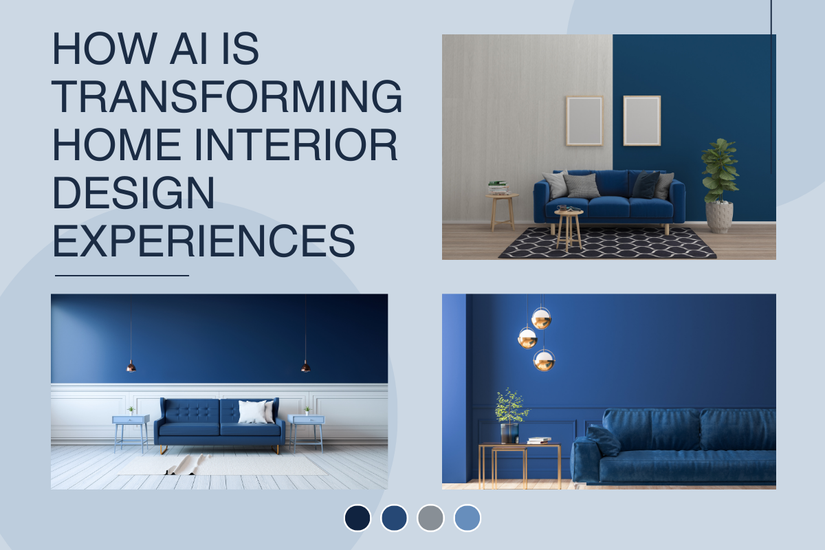
Interior design has always been deeply personal. It reflects how we live, what we value, and how we want to feel in our own spaces. Yet for decades, designing a home meant juggling inspiration boards, costly consultations, uncertain outcomes, and endless back-and-forth revisions. Many homeowners struggled to visualize how ideas would actually look once executed. Designers, on the other hand, spent hours creating mockups that still left room for doubt.
Today, artificial intelligence is quietly rewriting that entire experience.
From instant room visualization to predictive design suggestions and immersive augmented reality previews, AI is turning what was once a complex, expensive, and sometimes overwhelming process into something more intuitive and accessible. It’s not replacing creativity—it’s enhancing it. Whether you’re a homeowner experimenting with a new living room layout or a professional designer managing multiple clients, AI is becoming a trusted co-creator.
In this blog, we’ll explore how AI is reshaping home interior design from visualization and personalization to cost optimization and project execution. More importantly, we’ll examine what this transformation means for businesses, designers, and homeowners navigating the future of living spaces.
From Imagination to Instant Visualization: AI Makes Ideas Tangible
One of the biggest challenges in interior design has always been visualization. Even experienced designers sometimes struggle to communicate their vision clearly to clients. Mood boards, 2D layouts, and sample swatches don’t always translate into a complete mental picture.
AI-powered design platforms have changed that dynamic entirely.
With computer vision and generative algorithms, users can now upload a photo of their room and instantly see multiple redesigned versions in different styles—minimalist, industrial, Scandinavian, contemporary, or eclectic. The system analyzes room dimensions, lighting conditions, furniture placement, and architectural elements before generating highly realistic mockups. What used to take days of rendering work can now happen in minutes.
This level of visualization eliminates uncertainty. Homeowners no longer need to “trust the process” blindly—they can see the process unfold. Designers benefit too. Instead of spending excessive time on early-stage drafts, they can quickly generate variations and focus their energy on refining concepts and building meaningful client relationships.
As demand grows, many businesses are investing in AI house interior designing app development to offer clients immersive design tools that operate directly from their smartphones or tablets. These apps don’t just display static visuals—they adapt in real time as users change furniture, colors, or materials.
The result? A faster decision-making process, fewer costly revisions, and significantly improved satisfaction for both clients and professionals.
Hyper-Personalization: Designing Homes That Truly Reflect Individual Lifestyles
Interior design has always aimed to be personal, but AI takes personalization to a new level.
Modern AI systems analyze user preferences, browsing patterns, past design selections, budget constraints, and even lifestyle factors to recommend tailored design concepts. For instance, a family with young children might receive suggestions for durable fabrics and rounded-edge furniture, while a remote professional could be shown ergonomic workspace layouts with optimized lighting.
Unlike traditional recommendation engines that rely solely on basic preferences, AI design systems continuously learn. Each interaction refines the algorithm’s understanding of the user. Over time, suggestions become increasingly accurate and aligned with the homeowner’s evolving tastes.
This is particularly valuable in digital marketplaces offering apps on sale related to furniture, decor, and home styling tools. Instead of browsing endlessly through thousands of products, users receive curated selections based on their space dimensions, color schemes, and functional needs.
For designers and retailers, personalization translates directly into higher engagement and better conversion rates. Customers feel understood. They spend less time overwhelmed by options and more time confidently making decisions.
In essence, AI doesn’t dictate style—it listens, analyzes, and enhances human preference.
Cost Optimization and Smarter Budget Planning Through Predictive Intelligence
Budget constraints are one of the most common stress points in home interior projects. A design might look stunning on paper, but unexpected costs—materials, labor, shipping, or revisions—can quickly derail plans.
AI introduces predictive intelligence into the equation.
Advanced systems can estimate project costs with remarkable accuracy by analyzing current material prices, labor trends, and regional cost variations. They can suggest alternative materials that match aesthetic goals while staying within budget. For example, if marble exceeds a homeowner’s budget, AI might recommend high-quality engineered stone with similar visual appeal at a fraction of the cost.
Some platforms even simulate “what-if” scenarios. What happens to the total budget if you switch hardwood flooring to luxury vinyl? How does upgrading lighting fixtures affect overall expenses? These real-time financial projections empower homeowners to make informed trade-offs before committing to purchases.
For businesses working with an experienced AI development company, integrating such predictive cost modules into their design platforms creates significant competitive advantage. Clients are more likely to trust systems that combine creativity with financial clarity.
Ultimately, AI reduces surprises. It turns budgeting from a reactive process into a proactive, transparent strategy.
Immersive AR and VR Experiences: Walking Through Your Future Home
Static images are powerful, but immersion changes everything.
Augmented reality (AR) and virtual reality (VR), powered by AI, are transforming how people experience interior design before implementation. Using AR through a smartphone camera, homeowners can virtually place a sofa in their living room and walk around it. They can see how sunlight hits different surfaces at various times of day or how a new wall color interacts with existing decor.
VR takes this a step further by allowing users to “walk through” fully designed spaces. Designers can present clients with immersive digital tours, adjusting elements on the fly during consultations.
AI plays a critical role here. It processes spatial data, depth mapping, and object recognition to ensure virtual objects scale correctly and align naturally within real environments. Without AI, these immersive experiences would lack realism and accuracy.
For businesses involved in modern app development, integrating AR and VR features is no longer a futuristic concept—it’s becoming an industry expectation. Clients increasingly demand interactive experiences rather than static presentations.
This shift also democratizes design. Homeowners who may not afford high-end design studios can still access sophisticated visualization tools from their devices. The gap between professional-grade experiences and consumer accessibility continues to narrow.
AI as a Collaborative Partner for Professional Designers
There’s a common misconception that AI might replace interior designers. In reality, it’s becoming one of their most valuable collaborators.
AI handles repetitive tasks: generating layout options, suggesting color palettes, analyzing space efficiency, or creating initial drafts. This frees designers to focus on high-level creativity, storytelling, and emotional nuance—areas where human intuition remains irreplaceable.
For example, AI can analyze traffic flow within a room and suggest optimal furniture arrangements based on ergonomics and spatial dynamics. However, deciding how a space should “feel”—cozy, dramatic, serene, or energizing—still requires human empathy and experience.
Moreover, AI provides data-driven insights that enhance professional credibility. Designers can present clients with evidence-backed decisions rather than purely subjective recommendations. Want to justify a particular lighting setup? AI can show predicted brightness levels and energy efficiency comparisons. Rather than diminishing the role of designers, AI elevates it. Professionals become strategic advisors who leverage intelligent tools to deliver better, faster, and more informed outcomes.
Sustainable and Smart Living: AI Supports Eco-Conscious Design
Sustainability is no longer optional in interior design—it’s a priority. AI systems can analyze material sustainability ratings, carbon footprints, and energy efficiency data to recommend environmentally responsible choices. They can calculate how certain window placements impact natural lighting and heating costs, or how different insulation materials influence long-term energy consumption.
Smart home integration also benefits from AI-driven planning. Interior design is increasingly connected to automated lighting systems, climate control, and IoT-enabled appliances. AI helps ensure these technologies blend seamlessly with aesthetics rather than feeling like afterthoughts.
For homeowners concerned about long-term environmental impact, AI becomes a guide toward greener decisions without compromising style. It balances beauty with responsibility.
And for businesses building platforms around intelligent design tools, sustainability-focused features are not just ethical—they’re commercially strategic. Modern consumers actively seek eco-conscious solutions.
The Business Impact: Why AI Is Redefining the Interior Design Market
Beyond homeowners and designers, AI is reshaping the entire interior design ecosystem.
Retailers integrate AI recommendation engines into their e-commerce platforms. Real estate developers use AI-generated staging to market properties more effectively. Furniture brands deploy AI-powered virtual showrooms to reduce physical inventory costs.
Companies that invest strategically in AI-enabled solutions are gaining measurable advantages in customer engagement, operational efficiency, and market differentiation. The demand for integrated digital experiences continues to grow, especially in urban markets where tech-savvy consumers expect seamless, intuitive platforms.
However, successful implementation requires thoughtful strategy. It’s not about adding AI for the sake of trend alignment—it’s about solving real design challenges: visualization gaps, budget uncertainty, decision fatigue, and personalization limitations.
When implemented correctly, AI transforms not just individual homes but the business models behind them.
Conclusion: Designing the Future, One Intelligent Space at a Time
Home interior design has always blended art and function. What AI brings to the table is intelligence—context-aware, data-driven, and continuously learning.
It turns imagination into immersive previews. It transforms personal taste into hyper-personalized recommendations. It replaces budget anxiety with predictive clarity. It empowers designers instead of replacing them. And it supports sustainability without sacrificing style.
We are moving toward a future where designing a home feels less like navigating uncertainty and more like collaborating with a highly capable digital partner. AI does not eliminate creativity—it amplifies it. It does not remove the human element—it enhances human potential.
As technology continues to evolve, the most successful design experiences will be those that seamlessly blend emotional intuition with intelligent automation. Homes will not just be decorated—they will be thoughtfully engineered to reflect identity, lifestyle, and long-term vision.
In the end, AI isn’t simply transforming interior design. It’s redefining how we imagine, create, and live within our spaces.

 English
 Arabic
 French
 Spanish
 Portuguese
 Deutsch
 Dutch
Dutch
 Italiano
 Russian
 Romaian
 Portuguese (Brazil)
 Greek
Greek
