


Benefits of Choosing a Precast Concrete Plunge Pool
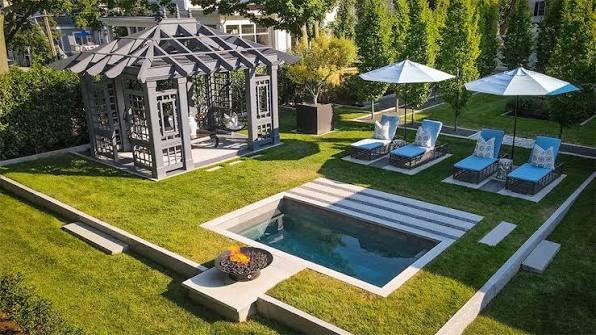
A backyard pool can completely change how you use your outdoor space, but a traditional swimming pool is not always the right fit. Large pools can require substantial space, lengthy construction, significant water volume, and ongoing maintenance. For homeowners who want the benefits of a pool without dedicating most of their yard to one, a precast plunge pool can be an appealing alternative.
Precast pools are manufactured away from the job site and transported to the property, where the prepared site, plumbing, electrical connections, and surrounding landscape are completed. This approach can reduce the amount of pool construction that has to happen in the backyard.
The appeal goes beyond installation speed. A well-designed plunge pool can provide a compact place for cooling off, relaxing, exercising, entertaining, or enjoying heated water throughout the year. Modern prefab pool designs can also be integrated into contemporary landscapes, patios, courtyards, and smaller residential lots.
So, what makes this type of pool worth considering?
What Is a Precast Concrete Plunge Pool?
A precast concrete plunge pool is a compact pool manufactured in a controlled production environment before being transported to the installation site. Instead of constructing the entire shell at the homeowner's property, much of the manufacturing work is completed beforehand.
This distinction is important.
With traditional on-site pool construction, several stages—including forming, reinforcement, concrete placement, curing, finishing, and other work—take place at the property. A precast approach moves much of that process off-site.
Current prefab plunge-pool designs can range from compact pools intended primarily for relaxation and cooling to larger models suitable for swimming and family use. The appropriate size depends on the manufacturer, available property space, intended use, access conditions, and local requirements.
Precast construction is not simply about making a pool smaller. It is about changing where and how the pool is manufactured and installed.
1. Faster On-Site Installation
One of the most attractive advantages of precast construction is the potential for a shorter on-site construction period.
Because the pool shell is manufactured before delivery, the backyard does not have to accommodate every stage of pool fabrication. Once excavation and foundation preparation are complete, the pool can be delivered, positioned, connected, and incorporated into the surrounding landscape.
For example, Soake Pools states that its finished precast pools can save weeks compared with traditional on-site gunite construction, with the exact timeline depending on project organization and site conditions.
That can make a major difference for homeowners who do not want a construction project occupying their backyard for an extended period.
However, "precast" does not mean the entire project happens instantly. Site excavation, base preparation, delivery logistics, crane placement where necessary, plumbing, electrical work, permits, and landscaping still require planning.
2. Less Backyard Construction Disruption
A pool project can temporarily turn a backyard into a construction zone.
Excavation equipment, construction materials, concrete work, workers, and finishing activities can affect how you use the property. Precast construction can reduce some of this disruption because significant manufacturing work happens elsewhere.
Once the site is properly prepared, the installation process focuses primarily on placing and connecting the finished structure.
This is particularly useful for homeowners who already have:
- Established landscaping
- Outdoor entertaining areas
- Patios
- Fences
- Mature gardens
- Limited access to the backyard
- Smaller residential lots
The actual amount of disruption will depend on the site and installation method, but moving manufacturing off-site can make the project more predictable.
3. Excellent Space Efficiency
Not every homeowner has room for a large backyard pool.
A plunge pool can provide a practical alternative when space is limited. Its smaller footprint allows homeowners to preserve room for other outdoor features instead of allowing the pool to dominate the entire yard.
You could potentially combine a compact plunge pool with:
- A patio
- Outdoor dining
- Fire pit
- Garden
- Lounge area
- Pergola
- Outdoor kitchen
- Lawn
- Deck
- Walkways
This is one reason plunge pools work particularly well in urban properties, courtyards, compact backyards, and homes where maximizing usable outdoor space is important.
The smaller footprint also gives landscape designers more flexibility to create a complete outdoor environment rather than designing the entire yard around a large swimming pool.
4. Lower Water Volume
Size has another important advantage: a smaller pool generally requires less water than a conventional large pool.
That can simplify filling, water management, and seasonal maintenance.
Soake Pools, for example, states that its largest listed model holds approximately 3,200 gallons and compares that with substantially larger traditional pools.
Water requirements will vary significantly by pool dimensions, depth, climate, evaporation, and maintenance practices, so homeowners should compare the actual specifications of the models they are considering.
For people who want water-based relaxation without maintaining a huge body of water, a smaller pool can be an attractive compromise.
5. Potentially Easier Water Management
Every pool requires proper water chemistry and routine care. However, managing a smaller water volume can be more straightforward than managing a substantially larger pool.
Owners still need to monitor factors such as:
- Sanitizer levels
- pH
- Water clarity
- Filtration
- Circulation
- Debris
- Equipment performance
A cover can also help reduce debris entering the water and may help with heat retention depending on its design and use.
The important point is that a plunge pool is lower-maintenance, not maintenance-free.
Regular testing and appropriate equipment remain essential for keeping the water clean and comfortable.
6. Efficient Heating for Year-Round Enjoyment
A plunge pool can be used differently from a traditional large swimming pool.
Instead of being used only during hot weather, a properly equipped plunge pool can potentially be heated during cooler periods. Its smaller water volume can make heating more manageable than heating a much larger pool.
Soake Pools specifically highlights smaller water volume, covers, and insulation as factors supporting efficient heating and year-round use.
This creates more flexibility.
In summer, the pool can provide a refreshing place to cool down. During cooler weather, heating can turn it into a warm relaxation space.
Whether year-round operation makes financial sense depends on your climate, equipment, energy costs, insulation, cover, and desired water temperature.
7. Flexible Installation Options
Depending on the manufacturer's engineering and the property, precast plunge pools may offer different installation configurations.
Some systems can be installed:
- Fully in-ground
- Partially above ground
- Partially in-ground
- Above grade
For example, Soake's current specifications state that its pools can be installed at different levels, including above ground, partially in-ground, or flush with grade.
This flexibility can be especially useful for properties with slopes or challenging landscaping conditions.
However, the available options depend on the specific pool design and structural engineering. Your installer should assess the site before deciding which configuration is suitable.
8. Strong and Consistent Factory Construction
Factory manufacturing offers another potential advantage: controlled production.
When a pool is produced in a dedicated manufacturing environment, the manufacturer can control many aspects of the production process more consistently than an entirely site-built project.
Prefab concrete pool construction can incorporate engineered reinforcement, controlled concrete placement, waterproofing systems, and factory-applied finishes.
This does not mean every precast pool is automatically superior to every traditionally constructed pool. Materials, engineering, manufacturing standards, installation quality, and maintenance all influence long-term performance.
For buyers, the key question is not simply "Is it concrete?" but:
How is the pool engineered, manufactured, finished, transported, and installed?
9. Attractive Design Possibilities
A compact pool does not have to look basic.
Modern precast designs can become a central architectural feature of the backyard. Depending on the manufacturer, homeowners may have choices involving:
- Interior tile
- Coping
- Steps
- Benches
- Pool surrounds
- Exterior finishes
- Water features
- Lighting
- Landscaping
- Decking
This allows the pool to complement the architecture of the home rather than appearing like an isolated addition.
Soake, for instance, describes hand-tiled interiors and multiple tile options as part of its product offering.
Other manufacturers may offer completely different finishes and customization options, so it is worth comparing actual product specifications before making a decision.
10. More Outdoor Space for Living
A pool should add to your outdoor lifestyle rather than consume it.
Because plunge pools are compact, you can potentially maintain dedicated areas for other activities.
Imagine a backyard with:
Pool + patio + lounge + garden + outdoor dining
rather than:
Large pool + narrow remaining space
That distinction can be significant for families who want their backyard to serve several purposes.
You may be able to create a space where people can swim, relax, eat, entertain guests, and enjoy landscaping without sacrificing one activity for another.
11. A Useful Alternative to a Large Concrete Pool
Traditional Concrete swimming pool construction can provide substantial flexibility in shape, size, depth, and design, but it may also involve extensive on-site work.
A precast plunge pool offers a different model.
Instead of starting with an empty excavation and constructing the pool shell at the property, the homeowner purchases a manufactured pool that is delivered and installed.
Neither approach is universally better.
A large custom pool may be ideal for someone who wants:
- Lap swimming
- Multiple depths
- Diving areas
- Large entertaining capacity
- Complex shapes
- Extensive water features
A precast plunge pool may be better suited to someone prioritizing:
- Compact dimensions
- Faster installation
- Simple outdoor living
- Relaxation
- Efficient heating
- Smaller water volume
Understanding this difference helps buyers choose based on lifestyle rather than marketing claims.
12. Comfortable for Relaxation and Recovery
Plunge pools are not necessarily designed primarily for swimming laps.
Their compact dimensions make them well suited to sitting, cooling down, relaxing, and enjoying water-based recreation.
Heated versions can also become part of a home wellness routine.
Some homeowners use compact heated pools alongside:
- Saunas
- Outdoor showers
- Exercise areas
- Meditation spaces
- Spas
- Cold-water routines
The experience depends heavily on water temperature and how the pool is equipped.
Importantly, people with medical conditions should consult an appropriate healthcare professional before using very hot or very cold water therapies.
13. Can Work in Challenging Backyard Layouts
Small or irregularly shaped yards can make conventional pool planning difficult.
A compact prefabricated pool may provide additional possibilities because the manufacturer already knows the structural dimensions of the finished unit.
However, delivery access becomes particularly important.
Before ordering, homeowners should determine:
- Can the delivery vehicle reach the property?
- Is there sufficient clearance?
- Will a crane be required?
- Are overhead power lines present?
- Can the pool reach the prepared excavation?
- Are gates wide enough?
- Are neighboring properties affected?
- What permits are required?
Soake's installation guidance, for example, emphasizes verifying delivery access and working with local professionals on site preparation.
This is one area where professional planning can prevent expensive surprises.
14. Predictable Manufacturing Can Simplify Planning
A major benefit of prefabrication is that the pool itself can be manufactured before arriving at your property.
That can make certain aspects of project planning easier because the primary pool structure already exists.
However, the total project still includes several variables:
- Excavation
- Foundation/base
- Delivery
- Crane or lifting equipment
- Plumbing
- Electrical
- Heating
- Permits
- Drainage
- Backfilling
- Landscaping
- Pool surround
Therefore, homeowners should request a complete project estimate, not just the price of the pool shell.
15. Potentially Better Long-Term Backyard Value
A well-designed plunge pool can improve how homeowners use their property.
Its value is not necessarily limited to resale.
For many homeowners, the bigger benefit is having an outdoor space they actually enjoy using.
A compact pool can provide:
- A place to cool off
- A relaxation area
- A gathering space
- A wellness feature
- A visual focal point
- Extended outdoor living
Whether a pool increases property value depends on the local real estate market, neighborhood expectations, installation quality, design, and buyer preferences. It should not be treated as a guaranteed financial investment.
Precast vs. Traditional Pool Construction
Before choosing a precast design, compare the two approaches honestly.
|
Feature |
Precast Plunge Pool |
Traditional On-Site Pool |
|
Manufacturing |
Primarily off-site |
Primarily on-site |
|
Installation |
Generally streamlined |
Often more construction-intensive |
|
Size |
Usually compact |
Highly flexible |
|
Backyard footprint |
Smaller |
Can be much larger |
|
Custom shapes |
Manufacturer-dependent |
Generally greater flexibility |
|
Water volume |
Usually lower |
Can be substantially higher |
|
Heating |
Potentially efficient due to size |
Depends on pool size and equipment |
|
Construction disruption |
Potentially reduced |
Often greater |
|
Delivery requirements |
Important |
Less dependent on large-unit delivery |
|
Best suited for |
Compact, relaxation-focused spaces |
Large/custom swimming projects |
There is no single pool type that is right for everyone.
The best choice depends on your property, budget, lifestyle, access, desired pool size, and intended use.
What to Consider Before Buying a Precast Plunge Pool
The benefits are attractive, but buyers should evaluate the complete project before signing a contract.
Site Access
A precast pool may be extremely difficult to deliver if there is no suitable access route.
Crane Requirements
Large prefabricated structures often require specialized lifting equipment. Confirm who is responsible for crane hire and associated costs.
Soil and Excavation
Ground conditions can affect excavation, drainage, structural preparation, and overall cost.
Permits and Safety
Pool regulations vary by location. Fencing, covers, electrical systems, barriers, and permits may be subject to local requirements.
Utilities
Plumbing, electrical connections, heating, filtration, and drainage all need to be planned.
Landscaping
Don't forget the area surrounding the pool. Decking, paving, retaining walls, gardens, lighting, and drainage can represent a significant part of the overall project.
How to Choose the Right Precast Plunge Pool
Start by defining what you actually want from the pool.
For relaxation
Prioritize comfortable seating, appropriate depth, heating, lighting, and easy access.
For cooling off
Focus on circulation, filtration, shade, and an easy-to-maintain water system.
For entertaining
Consider seating, surrounding patio space, lighting, safety, and access to outdoor dining.
For wellness
Look at heating and cooling capabilities, comfortable seating, water circulation, and integration with other wellness features.
For a small backyard
Measure the entire site before choosing the pool. Don't forget clearance for installation, equipment, walkways, and maintenance access.
Is a Precast Concrete Plunge Pool Worth It?
For the right homeowner, it can be.
The strongest reasons to consider one are its compact footprint, potentially faster installation, reduced water volume, factory-controlled construction, design flexibility, and potential for year-round use.
But the decision should be based on the complete project rather than the pool itself.
Think about:
Pool + delivery + installation + utilities + heating + landscaping + maintenance + safety
That is the real investment.
A precast plunge pool makes the most sense when its compact size and streamlined installation match your lifestyle and property.
Final Thoughts
Choosing a precast plunge pool is ultimately about finding a better balance between space, convenience, design, and outdoor enjoyment.
For homeowners who don't need a large pool for swimming laps but still want a beautiful place to cool off, relax, entertain, or enjoy heated water, a compact precast design can be an excellent option.
The biggest advantage is not simply that the pool is made from concrete or manufactured in advance. The real appeal comes from the combination of factory production, compact dimensions, reduced on-site construction, manageable water volume, and flexible backyard integration.
Before purchasing, compare manufacturers carefully, verify delivery access, understand installation requirements, check local regulations, and obtain a complete project quotation.
A good pool should fit your home and lifestyle, not force your entire backyard to revolve around it.

 English
 French
 Spanish
 Portuguese
 Deutsch
 Turkish
 Dutch
Dutch
 Italiano
 Russian
 Romaian
 Portuguese (Brazil)
 Greek
Greek
