


Maintaining the Edge on Your Ninja Sword
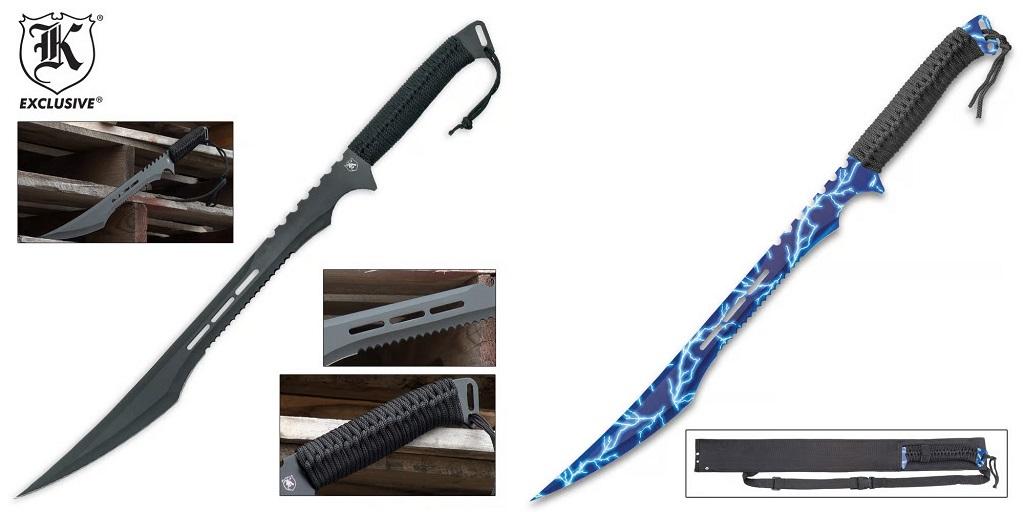
A ninja sword, also sometimes called a ninjato, is a relatively short, single-edged sword with a tanto point, very similar to a katana except that the blade lacks a katana’s signature curve.
That being said, maintenance (and appropriate use) of these two sword patterns is effectively the same. Here’s what you need to know about keeping the edge of your ninjato in slicing shape.
Cutting Appropriate Targets
The first and most important thing to keep in mind is that preventing damage to the edge of a ninja sword starts with what you cut with it.
But first, note this: you should not be using a ninja sword (or any sword) for live cutting practice if it is not battle-ready. This means it needs:
- To be constructed from an appropriate steel alloy.
- An appropriate temper.
- And a full tang construction.
If it has that and it is considered battle-ready, you can use your ninja sword for cutting practice but should only cut appropriate targets, such as:
- Cuts of meat.
- Fruits and vegetables.
- Full water bottles (softer plastic, like milk jugs, are best for this).
- Rolled tatami mats.
- Paper and cardboard.
As a general rule, these make some of the best targets for live swordplay. Other targets, such as hard wood or anything else of that nature, are not ideal, as they will dull the edge faster and can damage the sword as well.
Notes for Storage
How and where you store your ninja sword will also influence how long the edge lasts, because a little bit of corrosion on a sword’s blade can blunt the edge much more quickly than you might think.
The high-level notes are to store the sword somewhere cool and dry, with very low relative humidity. This will help prevent corrosion from manifesting on the blade.
Also, you can and should treat the blade with a little bit of sword oil before storage. One drop on either side of the blade should be more than enough. One alternative that will provide a higher level of protection because it won’t run off or evaporate like oil will is microcrystalline wax. This, applied to the blade, will insulate it and protect it from corrosion.
What Not to Do
In order to prevent damage to the blade of your ninja sword, you should also know what not to do with it. Here are some things you should not do with your ninja sword:
- Never throw it, you will be likely to damage the point or edge, or bend or snap the blade.
- Don’t stick the blade in the ground, as this will dull the edge very rapidly.
- Don’t cut targets on unsuitable stands, like stone.
- Don’t strike the blade against hard objects like stone or wood.
- Try not to cut through your target and into the stand if you can help it.
- Avoid touching the blade with your bare hands as acids and salts on your skin can cause discoloration and corrosion.
- Make sure to oil the blade before storing it in its scabbard for a prolonged period of time.
Other than these, just observe general common sense when handling, using or storing your ninja sword and the investment should last admirably.
Don’t Have a Ninja Sword Yet? Here’s Where to Get One
In the market for a new ninja sword for your collection? Check out True Swords first. They carry a wide range of battle-ready swords and weapons as well as a dedicated collection of traditional Japanese swords, among which are some ninja sword patterns. Visit their website and get in touch with them if you have any questions.
For more information about Defense Umbrella and Realistic Katana Please visit: True Swords.

 English
 Arabic
 French
 Spanish
 Portuguese
 Deutsch
 Turkish
 Dutch
Dutch
 Italiano
 Russian
 Portuguese (Brazil)
 Greek
Greek
