


Can Dicovalve High Temperature Stainless Steel Ball Valves Suit Thermal Processes
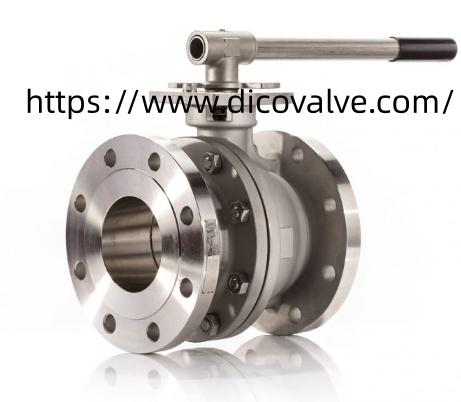
High Temperature Stainless Steel Ball Valves can be considered for industrial systems that handle heated fluids, steam, thermal oils, or process gases. Their suitability depends on the complete working environment rather than a single product characteristic. Engineers and purchasing teams should review the handled medium, pressure conditions, sealing materials, connection arrangement, thermal cycling, installation location, and maintenance requirements before choosing equipment.
Steam Handling Systems
Steam is widely used in manufacturing facilities for heating, cleaning, drying, and energy transfer. Piping systems carrying steam often require isolation components that can operate within the conditions created by repeated heating and cooling.
A suitable quarter-turn design can provide a practical method for opening or isolating a pipeline section. This can be useful during equipment servicing because maintenance teams may need to separate individual sections without changing the entire system layout.
Buyers should review the body material, sealing arrangement, packing construction, and applicable operating range before ordering. Installation practices also matter because flange alignment, fastening, gasket selection, and pipe support can influence overall system performance.
Thermal Oil Equipment
Thermal oil circuits are used in applications where controlled heat transfer is required. Industrial ovens, dryers, reactors, heat exchangers, and process heating equipment may use circulating oil to transfer energy between different parts of a production system.
In such installations, the compatibility of internal sealing materials with the circulating medium deserves careful attention. Continuous exposure to heated fluid can influence the properties of certain materials, so component selection should reflect the actual process environment.
Maintenance planning is another useful consideration. Equipment that can be isolated and accessed without extensive modification may make routine servicing more manageable. Buyers should therefore consider both operating requirements and the physical layout of the installation.
Chemical Processing
Chemical processing facilities can involve heated fluids together with corrosive or reactive media. Stainless steel construction may be suitable for certain environments, but the appropriate material grade should be determined according to the chemical composition, concentration, operating conditions, and surrounding atmosphere.
The body material is only one part of the selection process. Seats, seals, stems, packing, and other internal components also need to be compatible with the process medium.
Project teams should provide suppliers with accurate application information before purchasing. This gives manufacturers a clearer basis for discussing suitable materials and configurations while reducing the possibility of choosing equipment without considering the actual process conditions.
Heat Treatment Facilities
Heat treatment equipment is used in manufacturing environments where controlled heating and cooling form part of the production process. Furnaces, circulation lines, heating chambers, and related systems may require components capable of handling demanding operating conditions.
The surrounding environment should also be considered. A component installed near a furnace can be exposed to radiant heat even when the fluid passing through the pipeline has different characteristics.
Installation space, insulation, ventilation, pipe movement, and access for maintenance can all influence the choice. A practical layout allows technicians to inspect and service equipment without creating unnecessary interference with nearby machinery.
Petrochemical Processing
Petrochemical facilities handle many different process streams, including heated hydrocarbons and process gases. Flow isolation equipment can be used in various pipeline sections where controlled opening and closing are required.
However, every process stream has its own requirements. Fluid composition, operating conditions, mechanical loads, sealing construction, and connection standards should be evaluated together.
For buyers, this means purchasing decisions should begin with process information rather than relying on a general material description. A manufacturer that communicates clearly about available configurations can help engineering teams compare options according to their specific installation.
Power Generation
Power generation facilities contain steam, condensate, heating, cooling, and auxiliary systems. Components used within these networks must correspond with the operating environment and connection arrangement of each application.
Purchasing teams may review material selection, sealing design, operating range, flange dimensions, maintenance access, and documentation. Equipment used in a continuously operating system may have different requirements from equipment installed on an auxiliary line that operates intermittently.
Careful planning can also help maintenance teams prepare suitable replacement parts and service procedures before equipment is installed.
What Should Buyers Check?
Application information should be the starting point. Buyers can prepare details about the handled medium, operating conditions, connection type, installation environment, expected operating cycles, and maintenance requirements.
Sealing materials deserve particular attention because different materials have different service limitations. The selected arrangement should correspond with the fluid and operating environment rather than being chosen only according to the external body material.
Thermal cycling is another factor. Repeated heating and cooling can cause components to expand and contract. Engineers should consider how these changes may affect connections, internal clearances, and sealing behavior.
Material compatibility also deserves a complete review. Stainless steel grades have different characteristics, so buyers should verify the actual specification supplied for the intended application.
Working With A Suitable Manufacturer
Industrial projects often involve several connected requirements rather than one simple purchasing criterion. A suitable manufacturer should be able to discuss material choices, sealing arrangements, connection methods, installation conditions, and project requirements with buyers.
Dicovalve supports industrial flow control projects by providing product solutions that can be evaluated according to specific application conditions. Buyers can communicate their process requirements and compare configurations before making an equipment decision.
The selection process should remain practical and application-focused. Instead of relying on broad claims, project teams can review the actual working environment, maintenance plan, connection arrangement, and compatibility requirements.
For industrial flow control projects, product information and available solutions can be reviewed at https://www.dicovalve.com/ Careful communication before ordering can help buyers select equipment that fits the intended process and installation environment.

 English
 Arabic
 French
 Spanish
 Portuguese
 Turkish
 Dutch
Dutch
 Italiano
 Russian
 Romaian
 Portuguese (Brazil)
 Greek
Greek
