


Allergen-Resistant Couch Materials: What to Buy, What to Avoid, and Why It Matters
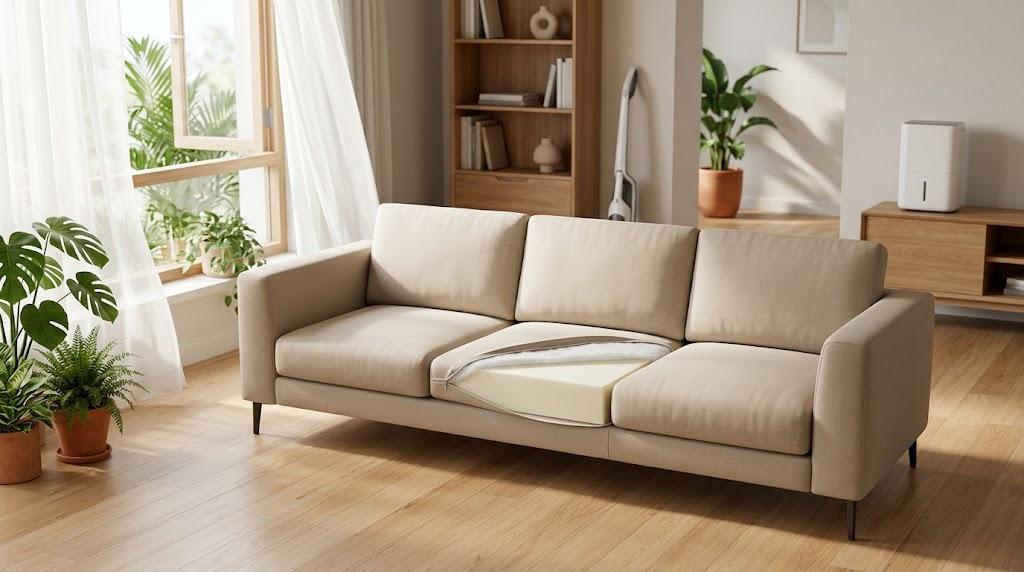
A quiet conversation happens between your body and your sofa every day. Skin cells drift downward and settle into fabric. Moisture from perspiration seeps past the surface and into padding. Given time, these deposits become food and shelter for organisms you cannot see.
Dust mites and mold are the two most common allergen sources found in household furniture. They do not announce their presence — symptoms do that for them. Congestion, sneezing, and irritated eyes often point back to the couch where you relax each evening. Fortunately, the relationship between material composition and allergen growth is well understood, and the remedies are entirely within your control.
Why Upholstered Furniture Attracts Biological Growth
Every cushion is a miniature ecosystem waiting to be colonized. Dead skin cells provide nutrition. Body heat and perspiration supply warmth and moisture. A standard sofa with loosely woven fabric and cotton or feather fills offers everything these organisms need to reproduce at alarming rates.
The mechanism of exposure is straightforward. When you sit on a cushion, the compression forces trapped air upward through the fabric weave. That air carries dust mite waste, mold spores, and decomposed skin particles directly into the space around your face. Allergic reactions follow within minutes for sensitive individuals.
Both dust mites and mold depend on soft, porous, moisture-retaining materials. They cannot survive on surfaces that stay dry and resist penetration. This is precisely why the materials chosen for your couch — visible and hidden alike — determine whether it becomes a health hazard or remains a safe place to rest.
Exterior Fabrics That Keep Allergens at Bay
The outermost layer of your sofa acts as a gatekeeper. A tightly constructed, non-porous covering prevents organisms and their byproducts from reaching the cushion interior where conditions favor growth.
Leather
Both natural and synthetic leather offer a smooth, sealed surface with no gaps for microscopic pests to infiltrate. Dust mites simply cannot penetrate the material. Mold requires absorbed moisture to grow, and leather resists absorption when wiped down periodically. The combination of durability and easy cleaning makes leather a perennial recommendation from allergists and interior designers alike.
Microfiber
Microfiber achieves its protective qualities through sheer thread density. Millions of ultra-fine synthetic fibers woven together produce a surface that blocks penetration at the microscopic level. Pollen, dander, and dust particles remain on the exterior where they are easily vacuumed away. The fabric's soft texture also provides genuine comfort, so choosing it never feels like a compromise.
Vinyl
This material shares the waterproof, non-porous characteristics of leather at a more accessible price point. It seals cushion interiors completely against moisture intrusion. Originally ubiquitous in medical offices and commercial spaces, vinyl has gained popularity in homes where severe allergies demand maximum barrier protection. A single wipe with a damp cloth keeps the surface hygienic.
Performance and Outdoor Textiles
Engineered to endure rain and sun exposure, outdoor fabrics naturally resist the moisture absorption that feeds mold growth. Solution-dyed acrylics maintain tight weave structures over years of heavy use. Water beads on contact rather than penetrating the surface, starving internal cushion materials of the humidity they need. These fabrics have earned a permanent place in indoor furniture design for their exceptional resilience.
Materials That Invite Trouble
Heavily textured fabrics including chenille, velvet, and bouclé feature loose, raised fibers that create countless traps for organic debris. Once particles lodge within these structures, extraction becomes nearly impossible through ordinary cleaning. Wool is equally problematic — it sheds fibers that accumulate inside cushions and retains ambient moisture, creating favorable conditions for fungal growth. These materials work against every other precaution you take.
What Goes Inside Your Cushions
Examining only the exterior fabric while ignoring the cushion core is like washing windows in a house with a leaking roof. The interior fill material occupies the vast majority of a sofa's volume and exerts enormous influence over its allergen profile.
High-Density Polyurethane Foam
This synthetic material is the cornerstone of allergy-conscious furniture construction. Its closed-cell architecture prevents moisture absorption from both perspiration and atmospheric humidity. Dust mites find the dense cell structure completely impenetrable. Premium foam also resists the gradual compression that creates uneven, debris-trapping pockets in aging furniture.
Polyester Fiber Wraps
A thin layer of polyester batting surrounding a foam core adds a comfortable softness to each cushion. The synthetic composition does not hold moisture or attract biological organisms. As long as this wrap stays enclosed within a tightly woven outer cover, it contributes comfort without risk. Many modern upholsterers use this layered construction as their standard approach.
Memory Foam
Viscoelastic memory foam is fully synthetic and therefore inhospitable to biological colonization. Its body-contouring properties distribute sitting pressure across a wider surface area. The main consideration is thermal retention — the material can trap warmth and, consequently, body moisture within the cushion. Good ventilation or climate control in the room prevents this from becoming problematic.
Materials That Compromise Health Goals
Down feathers represent one of the most allergenic fills used in furniture. As feathers age and compress, they produce fine particulate matter carrying proteins that trigger respiratory reactions. Cotton batting absorbs perspiration and humidity with ease, creating concealed moisture pockets where mold develops undetected. Both materials should be avoided entirely if managing allergies is a priority.
When Renewal Beats Replacement
Perhaps the hardwood frame of your current sofa remains perfectly sound. The proportions suit your room, the construction is solid, but the soft components have accumulated years of biological contamination. Replacing the entire piece is not always necessary or desirable. Professional sofa reupholstery addresses the problem at its source.
Technicians begin by stripping every soft layer from the frame — old fabric, degraded batting, contaminated foam, all of it removed. The bare frame is inspected and prepared for fresh materials. New high-density foam is cut and fitted into each cushion cavity, along with new synthetic wraps. A fresh outer covering completes the transformation.
This process allows you to implement everything this guide covers about hypoallergenic material selection. You choose a dense microfiber or smooth leather exterior backed by clean, synthetic cushion fills. Sofa reupholstery eliminates years of accumulated biological material in one comprehensive step, restoring the furniture to a genuinely clean condition.
The approach also delivers considerable financial advantages. Recovering an existing frame typically costs substantially less than purchasing new furniture of comparable quality. You retain the proportions and design you appreciate while gaining a completely renewed material composition tailored to your health requirements.
Tropical Humidity and Its Impact on Furniture
Where you live determines how aggressively biological growth develops inside upholstered pieces. Persistent heat and humidity accelerate mold establishment even when material choices are sound. Singapore sofa upholstery challenges illustrate this dynamic with particular clarity.
Singapore sustains elevated humidity across all twelve months of the year. Atmospheric moisture migrates into soft furnishings through passive absorption, without any spills or direct water contact required. Temperature fluctuations between air-conditioned interiors and warm exteriors generate condensation within cushion materials. Furniture in naturally ventilated spaces faces the most aggressive fungal pressure.
When exploring Singapore sofa upholstery providers, focus conversations on climate-adapted construction methods. Experienced local craftspeople understand which foam densities, thread types, and fabric treatments withstand sustained tropical humidity. They typically specify closed-cell synthetic fills exclusively and recommend outdoor-rated performance fabrics as the standard exterior covering for residential projects.
Moisture barrier membranes installed between the outer fabric and cushion foam represent an essential component in tropical furniture construction. These thin impermeable layers intercept perspiration and atmospheric humidity before they reach vulnerable cushion interiors. In consistently humid settings, this hidden addition transforms an otherwise susceptible piece into one that withstands the local climate effectively.
Consistent Care That Preserves Your Results
Material selection establishes the foundation for a healthy sofa. Ongoing maintenance determines how effectively that foundation performs across months and years of daily use.
Vacuum All Surfaces Weekly
A vacuum fitted with a HEPA filter captures particles too small for conventional filters to retain. Run it across cushion faces, along seam lines, and into the gaps between cushions where debris concentrates. This brief weekly routine keeps allergen levels below the thresholds that trigger symptoms.
Wash Removable Covers in Hot Water
Launder removable slipcovers every few months using water above sixty degrees Celsius. This temperature effectively destroys dust mites and neutralizes the allergenic proteins in their waste products. Always ensure covers dry completely before reassembly, since reintroducing damp fabric undermines the entire effort.
Control Indoor Humidity Below Fifty Percent
Dehumidifiers and air conditioning systems both maintain ambient moisture at levels hostile to mold and dust mite reproduction. Dry air is your strongest ally in the ongoing effort against biological allergens. An inexpensive digital hygrometer provides real-time feedback so you can verify your systems are working as intended.
Address Spills and Moisture Immediately
Blot any liquid that contacts your sofa within minutes using absorbent towels. Follow with directed airflow from a fan or open window. Even small amounts of trapped moisture inside cushion materials can initiate mold growth with surprising speed.
Use Internal Cushion Encasements
Allergen-proof zippered covers fitted over foam cores before the final upholstery fabric is applied add a crucial secondary barrier. They allow air to circulate freely while blocking dust mite penetration entirely. This inexpensive step provides meaningful protection hidden beneath the visible surface.
Flip and Rotate Cushions Monthly
Turning cushions on a regular schedule distributes wear patterns across all surfaces. Undersides gain exposure to air circulation, allowing trapped moisture to evaporate before it accumulates. This straightforward habit extends both cushion life and the hygienic quality of your seating environment.
Final Perspective
A healthy sofa begins with informed material decisions at every layer of construction. Non-porous exterior fabrics — leather, vinyl, microfiber — form the first barrier against biological intrusion. Dense synthetic fills inside the cushions prevent internal colonization that no amount of surface cleaning can fully address.
When accumulated contamination has already compromised your existing furniture, professional recovery offers a practical and economical remedy. Replacing degraded materials with hypoallergenic alternatives restores your couch to a clean, functional state. Combine those material upgrades with disciplined cleaning routines and humidity management, and your living room becomes a place where genuine comfort and respiratory health coexist without tension.

 English
 Arabic
 French
 Portuguese
 Deutsch
 Turkish
 Dutch
Dutch
 Italiano
 Russian
 Romaian
 Portuguese (Brazil)
 Greek
Greek
